

Q&A
Christopher Boucek
{
  "authors": [
    "Christopher Boucek"
  ],
  "type": "legacyinthemedia",
  "centerAffiliationAll": "dc",
  "centers": [
    "Carnegie Endowment for International Peace"
  ],
  "collections": [],
  "englishNewsletterAll": "menaTransitions",
  "nonEnglishNewsletterAll": "",
  "primaryCenter": "Carnegie Endowment for International Peace",
  "programAffiliation": "MEP",
  "programs": [
    "Middle East"
  ],
  "projects": [],
  "regions": [
    "North America",
    "United States",
    "Middle East"
  ],
  "topics": [
    "Political Reform",
    "Security",
    "Foreign Policy"
  ]
}
Source: Getty
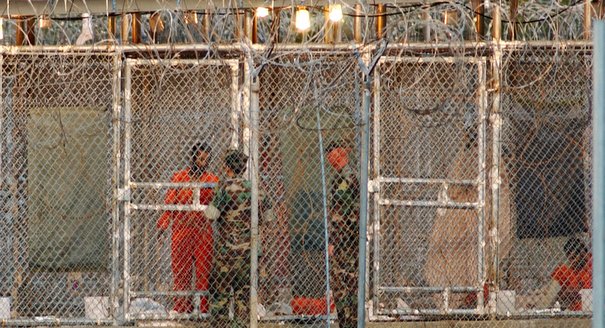
The Obama administration’s goal of closing the military detention facility at Guantanamo Bay was encouraging, but unrealistic; the larger issue that must first be addressed is the entire U.S. detainee policy and the need for disengagement programs that mitigate the chance of former detainees engaging in violent activities.
Source: Global Post

The goal of closing Guantanamo in a year was encouraging, but unrealistic. It’s not simply a matter of what to do with the detainees at Guantanamo, or “Gitmo North,” if any of its inmates ever end up being transferred to the Thompson correctional facility in Illinois.
The United States’ entire detainee policy is at issue, in Guantanamo, Bagram air base in Afghanistan, Iraq, and anywhere else the U.S. or its allies hold people without trial.
Today, there are about 200 prisoners at Guantanamo, most of whom are from Yemen. Moving them to Illinois doesn’t solve the problem, it just relocates it. At the most fundamental level, Obama still hasn’t decided what he wants to do.
The administration has prisoners it intends to place on trial, either in open courts or military tribunals. These include some of the 15 high-value detainees like Khalid Sheikh Mohammed and Ramzi bin al-Shibh. At the other end, the White House had cleared between 40 and 45 Yemeni detainees for release, but as yet, has no idea what to do with them.
In between, it gets even messier, with a group of detainees the administration doesn’t want to try but doesn’t want to let go, either. The administration will doing everything in its power to make that group as small as possible, but it won’t be easy, and the last four weeks haven’t helped.
President Obama has never adequately explained his position, that this is a matter of managing risk in a manner that comports with both our security and our values.
It would be politically suicidal for Obama to release any detainee who might return to violent activities, yet every day in the U.S., we tolerate a substantial risk of recidivism among paroled rapists and murderers, and we manage it. It’s equally absurd to presume that we can keep prisoners who have never been convicted of crimes in custody forever, or let them out and expect that they’ll never do anything bad.
Unfortunately, that leaves a range of unsettling options. The White House should try as many of the Guantanamo prisoners as possible in an American court. Terrorism is a crime, and our criminal justice system has tried and convicted terrorists before.
Among prisoners we release, there will always be a risk of behaviors we don’t like. We need to create programs to help handle that. Today, we simply don’t have the metrics to determine whether or not a prisoner constitutes a manageable risk, or a formalized process for releasing him. We have tools and processes to help make those decisions for sexual predators and other violent offenders (admittedly these are far from perfect), but for these detainees, we have nothing.
We should produce a much more detailed analysis, measuring how detainees engage in terrorist activities on a sort of scale. We can’t expect someone who was deeply involved in violence to give it up easily, but some of these detainees had never engaged in violent actions in the first place.
We need to think of terrorist behaviors as points on a spectrum, and create specific interventions to stop particular behaviors, or particular people from committing them, instead of saying essentially, “don’t do things we don’t like.”
Disengagement programs should ideally replace a detainee’s social network with one more conducive to peaceful behavior, determining who he can and cannot spend time with, and placing him in new social networks.
Saudi Arabia is the only country with a formal program to help reintegrate nationals who return from Guantanamo. The U.S. has made similar programs a condition for repatriating prisoners to other countries, including Kuwait, which may soon establish one.
Today, the Yemenis have no formal system to handle detainees, and the Obama administration needs to help them build one. To manage the risk of sending detainees back, Yemen needs a means of absorbing and reintegrating them into society.
Yet, as media attention turns again toward the Yemenis held at Guantanamo, people seem to forget that we’re only talking about 90 people. Though Obama may not solve it this year, or next year, or even by 2012, this is a manageable problem. We can deal with this, and we will.
Former Associate, Middle East Program
Boucek was an associate in the Carnegie Middle East Program where his research focused on security challenges in the Arabian Peninsula and Northern Africa.
Recent Work
Christopher Boucek

Christopher Boucek, Karim Sadjadpour
Carnegie does not take institutional positions on public policy issues; the views represented herein are those of the author(s) and do not necessarily reflect the views of Carnegie, its staff, or its trustees.
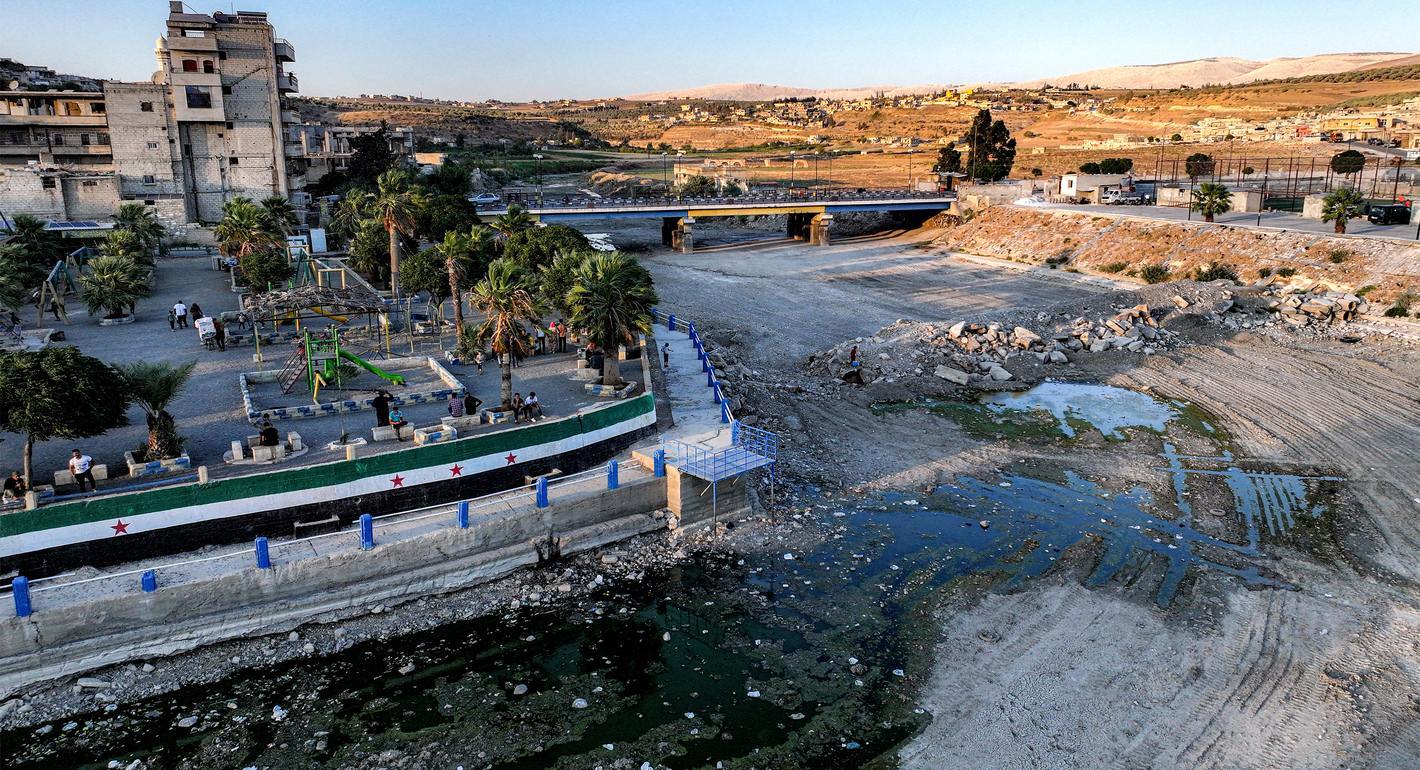
Syria’s worsening drought is no longer a seasonal crisis. This report explains what climate change is doing to rainfall, groundwater, and food security, and what solutions experts say are still possible.
Milia Esper
Power assessments shape our perceptions of the limits of the possible, but quantitative rankings and dashboards can provide false confidence.
Nicholas Kitchen
Europe has an interest in supporting Armenian leader Nikol Pashinyan as he tries to make peace with neighbors and loosen ties with Russia. But it is depersonalized support in the long term, not quickfire flash, that will win the day.

Thomas de Waal

In its version of an AI middle power strategy, Seoul is pursuing alignment with the United States not as an endpoint but as a strategy to build industrial and geopolitical leverage. Whether this balance holds remains an open question.

Darcie Draudt-Véjares, Seungjoo Lee
If Washington cannot adapt to the ongoing transformations of a multipolar world, its superiority will become a liability.

Amr Hamzawy