

• Research
  • Emissary
  • About
  • Experts
Carnegie Global logoCarnegie lettermark logo
DemocracyIran
  • Donate
{
  "authors": [
    "Pieter Bottelier",
    "Uri Dadush"
  ],
  "type": "legacyinthemedia",
  "centerAffiliationAll": "dc",
  "centers": [
    "Carnegie Endowment for International Peace"
  ],
  "collections": [],
  "englishNewsletterAll": "asia",
  "nonEnglishNewsletterAll": "",
  "primaryCenter": "Carnegie Endowment for International Peace",
  "programAffiliation": "AP",
  "programs": [
    "Asia"
  ],
  "projects": [],
  "regions": [
    "North America",
    "United States",
    "East Asia",
    "China"
  ],
  "topics": [
    "Economy",
    "Trade"
  ]
}

Source: Getty

In The Media

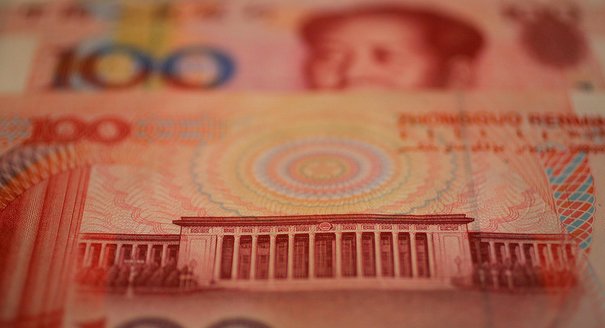
The Myths About China's Currency

The debate over China's currency propagates dangerous myths about both the Chinese economy and the potential benefits of a more expensive renminbi for the United States.

Link Copied
By Pieter Bottelier and Uri Dadush
Published on Mar 19, 2010
Program mobile hero image

Program

Asia

The Asia Program in Washington studies disruptive security, governance, and technological risks that threaten peace, growth, and opportunity in the Asia-Pacific region, including a focus on China, Japan, and the Korean peninsula.

Learn More

Source: International Herald Tribune

The Myths About China's CurrencyChina fever is again gripping Washington as the U.S. Treasury approaches its mid-April deadline for pronouncing whether China manipulates its currency for unfair trade advantage.

Though returning to a more flexible and appreciating currency is in China’s interest, dangerous myths about China’s economy, and the benefits to the U.S. of a more expensive renminbi, are again being propagated, feeding China bashers and protectionist lobbies while endangering a crucial relationship. Some of the myths:

China’s growth has depended primarily on exports. Exports are important to China, but domestic demand is the overwhelming growth-driver. As China’s imports grew almost as fast as exports during the decade preceding the crisis, net-exports accounted for only about 1 percentage point of China’s 9.5 percent average annual growth rate.

China did not contribute enough to global demand during the crisis. As a result of China’s aggressive and successful stimulus program, domestic demand expanded 12.3 percent in 2009 (while it contracted 2.6 percent in the United States). As a result, China’s current account surplus and the U.S. deficit declined sharply. China did more than any other country to pull the world out of the recession.

China’s consumption is not growing fast enough. Private consumption grew by an average of about 7.5 percent per year over the 10 years prior to the crisis, faster than in any other large economy, though investment and gross domestic product grew even faster, causing the consumption/G.D.P. ratio to fall to an unusually low level. In 2009 China’s consumption grew faster than G.D.P. for the first time in many years.

Revaluation of the renminbi will help the United States.
The immediate effect of renminbi appreciation will be to raise prices for U.S. consumers. A 25 percent revaluation of the renminbi, which some economists have said is needed, would — if not offset by a reduction in China’s prices — add $75 billion to the U.S. import bill. And since the United States imports three times as much from China as it exports there, higher U.S. exports to China would not nearly offset the welfare loss to U.S. consumers from higher Chinese prices.

In the end, though some U.S. firms would gain and some export jobs would be created, the U.S. consumer would be the loser.

Revaluation of the renminbi is critical to reducing global trade imbalances. A revaluation of the renminbi by itself would do little to redress global imbalances, and could, as mentioned, initially lead to a wider U.S.-China trade deficit. Most likely, unless U.S. domestic demand falls for other reasons, the overall U.S. trade deficit would in the end hardly budge as the U.S. would simply import more from other countries.

China has manipulated its currency for years. About 60 countries peg their exchange rates to the dollar today, and they are not all manipulators. China pegged the renminbi in the midst of the Asian crisis in 1997, winning plaudits from the U.S. and other countries for contributing to regional stability.

Complaints arose in 2003 as China’s trade surplus and the U.S.-China trade deficit widened, a trend that accelerated in subsequent years.

China’s currency became undervalued primarily because of questionable U.S. macroeconomic policies and inadequate oversight of the U.S. financial system that contributed to an explosion of liquidity and a debt-financed consumption boom fed, in part, by inexpensive imports from China.

Fast productivity growth in China’s manufacturing sector, due to aggressive market reforms since the late 1990s, combined with export promotion and import substitution policies, contributed to the growing trade imbalances. In 2005 China adopted a policy of gradual renminbi appreciation. Its currency rose by 21 percent over the three years to July 2008 when a sharp drop in export orders, due to crisis conditions in the U.S., brought suspension of the policy.

Sterile debates on China’s currency take attention away from more important but politically tougher reforms in the U.S., such as increased consumption and energy taxes.

As for China, a more flexible, appreciated currency is clearly in its interest as it would give it more control over its monetary policy and reduce prices of imported goods to its consumers.

China’s nominal exchange rate is much less important than the domestic policy adjustments needed in both countries.

About the Authors

Pieter Bottelier

Former Nonresident Scholar, International Economics Program

Bottelier was a nonresident scholar in Carnegie’s International Economics Program and senior adjunct professor of China studies at the School of Advanced International Studies (SAIS), the Johns Hopkins University. His work currently focuses on China’s economic reform and development.

Uri Dadush

Former Senior Associate, International Economics Program

Dadush was a senior associate at the Carnegie Endowment for International Peace. He focuses on trends in the global economy and is currently tracking developments in the eurozone crisis.

Authors

Pieter Bottelier
Former Nonresident Scholar, International Economics Program
Pieter Bottelier
Uri Dadush
Former Senior Associate, International Economics Program
Uri Dadush
EconomyTradeNorth AmericaUnited StatesEast AsiaChina

Carnegie does not take institutional positions on public policy issues; the views represented herein are those of the author(s) and do not necessarily reflect the views of Carnegie, its staff, or its trustees.

More Work from Carnegie Endowment for International Peace

  • Article
    Continental Asia and the Rise of Portfolio Politics

    Continental Asia—the overland space from Türkiye to China—has emerged as a critical geopolitical arena, yet receives less attention than its maritime counterpart, the Indo-Pacific. While Continental Asian states are cast as objects of great power competition, they are exhibiting growing agency through “portfolio politics”: strategically diversifying partnerships across sectors to pursue national goals.

      Jennifer B. Murtazashvili

  • Tiananmen Gate with US and Chinese flags
    Commentary
    Emissary
    Trump and Xi Should Tackle a Previously Impossible AI Conversation

    Previous dialogues ended in failure. This time could be different.

      Scott Singer

  • Trump and others walking down a red carpet, with Air Force One in the background
    Commentary
    Emissary
    “China Doesn’t Do Anything for Free”

    Why the outcomes of the U.S.-China meetings may be limited.


      Aaron David Miller, David Rennie

  • A drone flies in front of an Iranian flag in southern Tehran, Iran
    Article
    The Unintended Consequences of Iran’s Asymmetric Strategy and America’s AI War

    The Iran war is unique in the scope and scale of asymmetric warfare and AI-enabled conflict. These will test the limits of protecting civilians.

      Steve Feldstein

  • Commentary
    Carnegie Politika
    As Trump Threatens to Quit NATO, the Baltic States Are Playing for Time

    Governments in Estonia, Latvia, and Lithuania want to ensure that a U.S. military withdrawal would not leave them dangerously exposed to a Russian attack.

      Sergejs Potapkins

Get more news and analysis from
Carnegie Endowment for International Peace
Carnegie global logo, stacked
1779 Massachusetts Avenue NWWashington, DC, 20036-2103Phone: 202 483 7600
  • Research
  • Emissary
  • About
  • Experts
  • Donate
  • Programs
  • Events
  • Blogs
  • Podcasts
  • Contact
  • Annual Reports
  • Careers
  • Privacy
  • For Media
  • Government Resources
Get more news and analysis from
Carnegie Endowment for International Peace
© 2026 Carnegie Endowment for International Peace. All rights reserved.