

Paper
Pekka Sutela
{
  "authors": [
    "Pekka Sutela"
  ],
  "type": "other",
  "centerAffiliationAll": "dc",
  "centers": [
    "Carnegie Endowment for International Peace",
    "Carnegie Russia Eurasia Center"
  ],
  "collections": [],
  "englishNewsletterAll": "ctw",
  "nonEnglishNewsletterAll": "",
  "primaryCenter": "Carnegie Endowment for International Peace",
  "programAffiliation": "russia",
  "programs": [
    "Russia and Eurasia"
  ],
  "projects": [],
  "regions": [
    "Caucasus",
    "Russia",
    "North America"
  ],
  "topics": [
    "Economy"
  ]
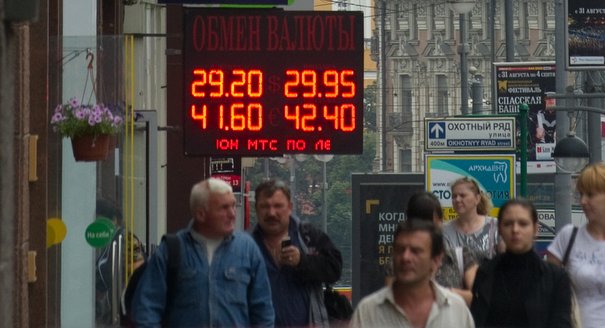
}
Source: Getty
While Russia’s short-term economy will largely depend on oil prices and the country’s demographic challenges, its medium-to-long-term outlook will be influenced by the lessons that leaders take from the crisis, which will affect Russia’s economic structure and policies for many years to come.
While the timing and extent of the global financial crisis surprised many countries, Russia was generally prepared. Its macroeconomic management of the recession rightly earned accolades from several international organizations.
But Moscow’s industrial and social policy responses were not as praiseworthy, representing yet another victory of political tactics over economic strategy. Although Russia’s leaders saw the crisis as vindicating their past policies—including the reform strategies they devised from 2006–2008—most of the structural issues in Russia’s economy remain, with solutions likely delayed for several years. Russia’s fiscal decline— from an average of 7 percent annual growth before the crisis to a loss of 7.9 percent GDP in 2009—is the highest figure among G20 countries.
Russia’s economy in the near term will largely depend on oil prices and how Moscow handles the country’s demographic challenges. But the economy’s medium-to-long-term outlook will be influenced by the lessons that leaders take from the crisis, which will affect Russia’s economic structure and policies for many years to come.
Former Nonresident Senior Associate, Russia and Eurasia Program
Sutela was a nonresident senior associate in the Carnegie Endowment’s Russia and Eurasia Program, where his research focuses on the economies of Eurasia, especially Russia.
Recent Work
Pekka Sutela
Pekka Sutela
Carnegie does not take institutional positions on public policy issues; the views represented herein are those of the author(s) and do not necessarily reflect the views of Carnegie, its staff, or its trustees.

The Bureau of Industry and Security needs to adjust its focus and practices to maintain its position as the U.S. government’s primary champion of international technological competition.

Geoffrey Irving

European Commission President Ursula von der Leyen is about to give her annual address on the state of the EU. Here’s what she won’t—but should—say.

Rym Momtaz

Depleted financial reserves and a shrinking tax base mean it is no longer possible to simultaneously deliver high defense spending, price stability, and economic growth.

Alexandra Prokopenko
Blurring the line between humans and animals is a long-standing tradition in social utopian prose. In his latest novel, Leonid Bershidsky reminds us that in social experiments, people are often treated no differently than animals.

Alexander Baunov
U.S. trading partners in Asia are closely watching the dispute for signs of how it may affect their own interests.
Barbara Weisel