

Commentary
It should address the shortcomings of previous crisis communication efforts and adapt to the demands of frontier AI.
Lucy Luo
{
  "authors": [],
  "type": "pressRelease",
  "centerAffiliationAll": "dc",
  "centers": [
    "Carnegie Endowment for International Peace"
  ],
  "collections": [],
  "englishNewsletterAll": "ctw",
  "nonEnglishNewsletterAll": "",
  "primaryCenter": "Carnegie Endowment for International Peace",
  "programAffiliation": "russia",
  "programs": [
    "Russia and Eurasia"
  ],
  "projects": [],
  "regions": [
    "North America",
    "United States",
    "Caucasus",
    "Russia"
  ],
  "topics": []
}
REQUIRED IMAGE
After falling to historic lows in 2008, U.S.-Russia relations rebounded following last year’s "reset."
WASHINGTON, November 3—After falling to historic lows in 2008, U.S.-Russia relations rebounded following last year’s "reset." In a new report, Matthew Rojansky assesses the first year of the Bilateral Presidential Commission, an initiative devised by Presidents Obama and Medvedev to encourage high-level interaction and produce concrete deliverables. While the commission has produced impressive accomplishments thus far—including joint efforts to combat terrorism and new binding arms control and nonproliferation agreements—it will require continued attention and flexibility from officials to permanently change relations.
Key Recommendations:
"The history of U.S.-Russia bilateral engagement shows that managing the relationship successfully requires sound institutions to advance the interests of both sides and to sustain global peace and security," Rojansky writes. "Without continuing high-level attention and follow-through on concrete, achievable goals, even this latest success story could quickly lose momentum, setting relations between Moscow and Washington once again adrift."
NOTES
Click here to read the full report
Matthew Rojansky is the deputy director of the Russia and Eurasia Program at the Carnegie Endowment. An expert on U.S. and Russian national security and nuclear weapons policies, his work focuses on relations among the United States, NATO, and the states of the former Soviet Union. He previously served as executive director of the Partnership for a Secure America, which seeks to rebuild bipartisan dialogue and productive debate on U.S. national security and foreign policy challenges.
The Carnegie Russia and Eurasia Program has, since the end of the Cold War, led the field on Eurasian security, including strategic nuclear weapons and nonproliferation, development, economic and social issues, governance, and the rule of law.
Press Contact: Kendra Galante, 202-939-2233, pressoffice@ceip.org
Carnegie does not take institutional positions on public policy issues; the views represented herein are those of the author(s) and do not necessarily reflect the views of Carnegie, its staff, or its trustees.

It should address the shortcomings of previous crisis communication efforts and adapt to the demands of frontier AI.

Lucy Luo
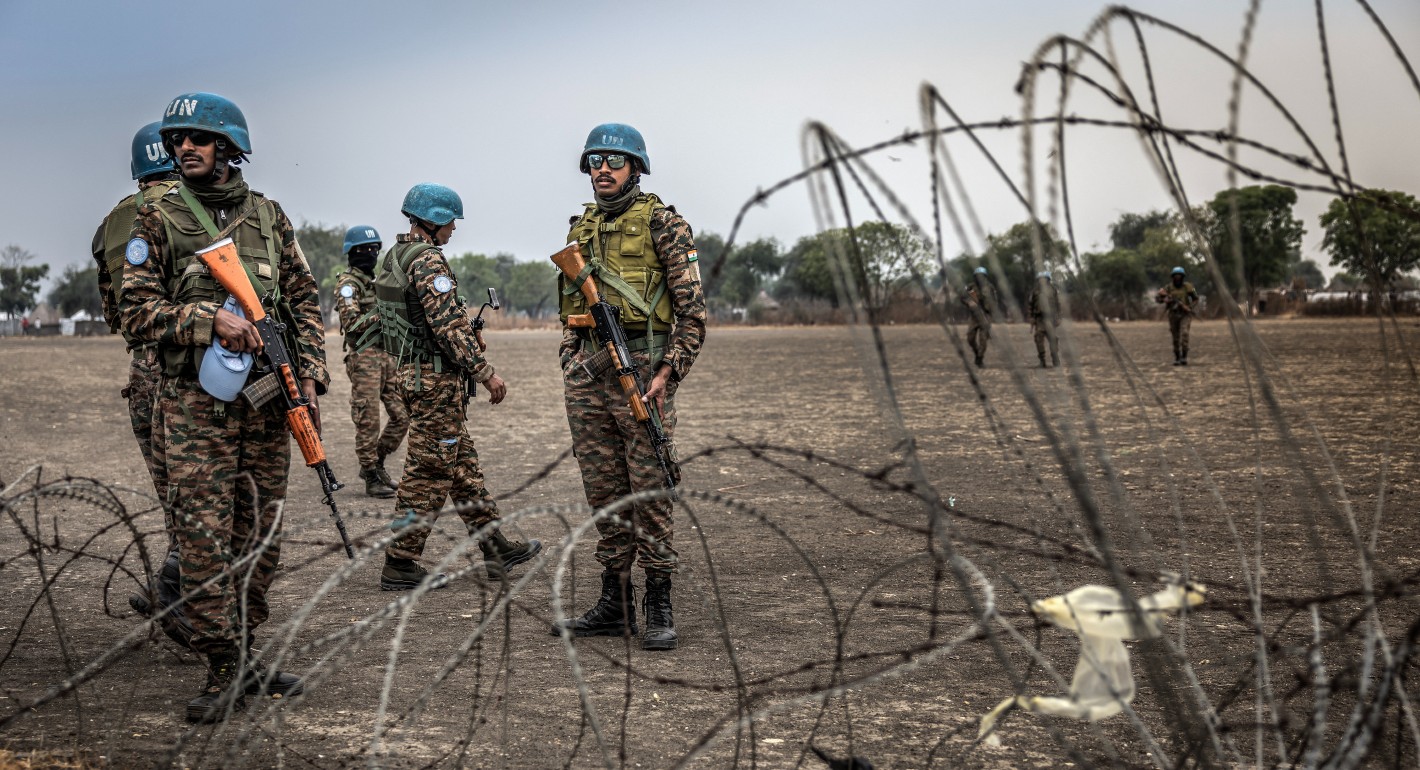
Washington’s decision to support some UN functions while letting others wither is pulling the organization apart at the seams.

Stewart Patrick, Theodore Zaritsky

While there are notable demographic, economic, and geographic divides over AI, there is also substantial alignment between Republicans and Democrats.



Ian Klaus, Mark Baldassare, Rachel George, …

Russia’s ruling party would have benefited from Putin appearing as its distant patron, but as an active frontman imposing his views on the public, he has done nothing but harm both the party’s election campaign and the ruling system overall.

Andrey Pertsev
AI capabilities are moving fast. Most institutions—including governments—can’t keep up.


Anton Leicht, Scott Singer