

In The Media
Lahcen Achy
{
  "authors": [
    "Lahcen Achy"
  ],
  "type": "legacyinthemedia",
  "centerAffiliationAll": "",
  "centers": [
    "Carnegie Endowment for International Peace",
    "Malcolm H. Kerr Carnegie Middle East Center"
  ],
  "collections": [],
  "englishNewsletterAll": "",
  "nonEnglishNewsletterAll": "",
  "primaryCenter": "Malcolm H. Kerr Carnegie Middle East Center",
  "programAffiliation": "",
  "programs": [],
  "projects": [],
  "regions": [
    "Egypt"
  ],
  "topics": [
    "Economy"
  ]
}
Source: Getty
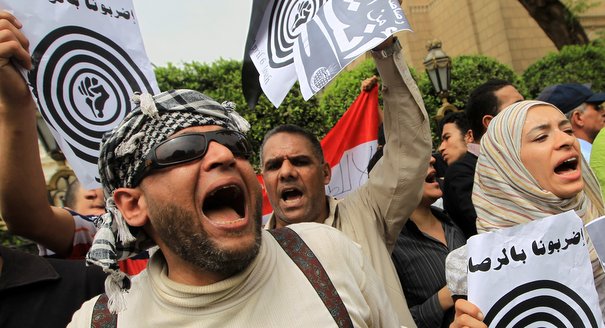
Egypt could face significant social upheaval unless its government takes concrete action to reform the country's education, labor, and the public finance systems.
Source: Ahram Online

Addressing these challenges is imperative; otherwise, the spread of poverty to large segments of the Egyptian population, cloudy economic prospects, and feelings of marginalization after the election could lead to greater social upheaval.
The reform process
In the early 1990s, Egypt’s macroeconomic situation had been alarming, with low growth, double-digit inflation, an unsustainable budget, and current account deficits. In addition, it had high import restrictions to protect infant government-led industries. Egypt embarked on a series of structural adjustment reforms that redirected its economy from the public to the private sector and reduced its rentier state status.
Ahmed Nazif’s appointment as prime minister in 2004 marked a turning point, as the cabinet implemented a series of major reforms. Financial reforms reshaped the banking sector, which is now largely privately owned. Cutbacks in government subsidies and the public workforce—and multiple privatizations of state-owned enterprises — helped to reduce the country’s burgeoning debt.
To boost tax compliance, the government decreased the corporate tax rate from 40 to 20 percent and improved tax collection. Trade was liberalized thanks to a drastic decline in tariffs applied to foreign products. The country also adopted preferential trade agreements with the United States, the European Union, African and Arab neighbors, as well as with Israel and Turkey.
Encouraging early results
These reforms improved Egypt’s business climate and boosted overall confidence in Egypt’s economy. Foreign direct investments (FDI) inflows surged by 50 percent in 2007 compared to 2006. Tourism picked up by 61.1 percent and exports of goods and services tripled from 2003 to 2008. This growth reduced Egypt’s external debt, reaching an impressive level in 2009 of less than 20 percent of GDP.
Persisting economic and social imbalances
Despite this progress, major structural concerns remain unresolved and deep economic and social imbalances persist, which could threaten Egypt’s future.
Macro-economic imbalances
The IMF projects a 2011 inflation rate of 9.5 percent in Egypt, bringing its 2006-2011 inflation average to 12 percent. Beyond undermining the purchasing power of most of the population, inflation impedes investment and hurts confidence in the stability of the Egyptian economy. Despite efforts to trim public spending, public domestic debt represents more than 70 percent of GDP, compared to an average of 50 percent in the Middle East and North Africa (MENA) region.
Egypt has a tax revenue-to-GDP ratio of about 15 percent, well below that of Morocco, Tunisia, and Jordan, with 24 percent, 21 percent, and 20 percent, respectively. This situation reveals the weaknesses of an Egyptian fiscal regime hampered by high tax evasion, corruption, and inefficient management.
On the expenditure side, fuel and food subsidies amount to 8 percent of GDP. Rising energy and food prices subsequently led to large increases in subsidies, even as they failed to target the neediest people.
High unemployment
As the most populated Arab country with an estimated 80 million people, Egypt has a young and growing population. This puts considerable pressure on the labor market to meet demand.
At least 50 percent of males and 90 percent of females remain jobless two years after leaving school. In addition, the number of jobs created decreased by more than 10 percent in 2009, with most of the available jobs involving poorly paid informal work, which is highly vulnerable to economic pressures. Far fewer jobs are available in the more stable, formal sectors. For example, only one of ten jobs is created by the manufacturing sector and one of twenty in tourism and financial services.
Social indicators remain grim
More than 21 percent of Egyptians live below the official national poverty line. While the poverty rate—which increased from 2000 to 2005—declined from 2005 to 2008, it is once again on the rise, according to the results of the National Income and Expenditure Survey, which was conducted in 2008/2009. Additionally, more than 40 percent of Egyptians earn less than $2/day, compared to a MENA average of 20 percent.
The 2010 Human Development Index ranks Egypt in the bottom half (101 of 169) of countries, and places it at 108 of 169 countries if inequalities in life expectancy, education, and income are considered. The country’s middle class is disappearing as inequalities among social groups, regions, and sectors increase.
Poor governance
Transparency International’s (TI) 2010 Corruption Perception Index ranks Egypt 98 of 178 countries with a score of 3.1 out of 10; most corruption occurs through bribes. According to TI, government decisions regularly favor private over public interests. The effect of corruption on businesses is widespread. A survey by the International Finance Corporation revealed that six of ten Egyptian entrepreneurs consider corruption a major constraint on their businesses.
With the executive and legislative branches, law enforcement agencies and public audit institutions suffering from lax governance, the democratic process is also growing weaker. Additionally, social unrest is expected to increase as social marginalization grows and political disempowerment rises after the election.
The way forward
Egypt must create incentives for investments in productive and labor-intensive sectors. At less than 1 percent of GDP during the past decade, Egypt’s Research and Development public expenditures are lower than those of Jordan, Morocco, and Tunisia. They are also far below those of another Medium Human Development country, China, which reaches 1.5 percent of GDP.
Egypt needs to reform its public finance system by cracking down on tax evasion, phasing out universal fuel subsidies, and improving delivery of public services. Policy makers must also design an ambitious development strategy to build a robust and competitive economy, based on domestic economic and human resources. Last but not least, all of these reforms will reallocate public resources with some social costs for the poor and end privileges for the business elite and corrupt officials. To be effectively implemented, however, they must rely on a fairly elected parliament and a government that people can trust. Otherwise, the status-quo exposes Egypt to more troubled times ahead.
Former Nonresident Senior Associate, Middle East Center
Achy is an economist with expertise in development, institutional economics, trade, and labor and a focus on the Middle East and North Africa.
Recent Work
Lahcen Achy
Lahcen Achy

Russian strikes are weakening the economy sustaining Ukraine’s war effort. Closing the growing funding gap will require more European support and politically contentious reforms in Kyiv.

Balázs Jarábik
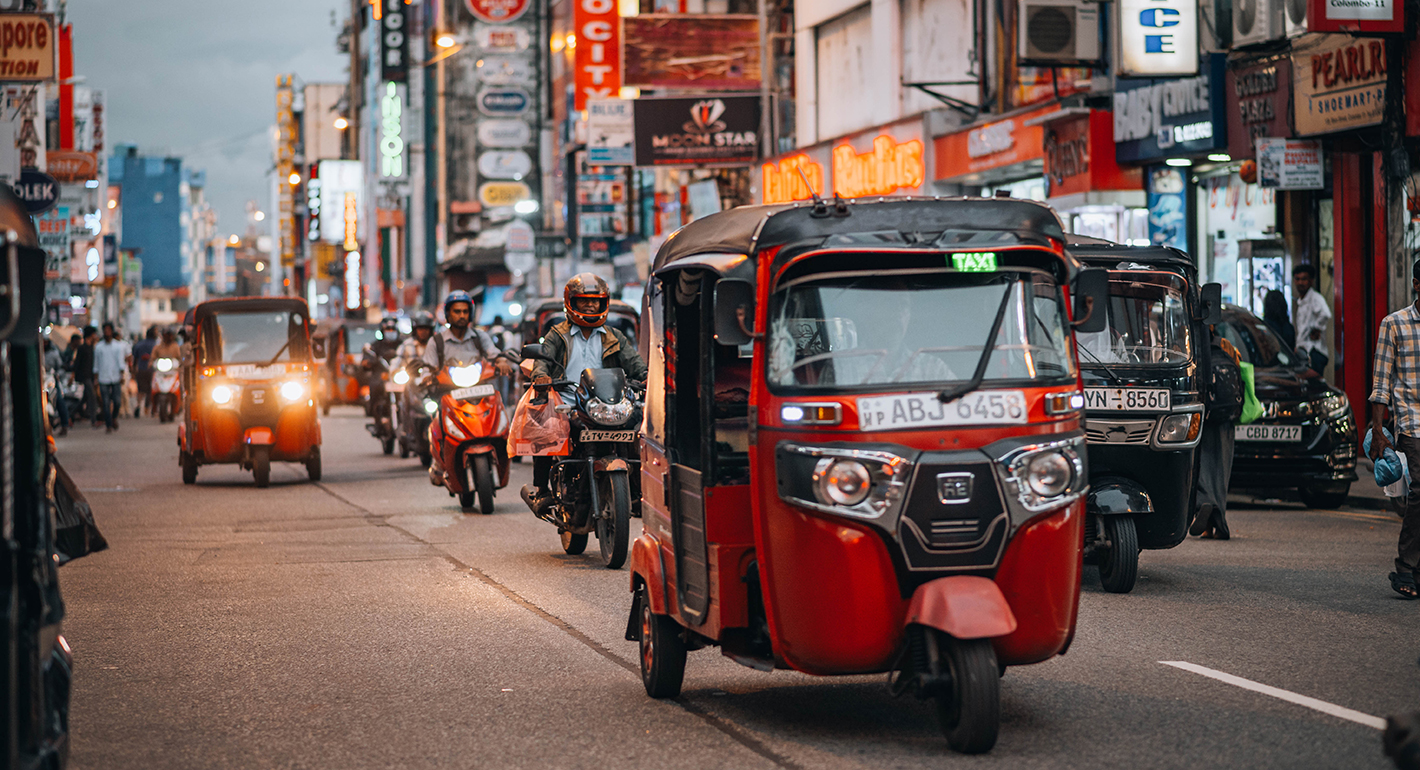
Economic recovery has brought Sri Lanka a modicum of stability, but domestic strains and great-power rivalry could test how long it lasts.
Avinash Paliwal
Policy proposals on sovereign debt must both match the scale of the challenge and be implementable within existing political constraints.
David McNair

For every ruble allocated to social policy, health, and education in 2027, double that amount is earmarked for the army, the police, and the security services.

Alexandra Prokopenko

The European Commissioner for Trade is headed to China. But after President Xi’s bridge-building visit to Washington, can a more isolated EU overcome Beijing’s stranglehold on critical raw materials? Who will blink first?

Rym Momtaz, ed.