

Commentary
Why governance of rapidly evolving technology will be distributed and complex.
Stewart Patrick, Scott Singer
{
  "authors": [
    "Deborah Gordon",
    "Yuhan Zhang"
  ],
  "type": "other",
  "centerAffiliationAll": "dc",
  "centers": [
    "Carnegie Endowment for International Peace"
  ],
  "collections": [],
  "englishNewsletterAll": "ctw",
  "nonEnglishNewsletterAll": "",
  "primaryCenter": "Carnegie Endowment for International Peace",
  "programAffiliation": "SCP",
  "programs": [
    "Sustainability, Climate, and Geopolitics"
  ],
  "projects": [],
  "regions": [
    "East Asia",
    "China",
    "North America"
  ],
  "topics": [
    "Climate Change"
  ]
}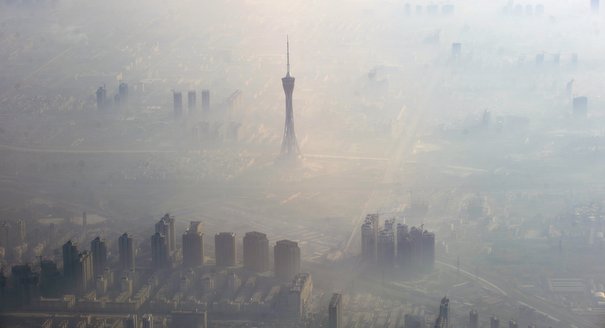
Source: Getty
China has become a driving force in global motorization, but future harmonious growth will depend on equitable and efficient measures that minimize the energy and environmental effects of China’s burgeoning transportation sector.
Just five years ago, no one anticipated China’s phenomenal rate of motorization. While all signs had been pointing to significant growth in the country’s vehicle fleet, recent projections are already out of date. Today, China is a driving force in global motorization. Future harmonious growth will depend on equitable and efficient measures that minimize the energy and environmental effects of China’s burgeoning transportation sector.
The number of cars in China was projected to increase six-fold in the first decade of the new millennium. Analysts estimated that it would take at least two decades for China’s automobile fleet to catch up to today’s U.S. fleet. And if fast-paced growth continued, China’s total motor vehicle fleet was expected to be on par with America’s fleet by 2030.
This reality did not materialize. Instead, China’s motorization vastly exceeded all expectations. Between 2000 and 2010, the nation’s car fleet grew by a factor of 20.
The total number of motor vehicles—cars, trucks, motorcycles, rural vehicles, and buses—ballooned from a projected 170 million to an estimated 270 million. Today, with its current vehicle fleet likely 60 percent larger than forecast just a few years ago, China has zoomed ahead of Japan and the EU nations and is poised to overtake the United States with its 250 million vehicles.
China’s vehicle growth is expected to continue, and possibly accelerate. Even if its annual gross domestic product growth rate declines from 10 to 7 percent, as projected by the International Monetary Fund and laid out in China’s 12th Five-Year Plan, some 600 million vehicles could fill China’s roads by 2030.
China’s unprecedented rate of motorization is a driving force of global proportions—one that has come to pass much sooner than expected. To consider the policy outlook vis-à-vis the surging size of China’s vehicle fleet, it is helpful to recall China’s transportation situation at the turn of the century, to look at a snapshot of where China’s motorization is today, and to consider potential fleet growth by 2020 and 2030, tracing the boundaries for both slower and rapid economic expansion.
The sheer numbers of and future projections for China’s vehicle fleet illuminate the energy and climate implications of China’s on-road transportation, both at home and abroad. Oil consumption, climate change, and air pollution will be pervasive concerns that China must reconcile as it motorizes.
Effective policy tools will be critical for China to manage its burgeoning motor vehicle fleet. In this respect, many opportunities for advancing new transportation technologies and strategies hold great promise:

Former Director and Senior Fellow, Energy and Climate Program
Gordon was director of Carnegie’s Energy and Climate Program, where her research focuses on oil and climate change issues in North America and globally.
Yuhan Zhang
Former Research Assistant, Energy and Climate Program
Carnegie does not take institutional positions on public policy issues; the views represented herein are those of the author(s) and do not necessarily reflect the views of Carnegie, its staff, or its trustees.

Why governance of rapidly evolving technology will be distributed and complex.


Stewart Patrick, Scott Singer

It should address the shortcomings of previous crisis communication efforts and adapt to the demands of frontier AI.

Lucy Luo

China’s police training infrastructure construction projects provide benefits to recipient countries, promote China’s image as a major global security provider, and are likely to reinforce alignment between Beijing’s security priorities and those of countries in the Global South.


Cameron Waltz, Sheena Chestnut Greitens, Kim Nguyen, …

AI capabilities are moving fast. Most institutions—including governments—can’t keep up.

Anton Leicht, Scott Singer

They face an uphill climb, but they could draw on a strategy that other diplomats have used in the past.


Shana Tabak, Alejandro Martin Rodriguez