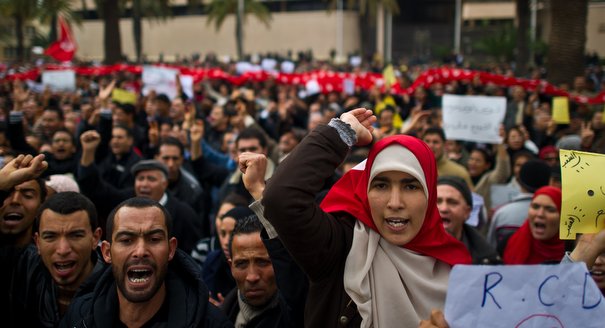
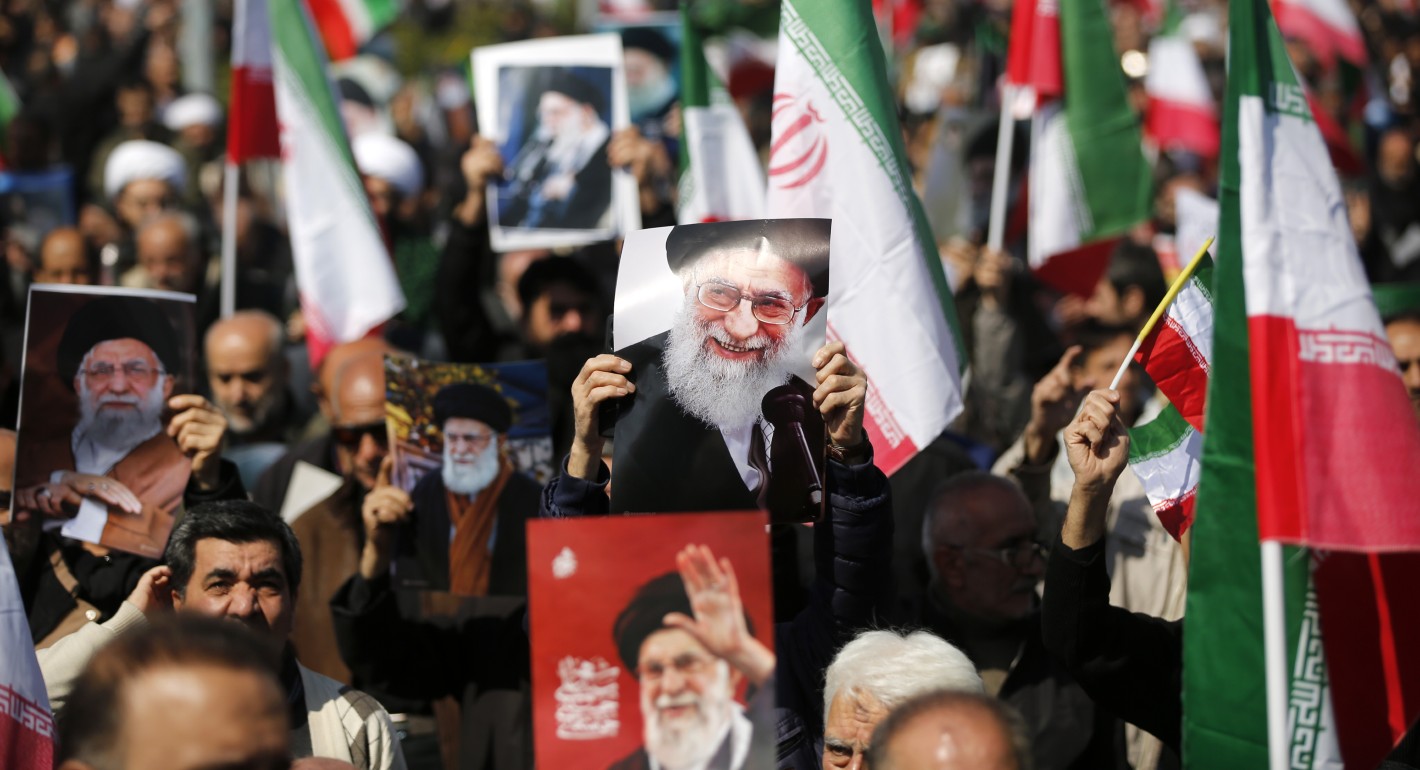
While Iran has welcomed uprisings against Western-backed regimes in Egypt and Tunisia, it dealt harshly with its own protesters and has been worried about recent events in Syria. Moreover, countries that threw out pro-Western dictators are not moving closer to Iran.
Egypt's and Tunisia’s future foreign policies are more likely to resemble Turkey's in becoming more independent while remaining allied with the West. And Iran's soft power has decreased as its regime looks increasingly repressive and new models of revolutionary success have emerged in Tunisia, Egypt, and other parts of the Arab world.
Turkey, for its part, bungled the opportunity to take advantage of this historic shift to bolster its influence in the Arab world. The Arab uprisings are effectively calling for the Arab world to be more like Turkey: democratic, with a vibrant civil society, political pluralism, secularism alongside Islam, and a productive and fairly balanced economy. However, after expressing clear support for Egyptian protesters, Turkey has hedged its bets in Libya and Syria.
Turkey has over $15 billion in business contracts with Moammar Kadafi's Libya and has built a close relationship with Syrian President Bashar Assad. Turkey's foreign policy of "zero problems" with neighbors is becoming harder to implement as peoples and governments in the neighborhood are increasingly on opposite sides.
Although Arab public opinion has held Turkey in very high esteem in past years, recent events have tarnished that image. This could have been Turkey's moment in the Middle East; the moment was lost.
Saudi Arabia has been taken aback by the loss of old allies and remains worried about increased Iranian influence, but has maintained its sphere of influence. Its military intervention in Bahrain shows that Riyadh is extremely worried not only about Iranian influence but about the wave of democratic change, and still has not figured out a way to achieve a balance between addressing growing demands by citizens for better governance and social justice, while keeping Iranian influence out of the Gulf Cooperation Council.
Although the United States has generally suffered setbacks from the events of the past months, it is adjusting quickly to the new realities and stands to remain a key player in the coming period. It has not lost its leverage despite the demise of its main Egyptian and Tunisian allies, and has expressed support for protests after realizing they were not dominated by radical groups and that they echoed Western values.
Emerging global powers such as Russia, China, India and Brazil have had mixed reactions to the "Arab Spring." All were reluctant to approve Western-led military intervention in Libya, expressing concerns ranging from the risk of higher oil prices to a potential spillover effect on their shores.
As for Israel, even though its peace treaty with Egypt will remain in place, it no longer has any friends in the region after the departure of Egyptian President Hosni Mubarak, its declining relations with Turkey and growing unrest in Jordan. The recent Fatah-Hamas accord underlines Israel's predicament. Two difficult challenges lie ahead: The Palestinian Authority's unilateral move to declare Palestinian statehood by the end of the year and a potential Palestinian popular uprising encouraged by the success of neighboring populations.
Although the Arab Spring has been largely about internal democracy and reform, it has affected all of the major regional and international actors. However, so far there has been no major shift in the balance of power or the basic pattern of regional relations.
Events in the coming weeks and months could still surprise us. Most important, any dramatic change in Syria would be a major blow for Iranian influence, as Syria has been a key ally in helping project Iranian power into Lebanon and the Arab-Israeli arena.