

Research
- +10
Rosa Balfour, Frances Z. Brown, Yasmine Farouk, …
{
  "authors": [
    "Moisés Naím"
  ],
  "type": "legacyinthemedia",
  "centerAffiliationAll": "",
  "centers": [
    "Carnegie Endowment for International Peace",
    "Carnegie China"
  ],
  "collections": [],
  "englishNewsletterAll": "",
  "nonEnglishNewsletterAll": "",
  "primaryCenter": "Carnegie Endowment for International Peace",
  "programAffiliation": "",
  "programs": [],
  "projects": [],
  "regions": [
    "North America",
    "South America",
    "South Asia",
    "India",
    "East Asia",
    "China"
  ],
  "topics": [
    "Economy"
  ]
}
Source: Getty
In order to accommodate a rapidly growing global middle class, world leaders should draw on ideas from a variety of sources, giving free rein to pragmatism and experimentation instead of rigid ideologies.
Source: Huffington Post

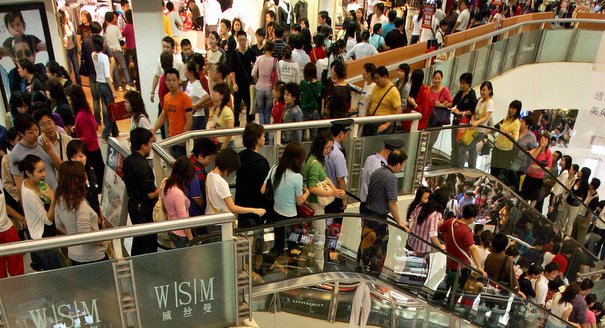
I visited China for the first time in 1978, when its economic reforms were just being introduced. Cars were rare and the streets were packed with swarms of cyclists, all dressed in a uniform of either navy or olive green. Today those same streets are lined with skyscrapers with the world's boldest architecture, crammed with cars, and people are dressed in every color and style imaginable. On my first trip, China's economy was only 40 percent of that of the Soviet Union. Today it is four times larger. While it remains to be seen how sustainable China's economic boom ultimately is, some of its consequences will endure.
The most fundamental change is that millions of Chinese have escaped poverty, thus joining a middle class that while much poorer than in Europe or the United States, has for the first time the means to consume more food, medicine, electricity, cell phones, or toys. While an economic crisis or a slowdown will shrink it, it will not wipe it out completely.
This is not a China-only phenomenon: the expansion of the middle-class in fast-growing poor countries is a global trend. India, Turkey, Vietnam, and Brazil are just a few in a long list of nations that now have a middle class larger than ever before. But will the ascent of the new middle class come with unbearable environmental and social pressures?
There are three ways to answer this question. The first was offered by Thomas Malthus. In 1798 he argued that if the population grows faster than food production, inevitably famine, disease, and wars will "rebalance" the situation. A 1972 book titled The Limits to Growth predicted that oil would be exhausted by 1992 and a major Malthusian catastrophe would occur around 2000. Obviously, Malthus and his followers underestimate the impact of new technologies. The green revolution in agriculture, for example, meant that grain production in poor countries doubled in just 20 years. In general, more food per capita is produced today than ever before and more technologies enable the exploitation of natural resources that until recently were inaccessible.
The second answer is that the problem is not about production but distribution. A minority consumes far too much and the majority of the world consumes too little. For example, the United States, with only 4.6 percent of the world's population, consumes 25 percent of the yearly global energy output. Each German uses nearly nine times more energy than every Indian, and 30 times more than a Bangladeshi. From this perspective, Marx was right: consumption should be more equitably distributed and the state has to intervene to ensure that this happens.
The third is a market-based response: prices and incentives will solve the problem. If there are shortages, prices go up and consumption is thus forced to go down as less people can afford the same quantities as they did when prices were lower. Moreover, higher prices create incentives to both be more efficient and to invent technologies that enable more production at a lower cost. If the price of oil continues to rise, wind, sun, and sea can compete with hydrocarbons for the generation of energy. If cotton prices go up, more farmers will be stimulated to plant more cotton. This, in fact is already taking place and in many areas we have witnessed almost miraculous growth of supply. And new technologies are creating more efficient and environmentally friendly manufacturing processes. The problem, however, is that market adjustments are brutal and are a threat to the poorest consumers for whom any decrease in consumption (forced by higher prices) means going hungry. Neither does it solve the problem of global market failures: the oceans are deteriorating at an unprecedented rate due to overfishing and their indiscriminate and largely unregulated exploitation. And we know what is happening with the CO2 emissions warming up the planet. Markets alone will not solve these problems.
Neither Malthus nor Marx nor the market give us adequate answers to the difficult questions posed by the explosive growth of countries like China, the expansion of the middle-class in many of them, and the resulting increase in global consumption. Technological responses stimulated by the market may be too late to avoid serious social and environmental damage. Excessive state intervention to correct inequalities can end up fatally distorting markets and stifling the innovations we badly need. And, without state intervention, market failures may make the planet unlivable.
Rigid ideological attachments will not help us find the solutions. We must draw on all the ideas, invent new ones, and give free rein to pragmatism and experimentation. In the past, humans managed to find solutions to unprecedented problems. There is no reason to assume that we will not be able do it again.

Distinguished Fellow
Moisés Naím is a distinguished fellow at the Carnegie Endowment for International Peace, a best-selling author, and an internationally syndicated columnist.
Recent Work



Rosa Balfour, Frances Z. Brown, Yasmine Farouk, …
Moisés Naím
Carnegie does not take institutional positions on public policy issues; the views represented herein are those of the author(s) and do not necessarily reflect the views of Carnegie, its staff, or its trustees.

Rubio’s recent visit brought welcome attention, but more capital requires governance changes that may be a hard sell for regional governments.

Jennifer B. Murtazashvili

China has showcased its engineering prowess with small modular reactor demonstration projects. But turning these technological achievements into commercial success will be a greater challenge.

Tong Zhao

Despite public disputes over trade and immigration, the strategic partnership’s foundations remain sturdy.

Sameer Lalwani

With its public finances in shambles, the far right polling at 35 percent ahead of the 2027 presidential election, and a growing protest movement, is France’s crisis a threat to the EU’s geopolitical awakening?

Rym Momtaz, ed.

Russian strikes are weakening the economy sustaining Ukraine’s war effort. Closing the growing funding gap will require more European support and politically contentious reforms in Kyiv.

Balázs Jarábik