

In The Media
Lahcen Achy
{
  "authors": [
    "Lahcen Achy"
  ],
  "type": "legacyinthemedia",
  "centerAffiliationAll": "",
  "centers": [
    "Carnegie Endowment for International Peace",
    "Carnegie Europe",
    "Malcolm H. Kerr Carnegie Middle East Center"
  ],
  "collections": [
    "Arab Awakening"
  ],
  "englishNewsletterAll": "",
  "nonEnglishNewsletterAll": "",
  "primaryCenter": "Malcolm H. Kerr Carnegie Middle East Center",
  "programAffiliation": "",
  "programs": [],
  "projects": [],
  "regions": [
    "Levant",
    "Syria",
    "Middle East"
  ],
  "topics": [
    "Economy",
    "Political Reform"
  ]
}
Source: Getty
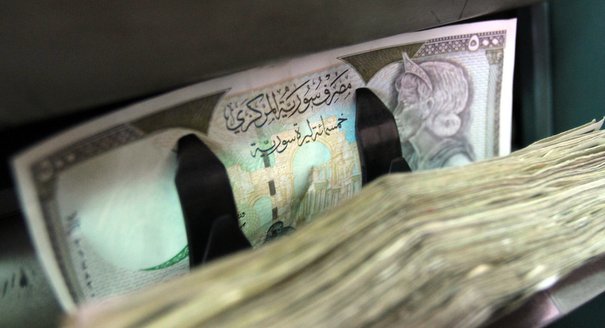
With recent popular protests causing a notable decline in Syria’s economic indicators, the country is facing critical socioeconomic challenges which could lead to the end of the Assad regime.
Source: Los Angeles Times

The budget deficit has increased due to expanded social expenditure and shrinking tax revenues. The economic and security situation is expected to deteriorate further as the unrest continues to grow. The international community may resort to additional sanctions affecting the private companies and government institutions that form the backbone of the Syrian economy. This could throw the country into an unprecedented economic and fiscal crisis.
Tourism, which accounts for about 12% of Syria’s GDP and directly contributes more than 10% of total employment, is one of the economic sectors most damaged since the protests began. Over the last three years, Syria has spent huge sums to increase its ability to receive Arab and foreign tourists and improve the quality of services provided to them. Tourist numbers rose from 6 million visitors in 2008 to 8.5 million in 2010, an increase of more than 40%. This activity supplied Syria with about $8 billion of hard currency over the same period.
Although little detailed data exist on the effect of the current social unrest on tourist numbers, most hotels are almost empty now that international tourism trip organizers have stopped proposing Syria as a destination, and most Arab embassies have issued statements urging their citizens to refrain from visiting Syria until further notice.
Recurrent unrest in various Syrian provinces has also driven a number of foreign investors to review their investment programs. Several Persian Gulf and foreign companies have announced plans to stop or cancel huge projects due to the uncertainty that overshadows Syria’s economic future. Some reports indicate that investments are being redirected — probably to Jordan, especially now that it may soon join the Gulf Cooperation Council.
This drop in tourism and the stoppage of large investment projects is worsening the living conditions of many Syrian families. Some of them will see their incomes fall, while others will join the unemployment lines.
To soften the hardship of this crisis and contain popular anger, the Syrian government has increased government salaries and fuel subsidies and reduced taxes on food. In the first few days after the protests started, Syria’s president, Bashar Assad, issued a decree increasing monthly salaries and wages by 1,500 Syrian lira ($30), in addition to a 30% increase for monthly salaries under 10,000 lira ($200) and a 20% increase for salaries at or above 10,000 lira. The government also reduced fuel prices by 25% to aid citizens’ purchasing power and counter negative effects of the inflationary pressures accompanying the protest wave.
The cost of these measures, which were not anticipated in this year’s fiscal law, is estimated at more than 2% of GDP. This means the budget deficit will expand and could surpass 8% of GDP unless tax revenues — and economic activity — rise.
The deteriorating budget situation raises questions about the government’s ability to cover the deficit gap without resorting to foreign loans. Bank deposits have dropped due to an increase in withdrawals after the protests began. To remedy this situation, the central bank has raised interest rates on lira deposits by two points to stimulate savings and stop the depletion of bank deposits. Although this measure may help improve liquidity in the banking sector, it is causing an increase in the cost of funding, especially for the governmental sector, which receives nearly 55% of bank loans.
The Syrian lira has also recorded a drop in its value versus the dollar, falling up to 15% at times. There has also been an increase in currency trading in the unregulated (black) market. The Syrian central bank announced the insurance of foreign currency for individuals and companies as needed in an effort to stop the lira’s devaluation and black market activity.
It is possible that the monetary authorities’ intervention to reduce pressures on the lira could exhaust a significant portion of the central bank’s hard currency reserve. Such fears are reinforced by the drop in tourism revenues and foreign investment, and they may have been the motive behind the central bank’s imposition of a 0.7% charge on dollar cash withdrawals from personal accounts. At the beginning of 2011, foreign exchange reserves were estimated at $17 billion. Under normal conditions, this would be enough to fund seven months of imports.
Implementing credible political and economic reforms was a genuine option in the hands of the regime. Harsh repression and excessive use of force against people killed that option. Today, Syria is facing critical socioeconomic challenges that could lead to an increase in the unrest’s human and financial costs, worsening living conditions for broad sections of the population. This will only further fuel popular anger and likely lead to the regime’s collapse.
Former Nonresident Senior Associate, Middle East Center
Achy is an economist with expertise in development, institutional economics, trade, and labor and a focus on the Middle East and North Africa.
Recent Work
Lahcen Achy
Lahcen Achy
Carnegie does not take institutional positions on public policy issues; the views represented herein are those of the author(s) and do not necessarily reflect the views of Carnegie, its staff, or its trustees.

The Bureau of Industry and Security needs to adjust its focus and practices to maintain its position as the U.S. government’s primary champion of international technological competition.

Geoffrey Irving

Depleted financial reserves and a shrinking tax base mean it is no longer possible to simultaneously deliver high defense spending, price stability, and economic growth.

Alexandra Prokopenko
Understanding the climatic pain points is necessary for policymakers hoping to minimize the war’s negative environmental consequences.



Alejandro Martin Rodriguez, Joy Arkeh, Sarah Yerkes

Huawei pushed hard to enter the Egyptian data centers market, until the Americans made a better offer.

Angie Omar

The books, podcasts, and films that explain the world it made.

Andrew Leber