

Commentary
Uri Dadush
{
  "authors": [
    "Uri Dadush"
  ],
  "type": "legacyinthemedia",
  "centerAffiliationAll": "",
  "centers": [
    "Carnegie Endowment for International Peace",
    "Carnegie Europe"
  ],
  "collections": [],
  "englishNewsletterAll": "",
  "nonEnglishNewsletterAll": "",
  "primaryCenter": "Carnegie Endowment for International Peace",
  "programAffiliation": "",
  "programs": [],
  "projects": [],
  "regions": [
    "Western Europe",
    "Germany",
    "Europe",
    "North America"
  ],
  "topics": [
    "Economy",
    "Trade",
    "EU"
  ]
}
Source: Getty
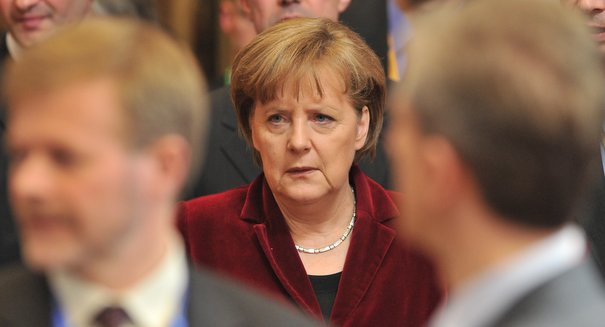
Leaders in Germany and other eurozone countries are starting to recognize that dealing with the euro’s problems requires not just austerity and structural reforms in the periphery but also a much closer fiscal union.
Source: European Voice

Germans blamed others when the eurozone crisis erupted almost two years ago, but as country after country was engulfed, that position became untenable. Greece could be faulted for profligacy, but Spain? Portugal could be held responsible for chronic underperformance, but Ireland? The crisis in Italy, and, more recently, France's widening spreads, could not be so easily dismissed.
Now Germans, too, have come to realise that the problems of the eurozone are systemic. Divergent competitiveness and fiscal performance inside the monetary union is not only the result of vice in the periphery and German virtue, but also the inevitable consequence of asymmetric shocks, diverse economic structures, and long-standing differences in the workings of labour and product-market institutions.
As many have recognised, the euro's problems also reflect a ‘Made in Germany' export bonanza. Repressed consumption and wages, combined with increases in productivity as workers from the eastern Länder were absorbed and retrained, contributed to the country's export boom. The surge in German exports was helped by a euro that was weaker than the Deutsche Mark would have been, and by equalised interest rates and a common European monetary policy that supported demand expansion in the periphery but not in Germany.
German and other eurozone leaders have now come to the awful realisation that dealing with the problem requires not just austerity and structural reforms in the periphery – arduous as these are – but also a transformation for which they are entirely unprepared: namely, a much closer fiscal union, in essence a giant step toward a United States of Europe.
Should Germany continue to support the monetary union? It must weigh a number of factors in making its decision. The cost of a fiscal union includes higher interest costs: according to the IFO Institute, these represent 1.5%-2% of German gross domestic product (GDP) a year, much more than Germany's annual contribution to the European Commission. But more importantly, it also includes a huge contingent liability on its guarantees of the periphery's debt. Should a generalised default wipe out 30% of the periphery's debt, Germany's share of the bill would amount to about €400 billion, or 16% of its GDP.
On the other hand, the cost of a collapse of the eurozone could result in a 30% haircut of the government debt of the periphery held by German banks, amounting to €21bn. It would also entail a modest loss of competitiveness. For example, a 30% devaluation in the periphery would imply a 3% real effective appreciation in Germany.
Germany runs risks either way, and some observers will fervently argue that a fiscal union carries the greater risk. But it would be an understatement to say that these calculations are subject to a large margin of error. They do not, for example, include the risk of a global financial crisis that might be triggered by the breakdown of the eurozone. And one could argue that, in a fiscal union, the probability of widespread default in the periphery is near zero.
In the final analysis, Germany's choice has to be based on more fundamental considerations than a speculative and incomplete economic calculus. In fact, it comes down to this: do Germans want to complete the European project and lead the United States of Europe, or do they prefer to share in a much looser arrangement, such as that long advocated by the UK?
Both Chancellor Angela Merkel and her finance minister, Wolfgang Schäuble, say they have made their choice. They have repeatedly declared their absolute commitment to the euro and said that they want a tighter, not looser, union. But they have also emphasised that a fiscal union must preserve incentives on the periphery to reform and also must be endorsed by electorates.
How could these entirely reasonable conditions be reconciled with impatient markets? A simultaneous ‘down payment' on fiscal union and on periphery reforms could be the answer. A proposal to issue Eurobonds equal to, say, half of new financing requirements of all eurozone countries (approximately €850bn a year), with guarantees proportional to respective financing requirements, could be part of this, as could the commitment of collateral – as recently proposed by Romano Prodi, a former president of the European Commission. Eurozone countries submitting to new fiscal disciplines, including balanced-budget provisions embedded in the constitution, could be the other part of the down payment.
The share of financing requirements funded by Eurobonds could also be programmed to rise over time, conditional on reforms to help shore up the eurozone's future.
Markets will soon demand to know Germany's choice.

Former Senior Associate, International Economics Program
Dadush was a senior associate at the Carnegie Endowment for International Peace. He focuses on trends in the global economy and is currently tracking developments in the eurozone crisis.
Recent Work
Uri Dadush
Uri Dadush
Carnegie does not take institutional positions on public policy issues; the views represented herein are those of the author(s) and do not necessarily reflect the views of Carnegie, its staff, or its trustees.
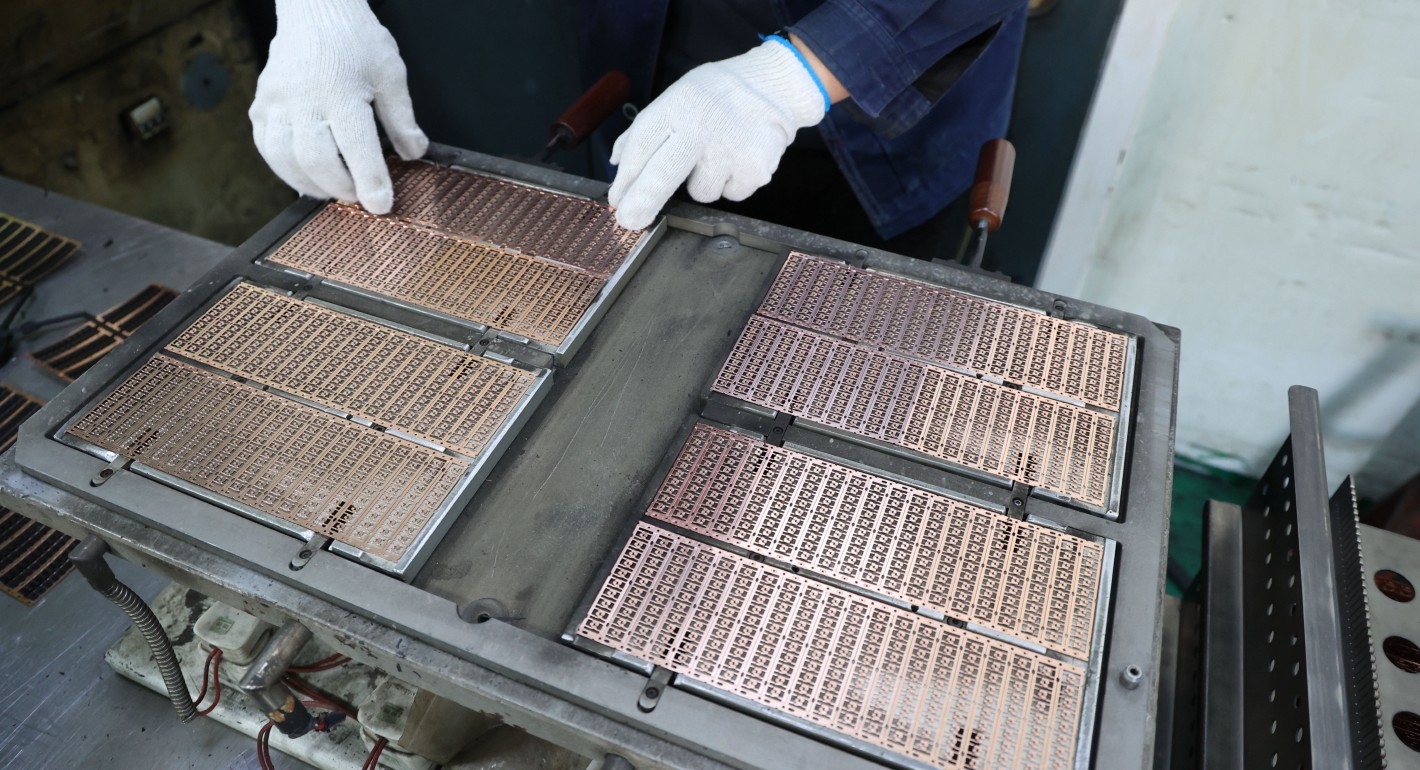
The Bureau of Industry and Security needs to adjust its focus and practices to maintain its position as the U.S. government’s primary champion of international technological competition.

Geoffrey Irving
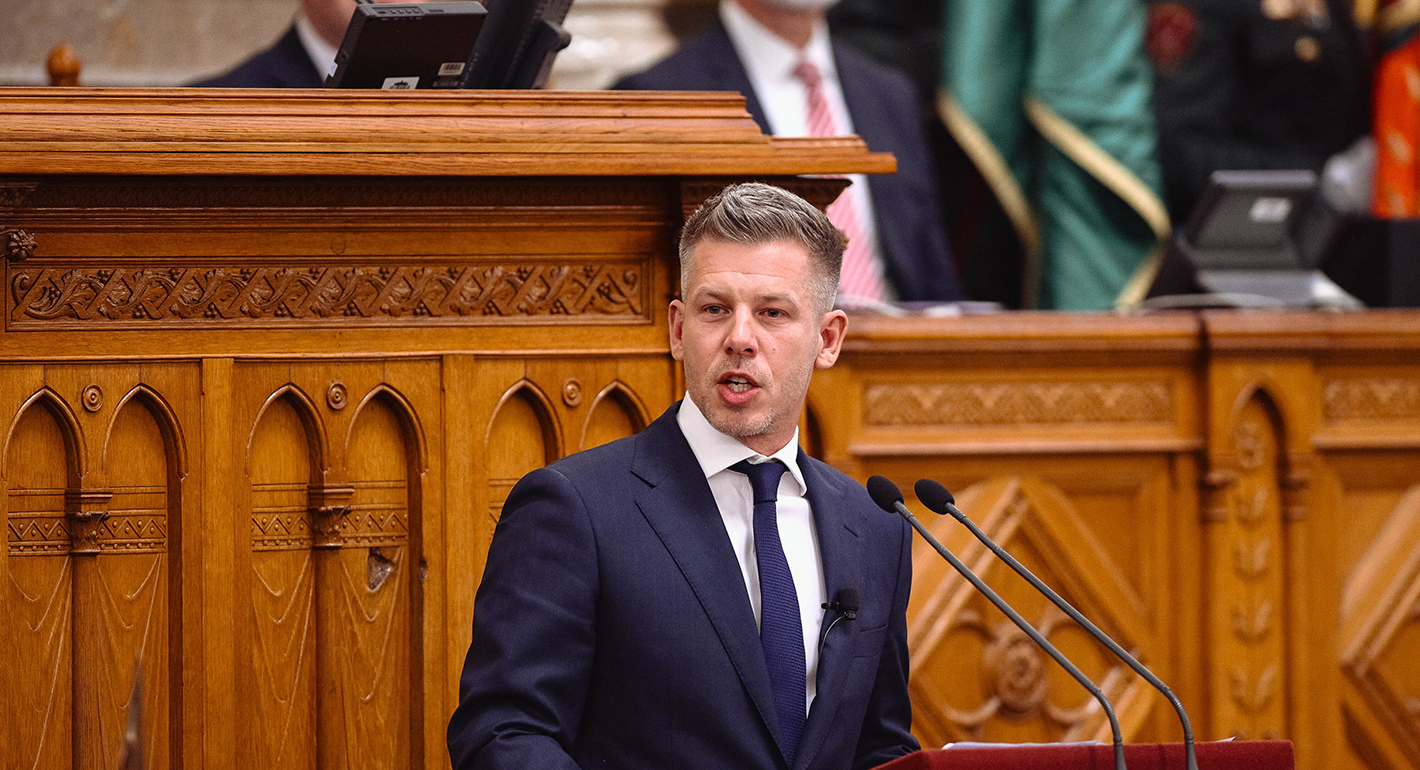
Despite myriad challenges and occasional stumbles, the new Hungarian government is moving ahead with energy and conviction to uproot years of illiberalism and corruption and rebuild Hungarian democracy.

Thomas Carothers

European Commission President Ursula von der Leyen is about to give her annual address on the state of the EU. Here’s what she won’t—but should—say.

Rym Momtaz

Depleted financial reserves and a shrinking tax base mean it is no longer possible to simultaneously deliver high defense spending, price stability, and economic growth.

Alexandra Prokopenko

Radical-right parties are expected to do well in upcoming elections in four of the EU's biggest member states. If successful, they could prevent the union from addressing key challenges ahead.

Stefan Lehne