

Paper
There is a transnational far-right populist movement that links middle powers in a global movement that extends well beyond Trump.
Christopher S. Chivvis, Rohan Mukherjee, Milan Vaishnav
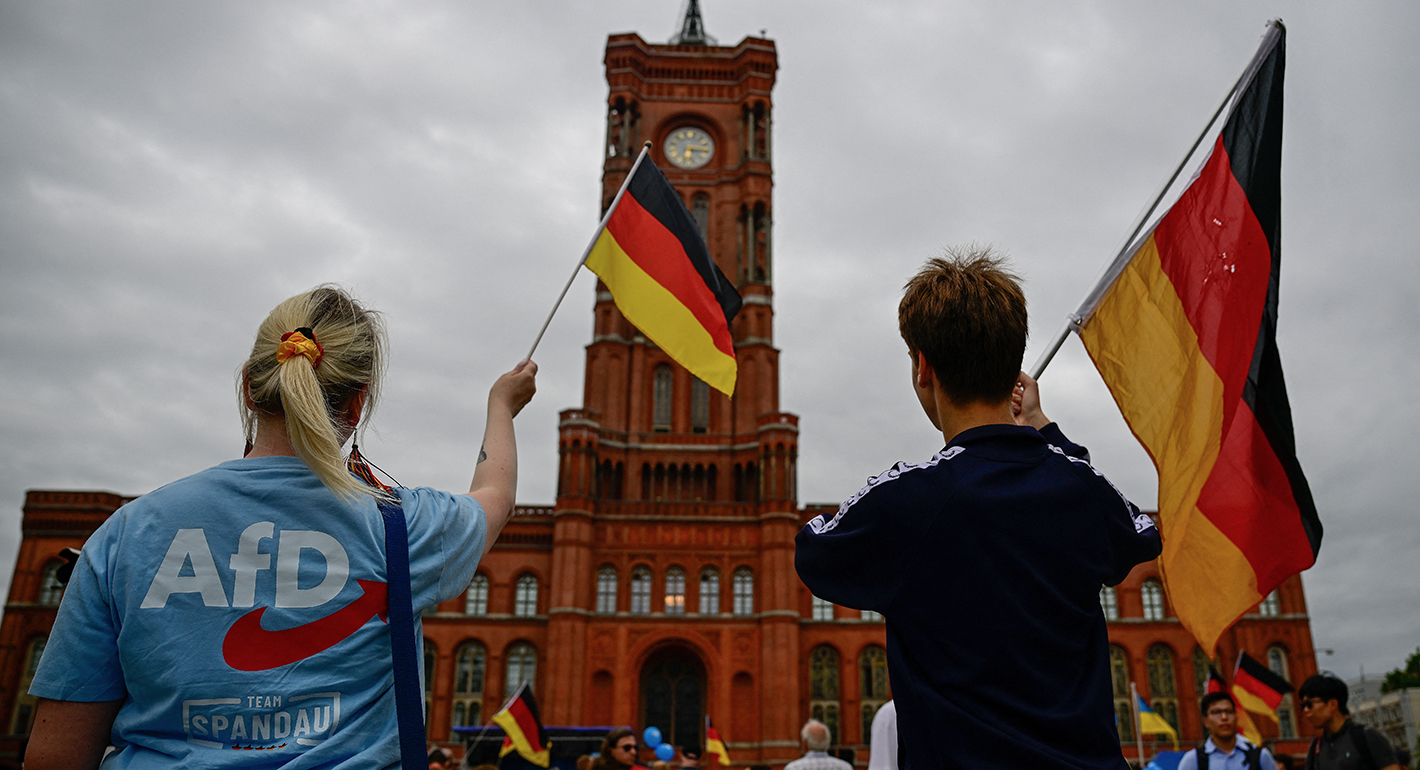
Source: Getty
Unresolved tensions within the AfD may ultimately constrain the its potential as a leader among European and global populist forces.
This paper is part of “The Populist Turn in Middle Power Diplomacy,” a Carnegie Endowment series on the international impacts of right-wing populism. Focusing on middle powers, the series explores how populist leaders reshape foreign policy, build transnational networks, and advance shared agendas across borders.
In early November 2025, reports surfaced that four legislators from the radical-right Alternative für Deutschland (Alternative for Germany, AfD) planned to attend an upcoming Europe-BRICS gathering in Sochi on Russia’s Black Sea coast. The news elicited starkly different responses from the party’s two co-leaders. Alice Weidel expressed frustration and urged the legislators to keep the visit low profile and avoid meeting with former Russian president Dmitri Medvedev.1 Tino Chrupalla defended the trip, insisting that he did not view Russia as a threat to Germany.2 In the end, at least three of the four legislators made the journey.3
The gathering proved a lackluster display: a handful of German politicians attending a Russian propaganda exercise masquerading as a global summit. Yet the episode revealed something more consequential about the AfD’s complexities and dangers—and what makes Germany an interesting case study of populist foreign policy among middle powers. Historically, ambiguities about the country’s position within Europe and its scale as a power have generated uncertainties about Germany’s geopolitical status, and the AfD’s foreign policy reflects those very tensions.
With respect to its ideological positioning, Germany has been described by foreign policy theorists like the early-twentieth-century liberal politician Friedrich Naumann as occupying a contested and imprecise Mittellage (middle position) between West and East.4 In terms of power, Germany inhabits an equally ambiguous space. Since unification in 1871, it has been neither merely another member of the European concert of states nor a stable hegemon. As Henry Kissinger supposedly quipped, Germany is “too big for Europe, too small for the world.”5
To understand these two tensions—each a recurring source of disorder in modern European geopolitics—is to understand what distinguishes the AfD’s foreign policy from that of other populist parties. The AfD is divided between seeking a Eurasian vocation for the German federal republic and a more Atlanticist orientation embracing Donald Trump’s United States.
The AfD is divided between seeking a Eurasian vocation for the German federal republic and a more Atlanticist orientation embracing Donald Trump’s United States.
On the Sochi question, Weidel represented the transatlantic tendency and Chrupalla the Eurasian alternative. But other divisions also cleave the party. Some in the AfD envision Germany as a cooperative actor among independent European nations, while others advance a more primacist vision of the country as Europe’s de facto voice (a split which maps roughly onto the party’s westward/eastward outlooks). As this paper argues, such unresolved tensions may ultimately constrain the AfD’s potential as a leader and convener among European and global populist forces.
At the tail end of the eurozone crisis in 2013, the AfD was founded as a platform for conservative critics of German membership in the eurozone—advocating a radicalized version of ordoliberalism, the West German doctrine of championing liberal capitalism within a strict legal framework. Since then, it has moved steadily rightward in distinct phases: In 2015, its founder, Bernd Lucke, was sidelined amid the European migration crisis6; in 2017, his successor, Frauke Petry, was ousted after attempting to make the party seem more respectable7; and between 2021 and 2022, under Weidel and Chrupalla, the AfD adopted a sharper oppositional tone, opposing COVID-19 lockdowns and channeling anger over rising living costs following Russia’s full-scale invasion of Ukraine.8
More recently, the party has flirted with “remigration.”9 Conventionally an objective description of migrants moving back to their countries of origin, remigration has become a deliberately inflammatory demand on the European radical right, associated with the mass emigration—nudged or forced—of millions of citizens with migrant backgrounds.10
Some European populist parties, like France’s Rassemblement National (National Rally, RN), have distanced themselves from this blatantly extreme and racist policy.11 The AfD, by contrast, has cited it as an objective. Admittedly, under the party’s recent bid for “bourgeois” conservative votes, its leaders have reined this back somewhat. They have banned links with Martin Sellner, an Austrian activist who advocates mandatory expulsions, and they insist that their vision of remigration would be consistent with Germany’s constitution.12 Nonetheless, this position stands as a marker of the AfD’s radicalism within the European right-populist landscape.
In the February 2025 federal elections, the AfD finished second, claiming 21 percent of the vote (see figure 1). The result saw Friedrich Merz become chancellor of a weak coalition comprising the center-right Union (an alliance of his Christian Democratic Union, CDU, and its Bavarian sister the Christian Social Union, CSU) and the center-left Social Democratic Party (SPD). As the coalition has struggled, the AfD’s support has risen further. The party now regularly polls between 25 and 29 percent and, at the time of writing, is ahead of the CDU/CSU.13
The AfD has not yet wielded significant executive power in Germany beyond a handful of local offices, largely because of the so-called Brandmauer—the normative “firewall” against cooperating with the radical right. For now, the party’s influence on German foreign policy therefore operates indirectly, shaping national discourse and influencing mainstream parties’ positions. The party remains at some distance from formal power, but it could draw closer in the coming years. This might happen if the AfD led a state government, became an unofficial partner of a right-of-center federal government, or even led a federal government coalition. The first of these eventualities is a possible outcome of two state elections, in the eastern states of Saxony-Anhalt and Mecklenburg-West Pomerania, due in September 2026.
Concerns swirl through mainstream German politics about the AfD’s potential influence—especially in a more powerful Germany whose defense spending is now on track to significantly surpass that of other major European states.14 In February, political scientist Liana Fix warned, “A militarily dominant Germany could prove particularly dangerous if its centrist domestic leadership starts to lose power—as it just well might.”15 Such anxieties speak to the two dimensions of Germany’s in-between status.16 It is neither simply another great power nor straightforwardly committed to a Western alliance that is itself under strain.
The AfD’s foreign policy is more an amalgam of intellectual influences, political strategy, and internal divisions than a coherent worldview. It blends German nationalist traditions with newer transnational currents of the radical right, even as the party’s evolution and (thus far) exclusion from power shape its external outlook. Importantly, tensions between leaders like Alice Weidel and Tino Chrupalla run through this vision. The following sections unpack these competing strands.
The AfD’s foreign policy is more an amalgam of intellectual influences, political strategy, and internal divisions than a coherent worldview.
The historical roots of the AfD’s contemporary foreign policy can be traced to Carl Schmitt and other nationalist thinkers of 1920s Weimar Germany. Writing in the tradition of nineteenth-century German nationalism and influenced by geopolitical theorists such as Halford Mackinder, Schmitt argued against what he saw as German subordination to decadent liberal-universalist Western powers, especially the United Kingdom and the United States. In its place, he proposed a continental European bloc anchored by Germany and defended the right of powerful states to claim Großräume, or conservative spheres of influence beyond the reach of liberal internationalism—a vision that would form a keystone of Nazi foreign policy.
AfD figures like Benedikt Kaiser, a party intellectual, and Dimitrios Kisoudis, an adviser to co-leader Chrupalla, have both cited Schmitt. The party also draws heavily on the nouvelle droite (“new right”) currents of the 1970s and 1980s—including those of the French theorist Alain de Benoist. One of de Benoist’s arguments is that the post-1968 left achieved a form of Gramscian cultural hegemony that in recent decades has strongly shaped the AfD’s self-conception as being part of a broader global illiberal counterrevolution.17
Such counterrevolutionary affinities would have seemed far-fetched at the time of the AfD’s founding. Lucke was an academic economist steeped in the German ordoliberal tradition. Yet as the party has grown, it has become more radical and nationalist—arguably an expression of long-suppressed currents on the German conservative right, constrained for decades by the Brandmauer. Over the past decade, the AfD has cultivated an ecosystem of thinkers shaped by the likes of Schmitt and de Benoist.
The AfD’s foreign policy outlook today stands out as one of the most stridently nationalist of the major European populist-right forces. Yet it is also instinctively—and some might argue, paradoxically—global, civilizational, and multipolar in orientation.
It is global in the sense that the party is among the European far-right forces least tethered to the continent’s post–Cold War eurocentrism and most committed to building connections beyond the EU. Unlike other major populist parties of the European right, the AfD belongs to neither of the main far-right groups in the European Parliament, instead occupying a small and isolated camp of its own. At the same time, it has been one of the most vocal advocates for engagement with China, Russia, and (until the latest war in Iran, at least) the United States under Trump. Weidel has worked in China and speaks Mandarin, while other senior figures have sought closer relations stretching from Japan18 and India19 to the Middle East20 and Latin America.21 Few European populist parties pursue such an expansive international network.
The AfD is civilizational in that it portrays the world as divided into distinct cultural realms. Its civilizational focus is less explicitly religious than that of many other international populist movements—partly reflecting its strength in the relatively secular, post-communist eastern German states—but it nonetheless rests on a traditionalist sense of European cultural kinship. This framing helps explain the party’s openness to engagement beyond Europe: It views such ties as relations between separate civilizations rather than as participation in a universal liberal order. As Björn Höcke, one of the party’s most extreme voices, has put it: “Islam has a cultural space in which to develop . . ., but this cultural space cannot be Europe.”22
Thus, as Jacob Ross of the German Council on Foreign Relations has argued, the AfD is multipolar in outlook, viewing the world as a constellation of major powers each of which is entitled to its own sphere of influence.23 It may regard Trump as a civilizational ally, but its senior figures have long described the United States as “raumfremd” in Europe, a hard-to-translate German word that means something like “territorially alien.”24 While the party seeks closer relations with China, Russia, the United States, and other powers, it ultimately champions regional autonomy and an “alliance of nations” within Europe. Markus Frohnmeier, the AfD’s foreign policy spokesman, has memorably described his party’s vision as replacing the EU’s “smoothie” with a “fruit salad” of sovereign states.25
Today the AfD channels all three of these characteristics into its approach to German foreign policy. The Brandmauer constrains the impact of this outlook—but does not eliminate it. Across the political mainstream, the AfD’s rise is evident in policies that reflect its priorities.
Merz’s political positioning is the most visible manifestation of the AfD’s impact on mainstream policy. The German chancellor hails from the center-right Christian Democrats but belongs to their more conservative wing. He broke with Angela Merkel’s centrist leadership of the party in the mid-2000s and lost bids for the party leadership in 2018 and January 2021—with the party in both cases choosing candidates viewed as more conciliatory and moderate. Only after the CDU’s defeat in the 2021 federal election did Merz win the leadership on a third attempt in September of that year, having long pledged that his tougher brand of conservatism could cut AfD support in half.26
He then set about giving the party a harsher edge. Part of this reflected his tendency to speak off the cuff. Merz’s early leadership saw him making a series of blunt, reactionary comments such as accusing Ukrainian refugees in Germany of “welfare tourism.”27 But it also involved policy substance—the influence of the AfD evident in more conservative CDU stances on topics like migration and climate policy. While still in opposition, Merz sparked controversy when he relied on AfD votes to pass a Bundestag motion for significantly tightened refugee and asylum rules in January 2025.
Since becoming chancellor, he has sought to balance centrist and right-wing voters, yet the AfD’s growing strength is evident in policies such as calls to end the EU’s planned phase-out of non-electric cars by 2035 and a German cooling on the prospect of Ukraine joining the EU. A dash of the AfD’s style—and more than a trace of its priorities—has thus filtered into federal policy. Yet tensions and even contradictions run through the AfD worldview. The following sections explore these fault lines.
German foreign policy has long been shaped by its Mittellage, its position between East and West. This conception has deep roots in German reactionary thought, including the work of Schmitt and his intellectual predecessors.
In 1918, Thomas Mann—the German author later celebrated as a pro-European liberal, but who in his youth was a strident nationalist—distinguished the Roman West (America, Britain, and France), with its bourgeois faith in reason and progress, from a deeper, more romantic German-Russian kinship personified by figures such as Friedrich Nietzsche and Fyodor Dostoevsky.28 Mann suggested that this “German primeval individuality . . . contains the whole basis and explanation for the lonely German position between east and west.”29 Variants of this thinking resurfaced during the Cold War among far-right West German figures such as Otto Strasser, who advocated a German “third way” between the United States and the Soviet Union.
As the dominant force for German nationalism today, the AfD casts itself as the heir to this tradition and its geoeconomic vision of Germany as an industry-rich but energy-poor state dependent on Eurasian gas and oil. The party has accordingly campaigned across the country for “peace” between Russia and Ukraine—effectively on Russian terms—and for the restoration of the Nord Stream gas pipeline.30 Its 2025 federal election manifesto declared: “Until the establishment of an independent and capable European military alliance, membership in NATO and an active role for Germany in the Organization for Security and Co-operation in Europe remain central elements of our security strategy.”31 By equating the two defense paradigms, this formulation underscores the AfD’s ambivalence toward Germany’s traditional post-World War II Western anchoring.
Nonetheless, there is a pronounced West-East split in the AfD about how far to take this Mittellage politics. The split maps closely onto the party’s electoral geography. It performs far better in Germany’s once-communist eastern states than in the west (see figure 2). Voters in the east tend to be more skeptical of the Western alliance and more receptive to Russia32—sentiments shaped in part by lingering nostalgia for the former East German state and by the socialization of older generations raised learning Russian and under official veneration of the Soviet Union.
Accordingly, the AfD’s eastern base tends to be more indulgent of Russian revisionism and more skeptical of Western power than its western supporters. Put differently, the Mittellage resonates more strongly in the east than in the west.
What might appear to be merely an intellectual or historical divide also reflects the differing tactical incentives the AfD faces in eastern and western Germany. In the eastern states, where the AfD now often polls near 40 percent, the party is within striking distance of circumventing the Brandmauer by forming a parliamentary majority without mainstream partners. This would mark a rupture with the German republic’s self-identity as a country mindful of the lessons of mid-twentieth-century extremism.
But in the western states, by contrast, the party is currently polling closer to 20 percent—still substantial, but not nearly enough to lead. Accordingly, AfD branches there generally seek not to circumvent the firewall but to dismantle it by winning over more conventionally conservative voters and ultimately making possible coalitions with the CDU/CSU. Because roughly four out of five German voters live in the states of former West Germany, the party probably needs to pursue this course nationally if it is to wield federal power one day.
This dynamic—between moderation and maximalism—is mirrored in the tension between Weidel and Chrupalla. The former has sought to anchor the party in a civilizational West, embracing the Trump administration as a badge of respectability and a means of increasing support in population-rich western German states. The latter, by contrast, is more firmly rooted in the AfD’s eastern strongholds and is more receptive to an eastward reorientation of German foreign policy. Dimitrios Kisoudis, one of Chrupalla’s advisers, has argued that Germany should align itself with a consolidated “Eurasian” pole in world affairs.33
These orientations are not entirely incompatible. Before his electoral demise, Viktor Orbán’s government in Hungary managed to combine an overtly pro-Trump posture with close ties to Russia and China. But in a Germany facing big choices about its defense posture, Russia’s war in Ukraine, EU enlargement, trade tariffs, industrial and digital policy, and other topics involving trade-offs between Western alignment and a more Eurasian future, they are much harder to combine. Within a party already prone to internal disagreement and rupture, the attendant tensions could easily escalate into open conflict.
Germany’s peculiar power status—neither fully middling nor fully hegemonic—also inevitably shapes the trajectory of its leading populist party. The AfD bristles at much of the federal republic’s distinctive culture of self-restraint: a democratic system where courts rule on parties’ characters, where the firewall limits coalition options, and where forms of self-expression can be deemed unconstitutional. The party flirts with the notion that the country is a great power unjustly cut down to size by Western opponents. Prominent figures have advanced revisionist interpretations of the German past: Former AfD co-leader Alexander Gauland once dismissed the Nazi era as a speck of “bird shit” in an otherwise “glorious history”34; Björn Höcke has chanted the Nazi-era slogan “everything for Germany”35; and the party’s 2025 manifesto called for restoring “the best traditions of German military history.”36
The AfD bristles at much of the federal republic’s distinctive culture of self-restraint.
Implicit in this revisionism, which is significant but not ubiquitous in the party, is a quest to “make Germany great again.” It is inherently in tension with the normalizing quest of some of the party’s leaders, especially Weidel in her recent bid for western German acceptability. And that ambiguity expresses itself in the party’s approach to building ties with other populists internationally. These efforts have been patchy, and only sporadically successful. It helps to review them across five main forms of international populist cooperation: leader-centric networks, party-to-party alliances, shared narratives and political messaging, transnational movements, and opportunistic alignment with authoritarian powers.
The AfD is less leader-centric than most populist parties. It has never had a singularly dominant figurehead in the mold of Marine Le Pen of France’s RN, Jarosław Kaczyński of Poland’s Law and Justice (PiS), Giorgia Meloni of the Brothers of Italy (FdI), or Nigel Farage of Reform UK, let alone figures like Trump, Narendra Modi, or Javier Milei. Alice Weidel has been its chancellor candidate in the last two federal elections but shares the leadership and is only one of several prominent party figures in the public eye. That is partially a function of the federal German traditions of party co-leadership and decentralized power, whereby national leaders wield less force than they do in more centralized systems—and therefore linked to that sense within parts of the party is the view that German greatness is hamstrung by its constraining post-1945 order.
But the lack of an internationally influential AfD figurehead also reflects others’ concerns about German power, past and present. Weidel’s relations with other European leaders are weak at least partly because those leaders are fundamentally wary of Germany: Farage and Le Pen both face accusations of belonging to Nazi collaborationist traditions in their own countries; Kaczyński and the PiS have actively deployed anti-German campaigns in Poland; and Meloni knows that in post–euro crisis Italy, excessive proximity to a German nationalist party carries a price.
Weidel’s European solitude is reflected in the party-family map of Europe’s far right. There are two main such groups in the European Parliament, both of which (or earlier iterations of which) have expelled the AfD when its rhetoric went too far even for them. In 2016, the European Conservatives and Reformists (a more Atlanticist outfit including PiS and FdI) kicked out AfD members of the European Parliament after one called on authorities to “shoot refugees.”37 In 2024, the more radical Identity and Democracy (I&D) group expelled the AfD after Maximilian Krah, the AfD’s lead candidate in that year’s European elections, spoke out in defense of Nazi SS members.38
Hence, despite decent relations with Austrian and Hungarian counterparts, the AfD remains largely isolated in the parliament: While Austria’s Freedom Party and Hungary’s Fidesz sit in Patriots for Europe (PfE)—the successor to I&D—the AfD is relegated to the much smaller Europe of Sovereign Nations, a fringe group of mainly small, central and eastern European hard-right parties.
The AfD’s basic pitch rhymes with other populist narratives: a virtuous people betrayed by globalist elites in league with minorities and other outsiders. However, it struggles to fuse that account with those advanced by fellow populist parties. In southern Europe, a common populist refrain holds that Germany imposed punitive terms during the eurozone crisis—a tricky charge for the AfD to rebut, given its origins in the most hawkish strand of German economic orthodoxy. Elsewhere, historical memory further complicates matters: Italy’s Lega (the party of deputy prime minister Matteo Salvini and a member of PfE) sees itself as the ideological heir to the northern Italian resistance against German tyranny during World War II39; in Poland, the country’s economic renaissance and new geopolitical confidence are viewed as marking the final emergence from its long subordination from 1939 to 1989, first to devastating German occupation and then to Soviet domination.40
What the AfD lacks in strong friendships in Europe it makes up for in its connections with the MAGA movement in the United States. In January 2025, Elon Musk addressed one of its pre-election rallies.41 In May, Weidel spoke at a Conservative Political Action Conference in Budapest.42 AfD Members of the Bundestag like Frohnmeier and Beatrix von Storch have been warmly received in Washington by Trump administration officials.43 The Trump administration has made it clear that it sees attacks on the AfD as threatening to right-wing populism in the United States.44 This kinship too seems to reflect the party’s sense that it seeks to restore Germany as a global power rather than to administer it as just another European one.
Nonetheless, the Trump administration’s aggressive behavior over the course of 2026 thus far has cooled some of that enthusiasm. The AfD leadership condemned the United States’ claims on Greenland in February and the U.S. war on Iran in April,45 recognizing that association with a conflict driving up costs for ordinary German voters could be toxic. In that respect, it demonstrated a fundamental versatility and opportunism seemingly typical of middle-power foreign policy.
That much is also evident in the AfD’s global engagements beyond its ties to the Trump administration. The Europe-BRICS gathering in Sochi illustrates how AfD figures continue to cultivate relations with Putin’s Russia. So too did Frohnmeier’s attendance at an economic conference in St. Petersburg in June 2026, where he met with one of Putin’s top advisers and called for the reopening of Nord Stream.46 The party also boasts of close links with China. In early 2026, Chrupalla and Enrico Komning, both leading AfD members of the Bundestag, visited the country, and the party frequently receives favorable coverage in Chinese state media.47
Whether these relationships can be converted into broader AfD influence remains uncertain. The party may hope to position itself as a conduit between European populists and authoritarian powers, but it could encounter familiar constraints. Authoritarian leaders outside Europe have shown a penchant for dealing bilaterally with individual European states—witness China’s “16+1” engagement with central and eastern Europe. Here too, perceptions of Germany as a European quasi-hegemon (or an aspiring one) could generate caution elsewhere.
In 2011, Radosław Sikorski, the then and now-foreign minister of Poland, declared in Berlin: “I fear German power less than German inaction.”48 He has since reiterated the refrain on several occasions. For a Polish politician, this was a radical argument, effectively arguing that Germany is not assertive enough in Europe and has failed to live up to its size. Some observers caution that moderate allies like Sikorski should be careful what they wish for.49 Germany’s annual defense spending is expected to reach $189 billion by the end of the decade—about twice that of France.50 Germany is also weighing the restoration of mandatory conscription. Combined with Germany’s economic heft, these advances will make it even more politically dominant within the EU, especially if the country’s giant stimulus pulls it out of its current low-growth slump.
What, then, might follow if such a Germany were governed by the AfD? The authority of the German state would rest with a party that seeks its own privileged relationship with global great powers, embraces spheres of influence, wants to assemble a European and international illiberal bloc, and views the EU as an annoyance—Orbán’s Hungary with more than twenty times the economic firepower. The substantial powers of the German chancellery would thus be vested in an untested and radical-right movement that is still grappling with unresolved tensions surrounding Germany’s place in Europe and its awkward in-between size. Some of this would also apply in the scenario—more plausible in the short-medium term at least—of the party exerting significant sway over a future government but from the outside rather than within a coalition.
What this implies, then, is that a growing role for the AfD would bring long-standing ambiguities about Germany’s geopolitical status bubbling right to the surface—intensified by the party’s own radicalism and internal divisions. That, in turn, evokes the specter of a government controlled (or heavily influenced) by the AfD leading Germany into still more of a “neither/nor” space on the world stage. Surveying the party’s foreign policy instincts and positions today, it is not hard to imagine it embracing the U.S. right while being too close to the big Eurasian powers to command its trust; embracing big powers while failing to achieve a relationship of equals with them and still alienating mid-sized ones; and being alarming enough to put other Europeans on edge (perhaps forming coalitions around Germany to balance it) without being mighty enough to impose its own will.
Readers familiar with other papers in this series may note the congruence between the AfD and other examples of middle-power populism. As elsewhere, Germany’s manifestation of this global trend is a party fundamentally shaped by the country’s pride, anxieties, strengths, and vulnerabilities. And like its counterparts in other middle powers, the AfD seems more likely to intensify the existing geopolitical quandaries arising from those conditions than to break through them.
Since the mid-2010s, populism has reemerged as a major focus of research in international relations and political science. Yet relatively little scholarship has examined how populist movements, and the connections they maintain across borders, are tangibly reshaping foreign policy and international politics.
Are populist leaders advancing new ideological framings of foreign policy? Are they forging transnational linkages with like-minded movements abroad? And are these connections producing greater alignment around shared policy agendas?
This Carnegie series explores the populist turn in middle power diplomacy. Focusing on states with regional influence and global reach, it brings together leading scholars to examine how the rise of right-wing populism is reshaping foreign policy decisionmaking, cross-border political networks, and relations among states.
Understand the world with the latest from our scholars around the world.
Jeremy Cliffe
Editorial Director and Senior Fellow, European Council on Foreign Relations
Jeremy Cliffe is editorial director and senior fellow at the European Council on Foreign Relations. He leads the editorial team, oversees ECFR’s publications, and co-heads the New Politics Project within the European Power programme. He is also a future world fellow at IE University in Madrid.
Carnegie does not take institutional positions on public policy issues; the views represented herein are those of the author(s) and do not necessarily reflect the views of Carnegie, its staff, or its trustees.
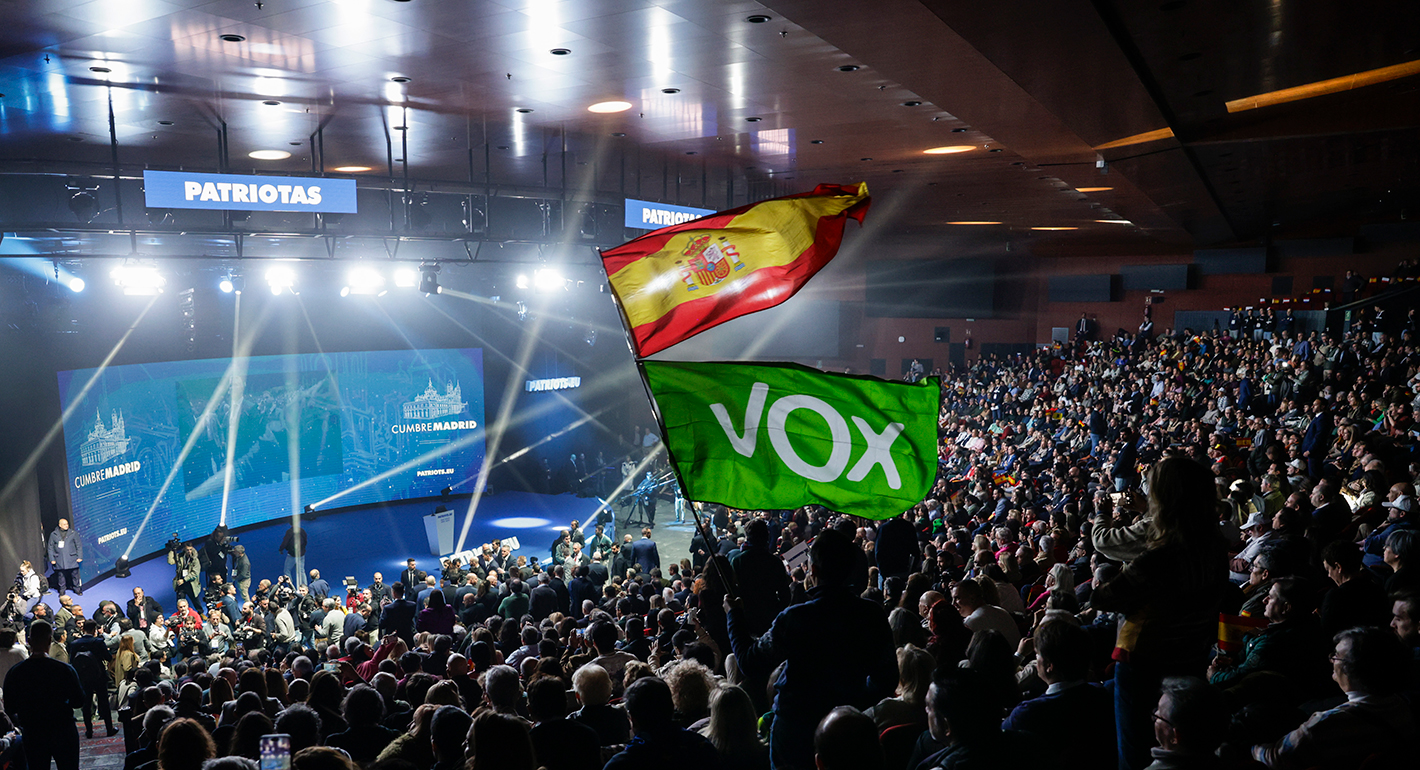
There is a transnational far-right populist movement that links middle powers in a global movement that extends well beyond Trump.

Christopher S. Chivvis, Rohan Mukherjee, Milan Vaishnav
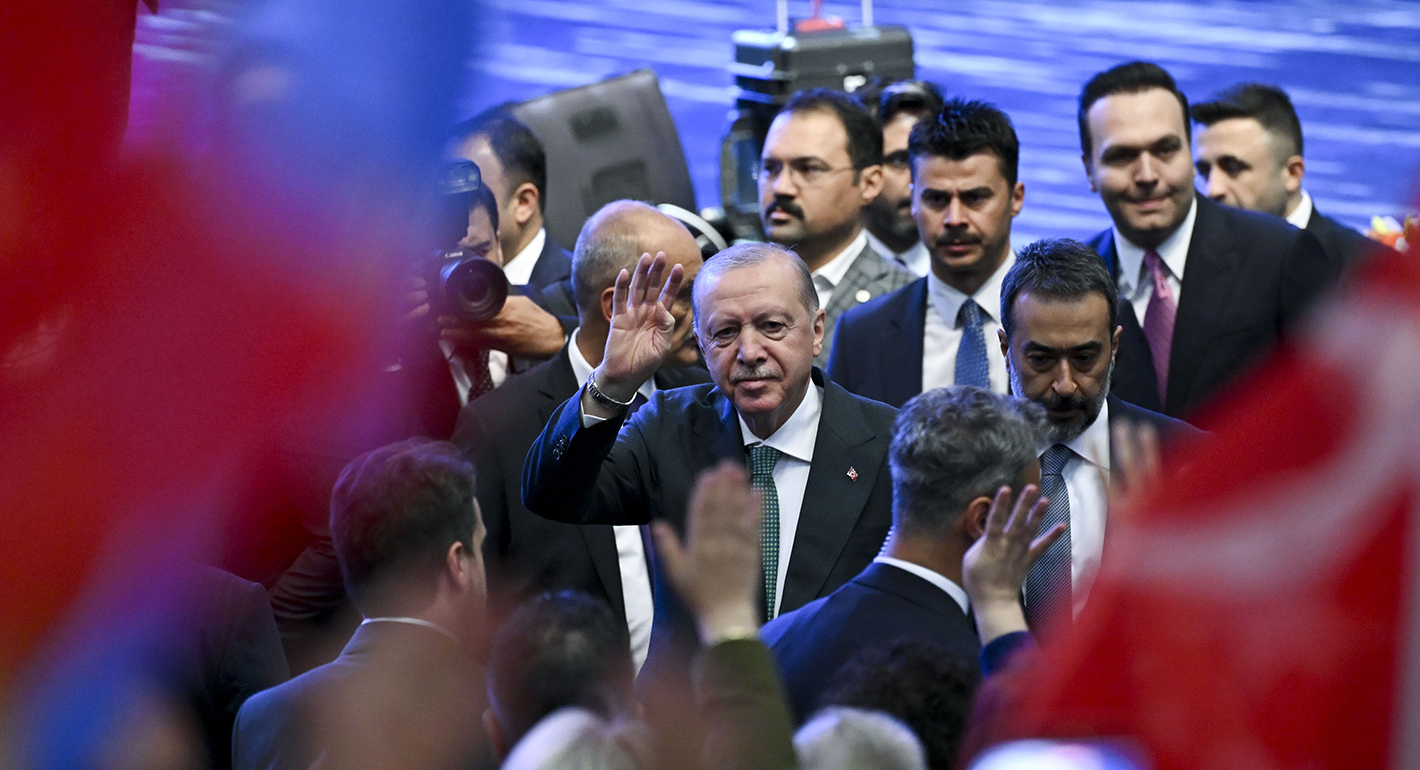
Turkish right-wing populists have been trying to advance the country’s middle-power goals based on perceptions of what the public wants, but they have been doing so in ways that reinforce their project of autocratic political consolidation.

Murat Somer
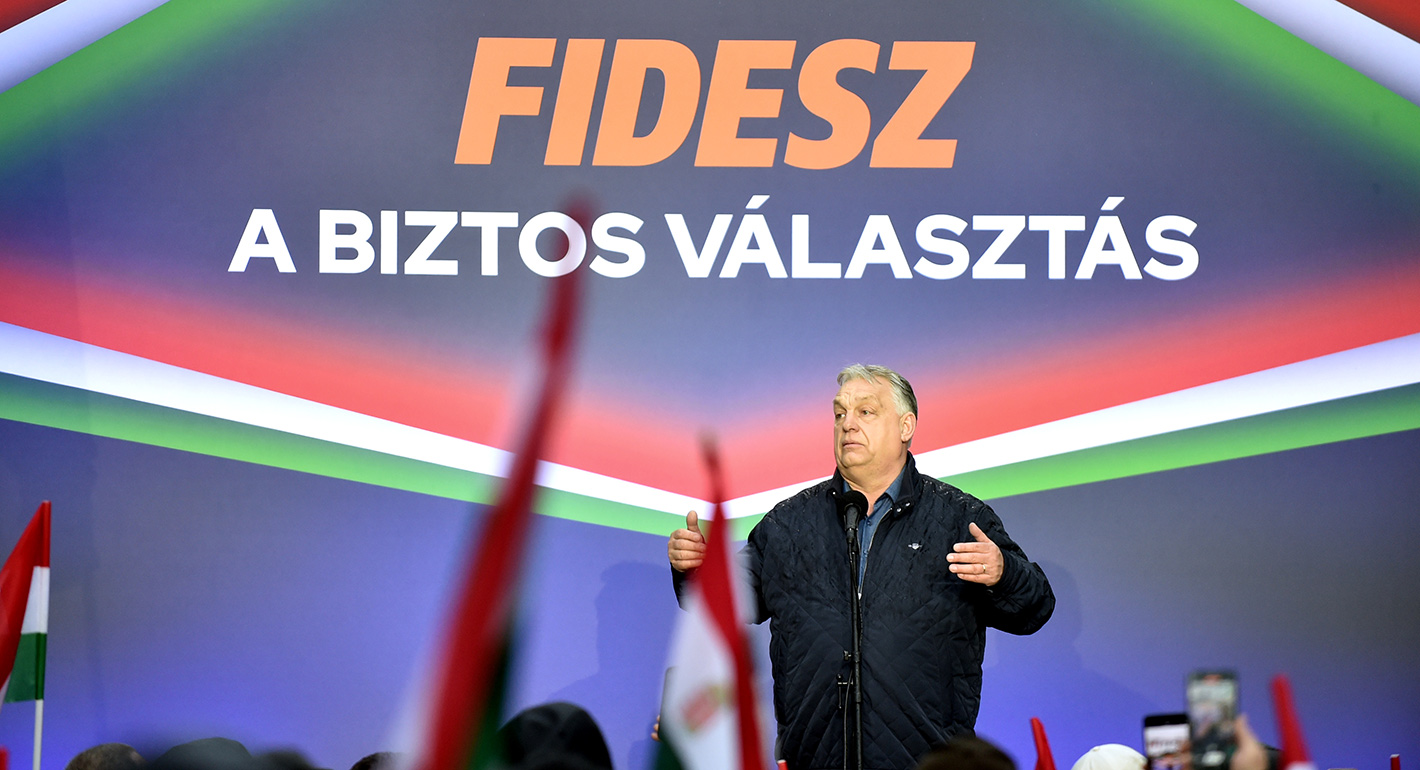
Hungary under Viktor Orbán deployed right-wing populism as a foreign policy strategy, embedding the country in a web of illiberal transnational networks whose legacy will endure even after his April 2026 electoral defeat.
Zsuzsanna Végh
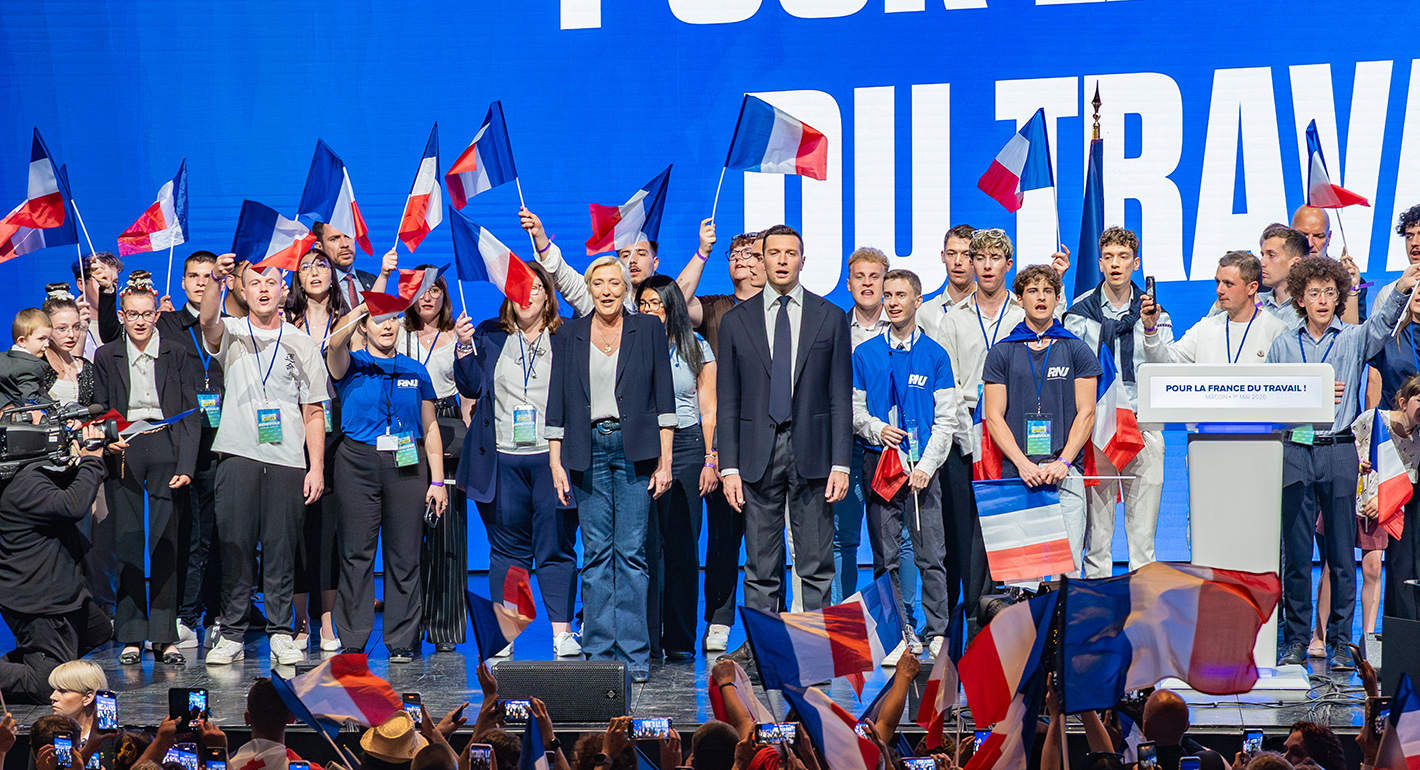
The National Rally’s electoral strength, coupled with its internal fragility at a crucial political juncture, contributes to foreign policy vagueness.

Catherine Fieschi
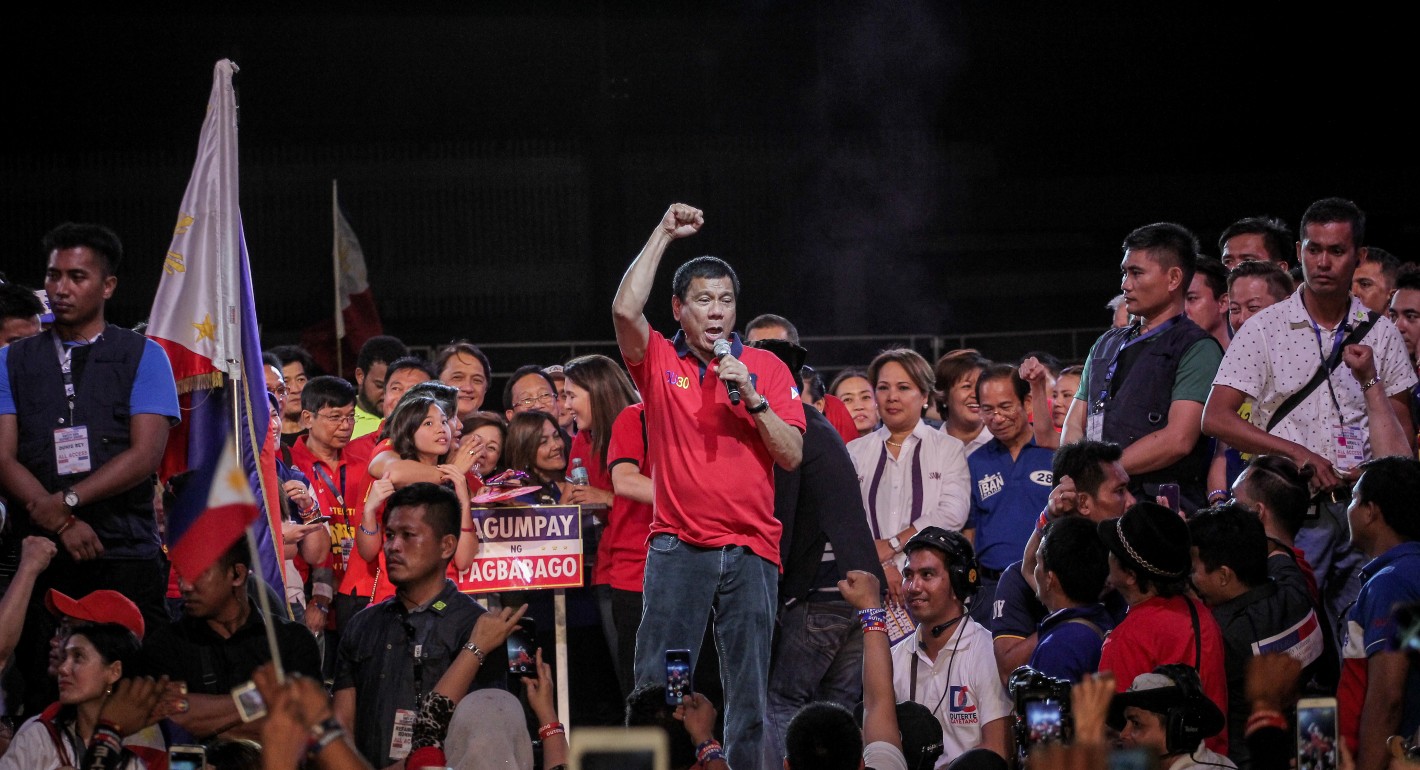
In the Philippines, Duterte-era discourse emphasizing sovereignty, anti-Western skepticism, and strongman diplomacy mirrors tenets of populist foreign policy around the world.
Aries A. Arugay