• Research
  • Emissary
  • About
  • Experts
Carnegie Global logoCarnegie lettermark logo
DemocracyIran
  • Donate
{
  "authors": [
    "Deborah Gordon"
  ],
  "type": "legacyinthemedia",
  "centerAffiliationAll": "dc",
  "centers": [
    "Carnegie Endowment for International Peace"
  ],
  "collections": [],
  "englishNewsletterAll": "ctw",
  "nonEnglishNewsletterAll": "",
  "primaryCenter": "Carnegie Endowment for International Peace",
  "programAffiliation": "SCP",
  "programs": [
    "Sustainability, Climate, and Geopolitics"
  ],
  "projects": [
    "Carnegie Oil Initiative"
  ],
  "regions": [
    "North America",
    "Caucasus",
    "Western Europe"
  ],
  "topics": [
    "Climate Change"
  ]
}
Source: Getty

In The Media

Quest in Search of Itself

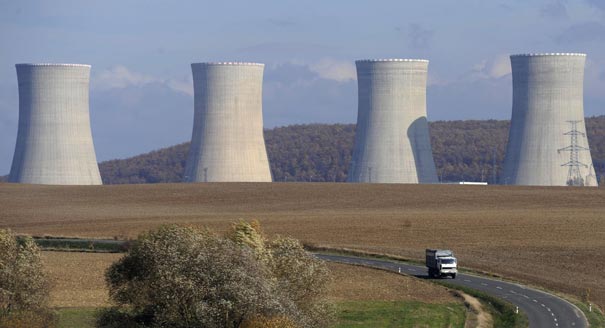
Charting a global energy future requires that world navigate the inherent risks and challenges that oil, gas, nuclear, and other energy sources portend.

Link Copied
By Deborah Gordon
Published on Sep 1, 2011
Program mobile hero image

Program

Sustainability, Climate, and Geopolitics

The Sustainability, Climate, and Geopolitics Program explores how climate change and the responses to it are changing international politics, global governance, and world security. Our work covers topics from the geopolitical implications of decarbonization and environmental breakdown to the challenge of building out clean energy supply chains, alternative protein options, and other challenges of a warming planet.

Learn More
Project hero Image

Project

Carnegie Oil Initiative

The Carnegie Oil Initiative analyzed global oils, assessing their differences from climate, environmental, economic, and geopolitical perspectives. This knowledge provides strategic guidance and policy frameworks for decision making.

Learn More

Source: Finance & Development

Quest in Search of ItselfDaniel Yergin’s stimulating new book, The Quest, offers an informative guide to how energy shapes and is shaped by global economics, power, and security. Yergin has taken on a large and complex subject. But he makes his lengthy book accessible to a broad audience by developing his analysis through hundreds of short vignettes, many of which are rich in historical details. General readers will learn a great deal about the wide world of energy on which we depend so completely—how it came to be the way it is and how it works. Energy experts, while not the primary audience, will gain a greater appreciation for the complex interplay of technology, markets, environments, and politics in today’s energy debate.

Yergin begins his story on December 31, 1991, the day the former Soviet Union ceased to exist. Readers may wonder (as I did) why a story about energy begins in Russia, out of the spotlight of the infamous Middle East. The reason is that this energy superpower is struggling with the many blessings and curses of an oil and gas economy. Russia has the potential to redraw the world map of fossil fuels, but it still has to get its own house in order. It must become much more efficient, orderly, and organized. And Russia must dial down domestic dependence on natural resources to capitalize on its vast natural resource wealth.

 

About the Author

Deborah Gordon

Former Director and Senior Fellow, Energy and Climate Program

Gordon was director of Carnegie’s Energy and Climate Program, where her research focuses on oil and climate change issues in North America and globally.

    Recent Work

  • Article
    Petroleum Companies Need a Credible Climate Plan

      Deborah Gordon, Stephen D. Ziman

  • Article
    Advancing Public Climate Engineering Disclosure

      Deborah Gordon, Smriti Kumble, David Livingston

Deborah Gordon
Former Director and Senior Fellow, Energy and Climate Program
Deborah Gordon
Climate ChangeNorth AmericaCaucasusWestern Europe

Carnegie does not take institutional positions on public policy issues; the views represented herein are those of the author(s) and do not necessarily reflect the views of Carnegie, its staff, or its trustees.
More Work from Carnegie Endowment for International Peace

  • Article
    China Is Building New Financial Architecture for Clean Energy Tech. It May Come with Conditions.

    China’s central bank swap lines could help developing world leaders drive their energy transition—if they harness conditionality to protect their interests.

      Ebipere K. Clark

  • Commentary
    Carnegie Politika
    What Does Pashinyan’s Parliamentary Victory Mean for Armenia’s Future?

    Pashinyan’s pro-European party has been re-elected with a decisive victory. But the pro-Russian opposition could still slow Armenia’s progress toward peace with Azerbaijan and rapprochement with Europe.

      Mikayel Zolyan

  • Europe trade economy container supply chains
    Paper
    From Trade Dependence to Geopolitical Leverage: The EU in an Era of Weaponized Interdependence

    As geopolitical rivalry weaponizes global supply chains, the EU’s true vulnerability lies in emerging-risk imports. For these goods, suppliers are growing more concentrated, substitution more difficult, and political risk is looming.

      Sinan Ülgen

  • Photo of flames behind palm trees in a residential neighborhood in Altadena, California.
    Article
    Reimagining Disaster Response in the Age of Chaotic Austerity

    It’s the early days of a new architecture for disaster recovery. Now is the time to build a better, more adaptive funding ecosystem.

      • Sarah Labowitz
      • Photo of Katie Mears.

      Sarah Labowitz, Katie Mears

  • Commentary
    Reviving Kosovo-Serbia Normalization Talks

    Three years after the Ohrid Agreement, Kosovo and Serbia remain far from normalization. To revive implementation, the EU should abandon its ambiguity and act as an even-handed arbitrator.

      • +1

      Miloš Pavković, Fitim Gashi, Iliriana Gjoni, …

Get more news and analysis from
Carnegie Endowment for International Peace
Carnegie global logo, stacked
1779 Massachusetts Avenue NWWashington, DC, 20036-2103Phone: 202 483 7600
  • Research
  • Emissary
  • About
  • Experts
  • Donate
  • Programs
  • Events
  • Blogs
  • Podcasts
  • Contact
  • Annual Reports
  • Careers
  • Privacy
  • For Media
  • Government Resources
Get more news and analysis from
Carnegie Endowment for International Peace
© 2026 Carnegie Endowment for International Peace. All rights reserved.