• Research
  • Emissary
  • About
  • Experts
Carnegie Global logoCarnegie lettermark logo
DemocracyIran
  • Donate
{
  "authors": [
    "George Perkovich"
  ],
  "type": "other",
  "centerAffiliationAll": "dc",
  "centers": [
    "Carnegie Endowment for International Peace"
  ],
  "collections": [],
  "englishNewsletterAll": "ctw",
  "nonEnglishNewsletterAll": "",
  "primaryCenter": "Carnegie Endowment for International Peace",
  "programAffiliation": "NPP",
  "programs": [
    "Nuclear Policy",
    "South Asia"
  ],
  "projects": [],
  "regions": [
    "South Asia",
    "Pakistan"
  ],
  "topics": [
    "Security",
    "Foreign Policy",
    "Nuclear Policy"
  ]
}
Source: Getty

Other

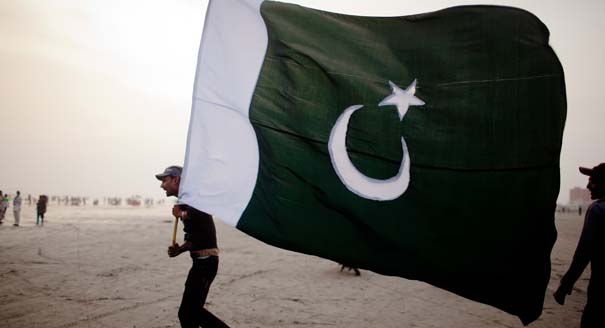
Stop Enabling Pakistan's Dangerous Dysfunction

Because the U.S. withdrawal from Afghanistan means that Washington will be less dependent on Pakistani supply lines, it presents a rare opportunity to reconsider American policies and practices in Pakistan.

Link Copied
By George Perkovich
Published on Sep 6, 2011
Program mobile hero image

Program

Nuclear Policy

The Nuclear Policy Program aims to reduce the risk of nuclear war. Our experts diagnose acute risks stemming from technical and geopolitical developments, generate pragmatic solutions, and use our global network to advance risk-reduction policies. Our work covers deterrence, disarmament, arms control, nonproliferation, and nuclear energy.

Learn More
Program mobile hero image

Program

South Asia

The South Asia Program informs policy debates relating to the region’s security, economy, and political development. From strategic competition in the Indo-Pacific to India’s internal dynamics and U.S. engagement with the region, the program offers in-depth, rigorous research and analysis on South Asia’s most critical challenges.

Learn More
As the United States begins to look to the end of its heavy fighting role in Afghanistan, it needs to confront the more important question of Pakistan’s future. The United States has been a major player there for sixty years; if Pakistan is dangerously dysfunctional, Washington helped enable it to get this way. Because withdrawal from Afghanistan means that the United States will be less dependent on Pakistani supply lines into that country, this is a rare opportunity to reconsider and dramatically revise American policies and practices in this strategically important country of almost 200 million.
 
The United States has frequently cited its interests in Pakistan: securing Pakistan’s growing nuclear arsenal; preventing war between it and India; counterterrorism; inducing Pakistan’s cooperation in stabilizing Afghanistan; and fostering development and democratization in what will soon be the world’s most populous Muslim-majority state. But overwhelmingly, these interests all boil down to one: the security of Pakistanis. If Pakistanis are more justly governed, more educated, more employed, and therefore more able to define and pursue a constructive national identity and interest, they will expunge terrorists to secure themselves. The United States will be better off as a result. Getting from here to there may be impossible, but it certainly will not happen if the United States continues to treat Pakistan as it has until now: as the means to pursue U.S. security interests outside the country.
 
For decades that posture has had the unintended but undeniable effect of empowering Pakistan’s grossly oversized and hyperactive military and intelligence services at the expense of the country’s civil society and progress toward effective governance. Washington’s collusion with the Pakistani security establishment has amounted to enablement—the indulgence and augmentation of a friend’s self-destructive outlook and actions. To stop doing harm, the United States would first have to give up the illusion that it can change the Pakistani military’s mindset, and stop offering money to do so. It would have to pause and then redesign a large aid program so hamstrung by anti-corruption and security measures that it antagonizes recipients and seems designed to fail. It would mean removing barriers to Pakistani imports into the United States, and, not least, undertaking determined efforts to correct the impression that Pakistani interests and lives mean less to the United States than Indian interests and lives.

About the Author

George Perkovich

Japan Chair for a World Without Nuclear Weapons, Senior Fellow

George Perkovich is the Japan Chair for a World Without Nuclear Weapons and a senior fellow in the Carnegie Endowment for International Peace’s Nuclear Policy Program. He works primarily on nuclear deterrence, nonproliferation, and disarmament issues, and is leading a study on nuclear signaling in the 21st century.

    Recent Work

  • Paper
    How to Assess Nuclear ‘Threats’ in the Twenty-First Century

      George Perkovich

  • Commentary
    “A House of Dynamite” Shows Why No Leader Should Have a Nuclear Trigger

      George Perkovich

George Perkovich
Japan Chair for a World Without Nuclear Weapons, Senior Fellow
George Perkovich
SecurityForeign PolicyNuclear PolicySouth AsiaPakistan

Carnegie does not take institutional positions on public policy issues; the views represented herein are those of the author(s) and do not necessarily reflect the views of Carnegie, its staff, or its trustees.
More Work from Carnegie Endowment for International Peace

  • Article
    India’s Oil Security Strategy: Structural Vulnerabilities and Strategic Choices

    This piece argues that the present Indian strategy, based on opportunistic diversification and utilization of limited strategic reserves, remains inadequate when confronting supply disruptions. It evaluates India’s options in the short, medium, and long terms.

      Vrinda Sahai

  • flood wall
    Commentary
    Emissary
    BRIC Is Critical for U.S. National Security. After a Yearlong Legal Battle, It’s Back.

    Its reinstatement should be celebrated, but it retains some major shortcomings.

      Leonardo Martinez-Diaz

  • Article
    Leveraging Internal Security Cooperation with Vietnam Offers a Glimpse of Future Chinese Diplomacy with Southeast Asia

    Despite long-standing differences, China and Vietnam are reinforcing common ground for collaboration, especially in public security. This internal security–centered diplomacy offers a strengthened road map for how China moves forward with Southeast Asia.

      Sophie Zhuang

  • Aerial shot of island community
    Commentary
    One Year After the Great Aid Recession, Investments in Climate Mobility Offer Cost-Effective Returns

    Climate mobility interventions can vary, but they all present opportunities to unlock transformative results that mitigate costs associated with inaction.

      • Alejandro Rodriguez

      Alejandro Martin Rodriguez

  • Man standing next to a pile of burned cars
    Commentary
    Emissary
    The Myriad Problems With the Iran Ceasefire

    Four Middle East experts analyze the region’s reactions and next steps.

      • Andrew Leber
      • Eric Lob
      • +1

      Amr Hamzawy, Andrew Leber, Eric Lob, …

Get more news and analysis from
Carnegie Endowment for International Peace
Carnegie global logo, stacked
1779 Massachusetts Avenue NWWashington, DC, 20036-2103Phone: 202 483 7600Fax: 202 483 1840
  • Research
  • Emissary
  • About
  • Experts
  • Donate
  • Programs
  • Events
  • Blogs
  • Podcasts
  • Contact
  • Annual Reports
  • Careers
  • Privacy
  • For Media
  • Government Resources
Get more news and analysis from
Carnegie Endowment for International Peace
© 2026 Carnegie Endowment for International Peace. All rights reserved.