

Q&A
Suzanne Maloney, Aaron David Miller, Karim Sadjadpour
{
  "authors": [
    "Karim Sadjadpour"
  ],
  "type": "legacyinthemedia",
  "centerAffiliationAll": "dc",
  "centers": [
    "Carnegie Endowment for International Peace",
    "Malcolm H. Kerr Carnegie Middle East Center"
  ],
  "collections": [],
  "englishNewsletterAll": "menaTransitions",
  "nonEnglishNewsletterAll": "",
  "primaryCenter": "Carnegie Endowment for International Peace",
  "programAffiliation": "MEP",
  "programs": [
    "Middle East"
  ],
  "projects": [],
  "regions": [
    "Middle East",
    "Iran",
    "Gulf"
  ],
  "topics": [
    "Political Reform",
    "Security"
  ]
}
Source: Getty
The decision by Iranian President Ahmadinejad to release two imprisoned American hikers is primarily part of an attempt to garner good will and demonstrate his political strength.
Source: CNN International
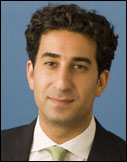
Speaking on CNN International, Carnegie's Karim Sadjadpour explained that the decision by Iranian President Ahmadinejad to release the two imprisoned American hikers is “certainly not coincidental.” Last year, days before Ahmadinejad’s trip to the UN General Assembly, he released the third hiker, Sarah Shourd, to garner some good will. Sadjadpour sugegsted that it would appear he is doing the same thing this year.
Moreover, Sadjadpour added, Ahmadinejad has recently been weakened domestically, so he is trying to prove that he can still deliver politically. Iran has a long history of hostage taking, Sadjadpour concluded. In the years since the Islamic revolution, “Turkey and Dubai have built thriving economies based on the trading of goods and services while Iran has continued to trade in human beings,” he said.

Senior Fellow, Middle East Program
Karim Sadjadpour is a senior fellow at the Carnegie Endowment for International Peace, where he focuses on Iran and U.S. foreign policy toward the Middle East.
Recent Work


Suzanne Maloney, Aaron David Miller, Karim Sadjadpour

Aaron David Miller, Karim Sadjadpour, Robin Wright
Carnegie does not take institutional positions on public policy issues; the views represented herein are those of the author(s) and do not necessarily reflect the views of Carnegie, its staff, or its trustees.
They face an uphill climb, but they could draw on a strategy that other diplomats have used in the past.


Shana Tabak, Alejandro Martin Rodriguez
Understanding the climatic pain points is necessary for policymakers hoping to minimize the war’s negative environmental consequences.


Alejandro Martin Rodriguez, Joy Arkeh, Sarah Yerkes

Huawei pushed hard to enter the Egyptian data centers market, until the Americans made a better offer.

Angie Omar

The books, podcasts, and films that explain the world it made.

Andrew Leber

In the tenth year of his presidency, President Mirziyoyev’s system is becoming even more personalized than that of his predecessor Karimov.

Galiya Ibragimova