

Commentary
- +2
Memduh Karakullukçu, Dmitri Trenin, Ümit Pamir, …
{
  "authors": [
    "Adnan Vatansever"
  ],
  "type": "legacyinthemedia",
  "centerAffiliationAll": "dc",
  "centers": [
    "Carnegie Endowment for International Peace",
    "Carnegie Europe"
  ],
  "collections": [],
  "englishNewsletterAll": "ctw",
  "nonEnglishNewsletterAll": "",
  "primaryCenter": "Carnegie Endowment for International Peace",
  "programAffiliation": "SCP",
  "programs": [
    "Sustainability, Climate, and Geopolitics"
  ],
  "projects": [],
  "regions": [
    "Russia",
    "Europe",
    "North America"
  ],
  "topics": [
    "Foreign Policy"
  ]
}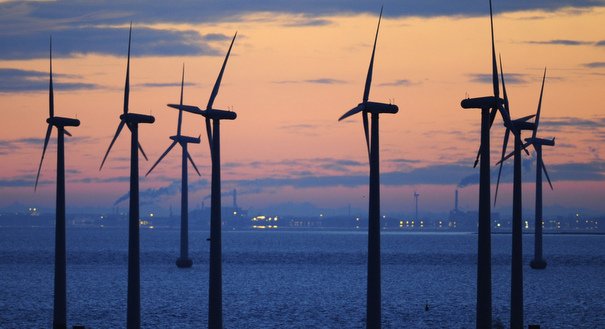
Source: Getty
A consolidated energy policy in Brussels will be critically important to the evolution of Europe's energy partnership with Russia.
Source: European Energy Review

The EU has for a long time been trying to forge a more effective approach in securing its energy future. With good reason. Europe stands at the center of international energy trade. It imports more oil and gas than the United States and China combined. More than 80 percent of Europe's oil and 60 percent of its gas come from abroad, with coal imports constituting an additional burden for its energy balance. And the dependence on foreign resources is only expected to grow, as domestic hydrocarbon output falls.
At long last, the EU has found the strength to take some convincing steps for building a unified external energy policy. In September, the European Commission adopted a communication on security of energy supply and international cooperation, outlining a fairly comprehensive approach for developing EU's external energy policy. Among other things, the Commission proposed the establishment of an information exchange mechanism in which it assigned itself an active role in the negotiation of energy deals with foreign countries. In addition, shortly after the proposal, the European Council approved a mandate for the European Commission to negotiate a legal framework agreement with Azerbaijan and Turkmenistan for a prospective gas pipeline under the Caspian Sea.
A consolidated energy policy with Brussels in the driver's seat will be critically important for how Europe's energy partnership with Russia evolves. Russia is Europe's chief supplier of not only gas, but also oil, coal, and uranium. Managing this level of dependence has been a challenge.
This challenge will keep getting bigger for the foreseeable future and continue to highlight the ever growing importance for a common European voice, for three main reasons.
First, at a time of historically high energy prices negotiating with a supplier can be a demanding experience. Barring a prolonged global recession, most respected agencies foresee that the world is highly unlikely to return to the era of low energy prices. A spike in prices translates into substantial welfare losses for Europe. Attempts to minimize these losses through revision of oil-indexed contracts could remain a major source of strain in corporate relations with Gazprom.
Second, in the next decade and beyond, the importance of natural gas for the Russian economy will rise. At this moment, Russia has a two-engine economy that is driven largely by oil and gas to secure the bulk of its export and budget revenues. The oil engine, however, is slowing down as it is nearing its peak output. It is the gas engine that is expected to derive increasing income for Russia as gas production and exports continue their upward trend. With gas growing in significance, Russian leaders will rigorously try to defend their market position in Europe. Predictably, an EU mandate for negotiating a trans-Caspian pipeline has attracted the wrath of Moscow officials.
Third, Russia and China are working on a gas deal that could harm Europe's energy security. The two big neighbors have so far failed to strike a deal as they have been unable to agree on the price. But an agreement is not out of question and it would potentially come with substantial repercussions for how Russia negotiates with Europe on future gas exports.
Thus, the EU needs a single voice in its external energy policy more than ever. In this regard, the Commission's recent proposals are very timely. If Europe successfully develops an integrated energy policy abroad, it could form the basis for more stable relations with Russia. Steps in the direction of greater transparency in foreign gas deals and possibly bringing Caspian gas to Europe could help allay the EU's often overblown fears of dependence on Russian gas.
On the other hand, it is not clear how Russia will react to a more centralised European approach. Moscow will remain worried about future European demand for Russian energy exports, and there is a risk that Brussels's growing voice could aggravate Moscow’s feeling of insecurity. More aggressive attempts to prevent alternative gas pipelines from reaching Europe and a growing hunger for European assets may ensue.
For this reason, relations need to be managed delicately. Europe's path to a sustainable solution for its energy security should go through engaging all parties, and certainly its main energy partner. For Europe, providing a clearer picture about the future role of natural gas in its energy balance would be a good start. Russian officials, on the other hand, need to realize that unless they collaborate with Europe in building a transparent and competitive gas market, the EU's sense of insecurity will not get any better.

Former Senior Associate, Energy and Climate Program
Vatansever was a senior associate in the Energy and Climate Program where he specializes in the energy sectors of the former Soviet republics and Eastern Europe.
Recent Work
Memduh Karakullukçu, Dmitri Trenin, Ümit Pamir, …
Adnan Vatansever, Анна Корппоо
Carnegie does not take institutional positions on public policy issues; the views represented herein are those of the author(s) and do not necessarily reflect the views of Carnegie, its staff, or its trustees.

For every ruble allocated to social policy, health, and education in 2027, double that amount is earmarked for the army, the police, and the security services.

Alexandra Prokopenko

The acknowledgment has sparked fears of a new arms race with China and Russia.

Chris O’Meara
Smaller powers cannot go it alone, but Canadian history shows that integration with the United States will not always be benign.
Paul Samson

The European Commissioner for Trade is headed to China. But after President Xi’s bridge-building visit to Washington, can a more isolated EU overcome Beijing’s stranglehold on critical raw materials? Who will blink first?

Rym Momtaz, ed.
The summit may be remembered as a fatal blunder, when Washington, Beijing, and the AI industry collectively chose ceremony over action.

Jeffrey Prescott