

Q&A
- +1
Amr Hamzawy, Andrew Leber, Eric Lob, …
{
  "authors": [
    "Marwan Muasher"
  ],
  "type": "legacyinthemedia",
  "centerAffiliationAll": "dc",
  "centers": [
    "Carnegie Endowment for International Peace",
    "Malcolm H. Kerr Carnegie Middle East Center"
  ],
  "collections": [],
  "englishNewsletterAll": "menaTransitions",
  "nonEnglishNewsletterAll": "",
  "primaryCenter": "Carnegie Endowment for International Peace",
  "programAffiliation": "MEP",
  "programs": [
    "Middle East"
  ],
  "projects": [],
  "regions": [
    "Middle East",
    "Israel",
    "North Africa",
    "Palestine",
    "Saudi Arabia",
    "Levant"
  ],
  "topics": [
    "Security"
  ]
}
Source: Getty
As the tenth anniversary of the Arab Peace Initiative approaches, Israel's concern that a more hostile neighborhood is emerging risks becoming a self-fulfilling prophecy if the country does not try to find a serious resolution to the conflict.
Source: Atlantic

The idea of the plan was simple yet powerful. To jump-start the deadlocked Israeli-Palestinian negotiations, the Arab countries would offer Israel a collective security and peace agreement, a mutually-agreeable resolution of the refugee issue, and an end to the conflict and all claims. By withdrawing from Syrian and Lebanese territories, ending its occupation of the West Bank and Gaza Strip, and allowing the establishment of a Palestinian state, Israel would receive security guarantees from all Arab states and would be accepted permanently in the region. (For more on the role of the Arab Peace Initiative in ensuring Israel's security, see the Security chapter of "Is Peace Possible?" on The Atlantic.)
The Israeli government outright rejected the offer, with then-Prime Minister Ariel Sharon citing the Arab Peace Initiative's reference to UN Resolution 194 -- which calls for the right of Palestinian refugees to return to Israel. (Sharon ignored the key phrase in the proposal that any solution needed to be agreed to by both sides.) The Bush administration, for its part, gave the proposal lip service but lukewarm support at best.
Arab states are often blamed for not properly marketing the offer directly to the Israeli public. This argument, while not without merit, still ignores the responsibilities of the United States and Israel. As the main sponsor of the peace process, the United States has the duty to make use of rare opportunities when they present themselves. And Israel brushed the proposal aside without presenting any ideas of its own.
Despite this chilly reception, as well as the subsequent political difficulties surrounding the peace process in the last ten years, not one Arab country has withdrawn its signature. Does that mean the Arab Peace Initiative is a permanent offer and resilient to all pressures? Hardly.
There are two factors that are placing significant stress on the initiative. The first is the historical transformation that the Arab world is experiencing. Arab publics, who have caused the overthrow of three Arab leaders so far, are increasingly disparaging of an Israeli occupation that has become, just like the status quo in the Arab world, unsustainable.
It is a huge mistake to assume that, because Arab protestors did not raise anti-Israel slogans in their protests against the low level of governance in their countries, they have stopped caring about the issue. The recent storming of the Israeli embassy in Cairo is but one rejoinder to the contrary. As new Arab governments emerge in Egypt, Tunisia, and elsewhere, they will be more responsive to public mood and will not be hesitant in voicing their rejection of an occupation that has become seemingly endless.
While I do not believe the Egyptian-Israeli or Jordanian-Israeli peace treaties are in jeopardy, it will be impossible to forge new ones in the current context. Israel's concern that a more hostile neighborhood is emerging will become a self-fulfilling prophecy if it does not try to find a timely end to the occupation and a serious resolution to the conflict. The initiative's main allure -- an agreement with all Arab states -- is becoming increasingly unlikely under the present circumstances.
The second factor is biological. King Abdullah of Saudi Arabia is the last Arab leader of the stature required to protect the Arab Peace Initiative and the principles behind it. As someone who was intimately involved in the development of the Arab Peace Initiative and who attended the Beirut Arab Summit where it was signed and launched in March 2002, I can attest that King Abdullah played a critical role in circumventing possible dissent by some Arab countries and ensuring that the initiative was passed unanimously. But he is now 87 years old and once he leaves the scene, the initiative might very well tear apart at the seams.
Many analysts have dismissed the idea of a timely effort to resolve the conflict now as naïve and unrealistic -- wishful thinking that ignores reality. But while it is difficult to solve the conflict today, it may be impossible to solve in the near future. We might not see an official death notice for the Arab Peace Initiative, but it is unrealistic to expect that it well be on the table indefinitely in light of recent developments in the region. Reaching a peace agreement between Israelis and Palestinians will be infinitely more challenging without the support of the Arab countries.
A famous joke in the Arab world tells the story of a computer placed outside a train station that identifies people and answers their questions. "Who am I?" asks a skeptical traveler. The computer simply says, "You are Ahmad and you are waiting for your train that will leave in one hour." Ahmad is impressed but wants to further test the machine. He puts on a hat, wears sunglasses, fakes a limp, and approaches the computer again. "Who am I?" he asks again. "You are still Ahmad and your train will leave in half an hour." Ahmad decides to make it even harder. He buys a woman's outfit and puts on elaborate makeup. He finally approaches the computer again. "Who am I?" he asks a third time. "You are still Ahmad," the computer responds, "and you kept playing games until the train just passed you by."

Vice President for Studies
Marwan Muasher is vice president for studies at Carnegie, where he oversees research in Washington and Beirut on the Middle East. Muasher served as foreign minister (2002–2004) and deputy prime minister (2004–2005) of Jordan, and his career has spanned the areas of diplomacy, development, civil society, and communications.
Recent Work



Amr Hamzawy, Andrew Leber, Eric Lob, …
Marwan Muasher
Carnegie does not take institutional positions on public policy issues; the views represented herein are those of the author(s) and do not necessarily reflect the views of Carnegie, its staff, or its trustees.

Europe is facing rising populism internally as well as external pressures from Russia, China, Turkey, and the United States.

Dimitar Bechev
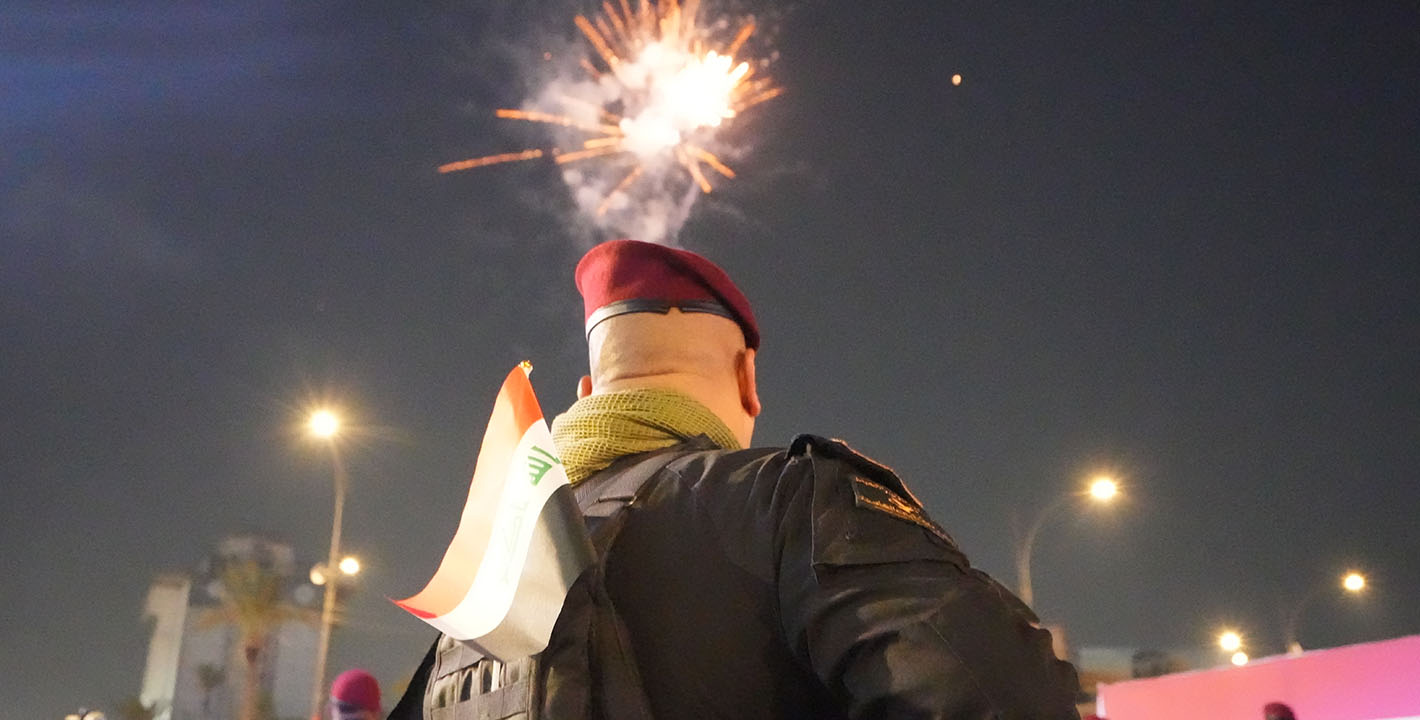
As the U.S.-led Coalition withdraws, the Kurds’ reliance on Baghdad, and on themselves, will only increase.
Wladimir van Wilgenburg
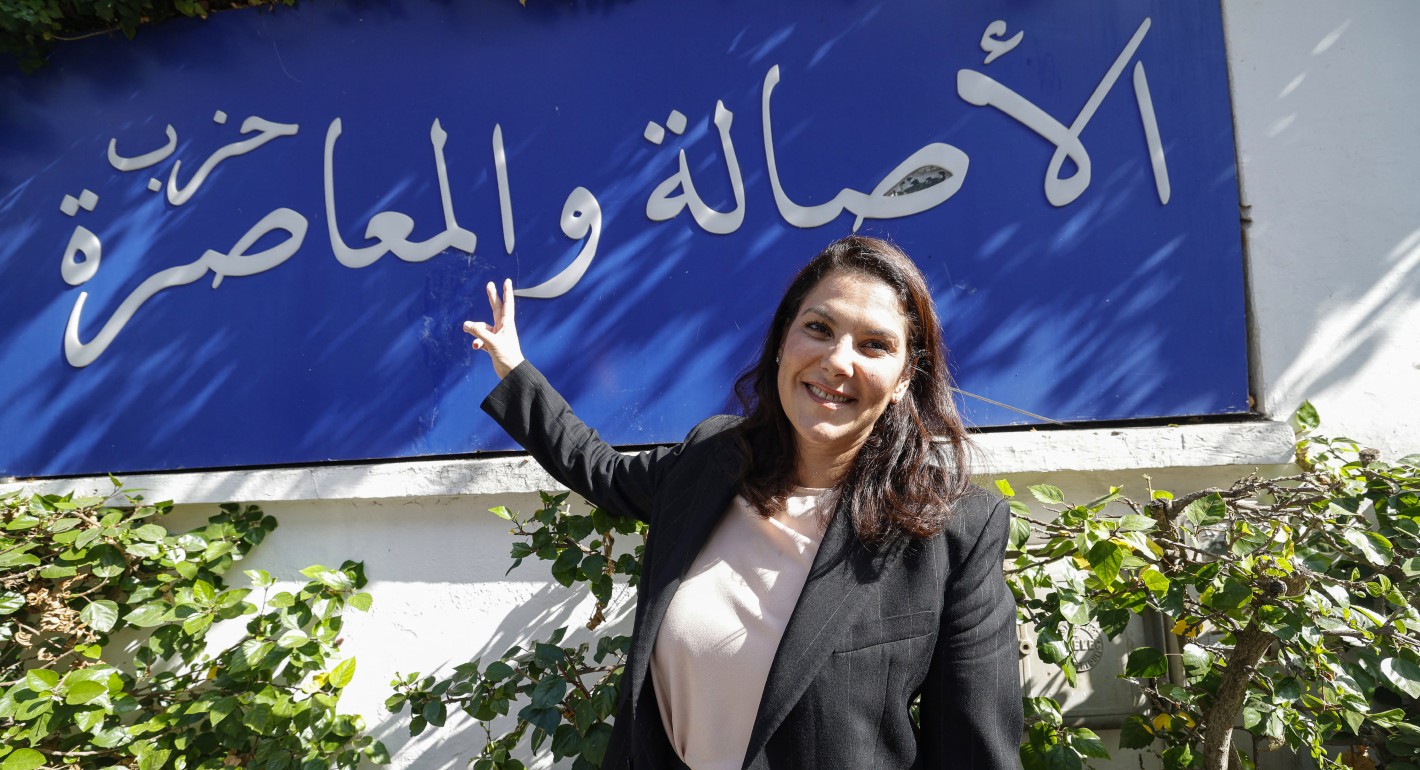
Fatima El Mansouri is the country’s first female prime minister. She’s also a privileged insider in a largely ceremonial position.

Sarah Yerkes

In an interview, Ian Lustick and Eli Clifton discuss their new book on why a prominent ally has so much influence in America.

Michael Young

The Horn of Africa countries are among those facing a new security calculus.

Andrew Leber, Lesley Anne Warner