

In The Media
Kevin Jianjun Tu
{
  "authors": [
    "Kevin Jianjun Tu"
  ],
  "type": "legacyinthemedia",
  "centerAffiliationAll": "dc",
  "centers": [
    "Carnegie Endowment for International Peace",
    "Carnegie China"
  ],
  "collections": [],
  "englishNewsletterAll": "ctw",
  "nonEnglishNewsletterAll": "",
  "primaryCenter": "Carnegie China",
  "programAffiliation": "SCP",
  "programs": [
    "Sustainability, Climate, and Geopolitics"
  ],
  "projects": [
    "Carnegie Oil Initiative"
  ],
  "regions": [
    "North America",
    "East Asia",
    "China"
  ],
  "topics": [
    "Climate Change"
  ]
}
Source: Getty
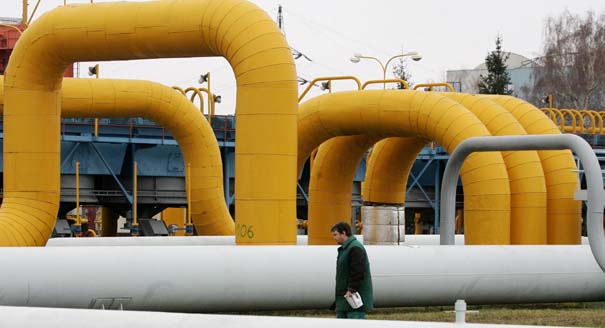
Chinese imports of Canadian oil sands would strain the Sino-U.S. relationship, be detrimental to China's international climate change negotiations, and face opposition from indigenous and environmental groups in Canada.
Source: Phoenix News Group

Given that 99 percent of Canadian oil exports are destined for the U.S. market, the Obama administration’s decision is a big blow to the ambitious oil-sands-development agenda set by the conservative Canadian government. To diversify its oil exports away from the U.S. market, Harper promptly turned to Enbridge's plan for the construction of the Northern Gateway pipeline. That pipeline would move synthetic crude and bitumen from Edmonton in Alberta to the west coast of Canada—and then it could be shipped directly to China. The export of Canadian oil sands output was thus a key issue underlying Harper’s visit to China.
Oil sands consist of a naturally occurring mixture of bitumen, sand, clay, or other minerals and water. Alberta's total oil sands reserves amount to the equivalent of 169.3 billion barrels of crude, which means Canada has the third-largest proven oil reserves worldwide, ranking only behind Saudi Arabia and Venezuela. Compared to conventional oil extraction, oil sands development is not only technologically more sophisticated but also more energy intensive. Nevertheless, recent spikes in global crude oil prices and technological breakthroughs in oil sands extraction and processing have led to an increase in Canada’s oil sands output from 0.61 million barrels per day in 2000 to 1.47 million barrels per day in 2010. According to the most recent forecast by the Canadian Association of Petroleum Producers, Canada’s oil sands output could be as high as 3.73 million barrels per day by 2025.Since China first became a net oil importer in 1993, its national oil consumption has grown rapidly at an average of 6.5 percent annually, making the country the world’s second-largest oil consumer after the United States. In comparison, China’s oil output has increased at an average annual rate of only 2 percent during the same period. As a result, China has become increasingly reliant on imported oil, currently depending on imported oil to meet more than half of its oil demand. Furthermore, as China sources most of its oil imports from politically unstable countries in the Middle East and Africa, energy security has become an increasingly imperative policy challenge for Chinese decisionmakers.
Considering the complementary nature of the two country’s energy sectors, at first glance Harper’s exporting proposal seems like a win-win initiative for both China and Canada. The Northern Gateway pipeline is designed to provide a crude oil export capacity of 525 thousand barrels per day, which could ultimately be expanded to 850 thousand barrels per day. The completion of the pipeline could not only reduce Canada’s overreliance on the U.S. market, but also help China diversify its oil supply. An additional advantage for China is Canada’s stable political and transparent regulatory environment, which makes large-scale imports from Canadian oil sands attractive to Chinese decisionmakers.
However, looking beyond the energy-security perspective, Canadian oil sands exports to China are actually politically troublesome, largely due to three factors: the strain such a move would put on the Sino-U.S. relationship, the detrimental impact the deal would have on China’s international climate change negotiations, and the strong opposition from environmental groups and indigenous communities in Canada.
First, Canadian oil sands exports to China could further strain the already turbulent Sino-U.S. relationship. In 2012, a presidential election year, the Obama administration rejected TransCanada’s application to build the Keystone XL pipeline. The move stemmed from strong Democratic and environmentalist opposition to the deal—Obama would have risked losing the pro-environment electorate if he approved the plan. Yet, the Democratic Party has been unable to reach a consensus on this contentious issue, and the U.S. State Department has agreed to allow TransCanada to reapply for a Keystone XL permit once an alternative route that avoids particularly environmentally sensitive sites is selected.
By comparison, almost all congressional Republicans strongly support the Keystone XL pipeline. Arguing that turning down the pipeline will harm U.S. energy security, kill U.S. jobs, and unnecessarily benefit China, they have vigorously attacked Obama’s decision. Any renewed support for the Northern Gateway pipeline by Chinese national oil companies would shift the focus of the Keystone XL debate within the United States from the environment to national security—a prevailing fear, especially among congressional Republicans, is that without Keystone, China will beat the United States to Canada’s rich oil reserves. A desire to shift the debate to national security in the United States may even be driving the Canadian government’s public support of the Northern Gateway pipeline.
Second, large-scale Chinese imports of output from Canadian oil sands would come with a high price tag for China’s future international climate negotiations. According to the revised national Energy Balance Table, China surpassed the United States to become the world’s largest carbon emitter as early as 2006. In 2009, emissions from Chinese coal combustion alone exceeded total U.S. carbon dioxide emissions. According to the International Energy Agency, China is expected to account for 42 percent of global incremental carbon emissions by 2035.
Nevertheless, under the 2011 Durban Platform for Enhanced Action, China has already said it will join a legally binding international climate treaty that will be agreed upon by 2015 and will come into force by 2020. As a result, during future international climate negotiations, China is expected to face increasingly higher pressure from the international community to retard its spiking carbon emissions.
According to the Canadian Industrial Energy End-Use Data and Analysis Center, carbon-emission intensities of upstream oil sands production are generally one to four times higher than conventional oil extraction. Although recent “well-to-wheels” studies have found that the life-cycle emissions of oil-sands-based products are only 5 to 15 percent higher than those of conventional oil products, such analyses likely overlook the substantial carbon-emissions potential that is embedded in the large amount of carbon-intensive oil sands byproducts, such as petroleum coke. According to Environment Canada, oil sands development and the transportation sector are the primary drivers underlying the growth of Canada’s greenhouse gas emissions.
In order to allow room for the emissions that would result from oil sands development, and to save $14 billion in penalties for not achieving its Kyoto targets, the Canadian government withdrew from the Kyoto Protocol right after the Durban climate conference, without adequate consideration of the criticism it would receive from the international community. Large-scale Chinese imports of Canadian oil sands output would correspond to de facto support of Canada’s environmentally irresponsible climate policy. Not surprisingly, Chinese imports from Canada’s oil sands would not only be criticized by the international environmental community but would also make the work of China’s climate negotiation delegation much more difficult in the future.
Finally, strong opposition to the Northern Gateway pipeline from environmental organizations and Canada’s indigenous community is another important issue that China should not ignore. As early as 2005, PetroChina, the listed arm of China’s largest national oil company, signed a cooperation agreement with Enbridge to support the Northern Gateway pipeline. However, after Stephen Harper came into power in 2006, Sino-Canadian relations soon deteriorated. Citing a lack of support from the Canadian federal government, PetroChina withdrew from the pipeline project in 2007 but forgot to mention the other serious impediment to the deal—strong opposition from both environmental organizations and indigenous communities along the pipeline route.
Although the Canadian government now seems to be supportive of the pipeline, it will still be unable to address environmental concerns and the indigenous community’s opposition to pipeline construction in the near future. Consequently, Enbridge’s application for the pipeline is expected to be a prolonged process, which will inevitably increase the financial risks of the project.
To enhance China’s energy security, Chinese national oil companies have significantly expanded their overseas presence in recent years. But, due to the monopoly status they have long enjoyed domestically, these companies often evaluate overseas projects primarily on the basis of energy security and corporate bottom line. However, many other factors are at play, and such practices have made securing a return on some Chinese overseas investments problematic at most.
Importing output from Canadian oil sands is likewise complicated. Chinese leaders should prohibit national oil companies’ involvement in the Northern Gateway pipeline, at least during a U.S. presidential election year, or they risk stirring up a national security debate in the United States and inflaming Sino-U.S. relations. After the conclusion of the Chinese political power transition by the end of 2012, the new Chinese leadership should not only fundamentally reform China’s energy-oversight mechanism, which has so far failed to adequately regulate Chinese national oil companies, but also significantly improve intergovernmental coordination. This would lead Chinese national oil companies to, in addition to focusing on national energy security and their corporate bottom line, take other important factors such as Sino-U.S. relations, environmental governance, and the host country’s internal politics into consideration when they make future overseas investment decisions.
This article originally appeared in Chinese in the Phoenix News Group.

Former Senior Associate , Energy and Climate Program
Tu was a senior associate in Carnegie’s Energy and Climate Program, where he led the organization’s work on China’s energy and climate policies.
Recent Work
Kevin Jianjun Tu
Kevin Jianjun Tu
Carnegie does not take institutional positions on public policy issues; the views represented herein are those of the author(s) and do not necessarily reflect the views of Carnegie, its staff, or its trustees.

Without a ceasefire with Ukraine on attacking each other’s energy infrastructure—to which the Kremlin is unlikely to agree—the diesel agreement between Putin and Trump is largely for show, rather than representing a genuine increase in the volumes of Russian diesel on the global market.

Sergey Vakulenko

Despite its flop at the box office, the film raises important questions for the climate community to answer.

Leonardo Martinez-Diaz

While the EU and European governments are embracing the much-lauded middle-power moment, this entails three difficult conundrums.

Richard Youngs

Europe is facing rising populism internally as well as external pressures from Russia, China, Turkey, and the United States.

Dimitar Bechev

The acknowledgment has sparked fears of a new arms race with China and Russia.

Chris O’Meara