

Commentary
Yezid Sayigh
{
  "authors": [
    "Yezid Sayigh"
  ],
  "type": "legacyinthemedia",
  "centerAffiliationAll": "",
  "centers": [
    "Carnegie Endowment for International Peace",
    "Carnegie Europe",
    "Malcolm H. Kerr Carnegie Middle East Center"
  ],
  "collections": [],
  "englishNewsletterAll": "",
  "nonEnglishNewsletterAll": "",
  "primaryCenter": "Malcolm H. Kerr Carnegie Middle East Center",
  "programAffiliation": "",
  "programs": [],
  "projects": [],
  "regions": [
    "Levant",
    "Middle East"
  ],
  "topics": [
    "Political Reform"
  ]
}
Source: Getty
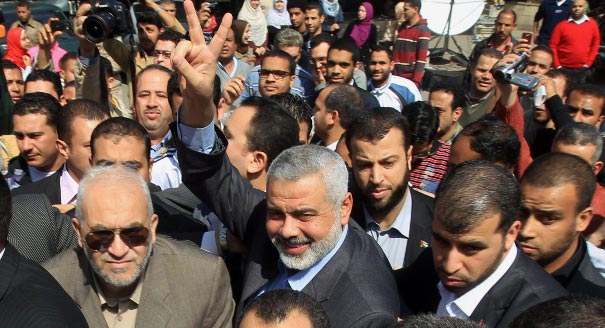
The Arab Spring has afforded Hamas genuine regional recognition. Now Hamas must turn its short-term successes into a long-term political strategy if it hopes to achieve Palestinian statehood.
Source: Al-Hayat

This opening of doors is a direct outcome of the Arab Spring. Islamist movements—some of them, like Hamas, branches of the Muslim Brotherhood Society—are gaining ground in much of North Africa. Now Hamas must turn its short-term successes into a long-term political strategy if it hopes to achieve Palestinian statehood.
For all the opportunities opening up for Palestinians, changing regional realities pose challenges as well. On February 6, Khalid Meshaal, the head of Hamas’s Political Bureau which is based in Syria, and Mahmoud Abbas, the Palestinian Authority president who also heads the rival nationalist movement Fatah, reached an agreement on Palestinian national reconciliation in the Qatari capital Doha. Yet, the power-sharing deal is not comprehensive.
Since Israel has already announced that it will not allow a revival of Hamas in the West Bank, power sharing and the reintegration of Palestinian Authority institutions can only take place in Gaza, at the expense of Hamas. Meshaal apparently regards this as a necessary price to pay in the interest of national unity, but the Gaza-based leadership disagrees.Behind this divergence lie differing assessments of the regional ascendance of the Muslim Brotherhood—Hamas’s mother organization. In one view, the Brotherhood wishes to demonstrate its ability to govern effectively and maintain regional stability in order to win U.S. acceptance of its role. In endorsing nonviolent resistance against Israel and granting President Abbas an additional year to pursue peace talks with Israel, Meshaal appears to prioritize the Brotherhood’s need to demonstrate moderation.
The Hamas leadership in Gaza has a different view of the situation, apparently believing that the Brotherhood’s ascension offers even greater benefits. However, it may be overestimating the regional power shift toward Islamist parties. The Brotherhood has gained significant ground in Egypt, and the leadership in Gaza has benefited from a significant increase in the flow of construction materials and consumer goods through tunnels from the Sinai. It is also negotiating a free-trade zone with and the supply of fuel and energy from Egypt.
But Egypt will not abrogate its peace treaty with Israel, even if the Brotherhood forms the next government in Cairo, nor will the interim military leadership, the Supreme Council of the Armed Forces, allow such an abrogation even after it hands over power. Islamist governments in Tunisia, Libya, and Morocco that are keen to rebuild economic and security ties with the United States and the European Union will also expect Hamas to moderate its stance in return for their political and material support.
Clearly, the challenges facing Hamas regionally remain great. One measure of those obstacles is its attempt to mend relations with Saudi Arabia, which were severed following the Hamas takeover of Gaza in 2007. The Doha Agreement goes some way to repairing the damage—Saudi Arabia has been a central supporter of the peace process. And Haniyya’s public endorsement of “the heroic Syrian people, who are striving for freedom, democracy and reform” helps as well, distancing Hamas from the “Shia axis” of Iran, Syria, and Hezbollah that Saudi Arabia opposes. But the rapprochement is fragile: should Saudi Arabia relaunch its 2002 Arab Peace Initiative following the inauguration of the next American administration in early 2013, Hamas will find it hard to reconcile its wish to regain Saudi political and financial support with its refusal to endorse the Saudi approach publicly.
The Hamas government in Gaza is not under immediate pressure to decide its future course. Its truce with Israel has now held for over three years, with minor exceptions, and Israel has eased its blockade of the Gaza Strip significantly. Indeed, Gaza’s economy is booming while its West Bank counterpart declines under relentless Israeli restrictions. The Gaza government has contained the threat posed by local jihadist groups—a success noted quietly in the United States—and is justified in thinking that it can survive for years to come.
Yet Hamas must translate these gains into a new political strategy if it is to maintain its claim to offer a better chance of attaining Palestinian statehood than Abbas and Fatah. The Haniyya government clearly seeks to expand and extend economic growth in Gaza, but this is at least partly dependent on continuation of the massive aid flows that have kept the local economy alive since 2007. The Palestinian Authority government in the West Bank spends over half its budget in Gaza, and the United Nations Relief and Works Agency for Palestine Refugees provides basic health care, education, and food assistance for the refugees who form some 70 percent of the local population.
However, those flows are under threat, as the European Union has cut its assistance to the Palestinian Authority by 40 percent in two years. The U.S. Congress has withheld up to two-thirds of the $600 million promised in 2012 in retaliation for Abbas’s bid to gain United Nations recognition of Palestinian statehood last September. Qatar has quietly provided financial assistance to Hamas to encourage it to forego Iranian sponsorship but may withdraw this if the Doha Agreement fails. Hamas’s relations with Saudi Arabia have not warmed enough for it to make up for the loss of Iranian funding, and Turkey will not provide aid on a sufficient scale. These issues will no doubt be debated during the leadership elections that Hamas will hold this year. Hamas has the organizational cohesion and decisionmaking structure to survive the contest of wills between the Gaza leadership and Meshaal in Syria. But it will still face pressure to articulate an explicit position on the two-state solution and peace with Israel.
Hamas can take some shelter in the Doha Agreement—according to the accord, Abbas and Fatah are responsible for negotiating the terms of peace. Yet if the Gaza leadership derails the reconciliation agreement, then the very same regional developments that have provided so much political encouragement and economic opportunity may force Hamas to deal directly with the question of negotiations next year, without the shelter provided by its rivals. This moment can be delayed, but not indefinitely.
This article originally appeared in Arabic in Al-Hayat.

Senior Fellow, Malcolm H. Kerr Carnegie Middle East Center
Yezid Sayigh is a senior fellow at the Malcolm H. Kerr Carnegie Middle East Center in Beirut, where he leads the program on Civil-Military Relations in Arab States (CMRAS). His work focuses on the comparative political and economic roles of Arab armed forces, the impact of war on states and societies, the politics of postconflict reconstruction and security sector transformation in Arab transitions, and authoritarian resurgence.
Recent Work
Yezid Sayigh
Yezid Sayigh
Carnegie does not take institutional positions on public policy issues; the views represented herein are those of the author(s) and do not necessarily reflect the views of Carnegie, its staff, or its trustees.
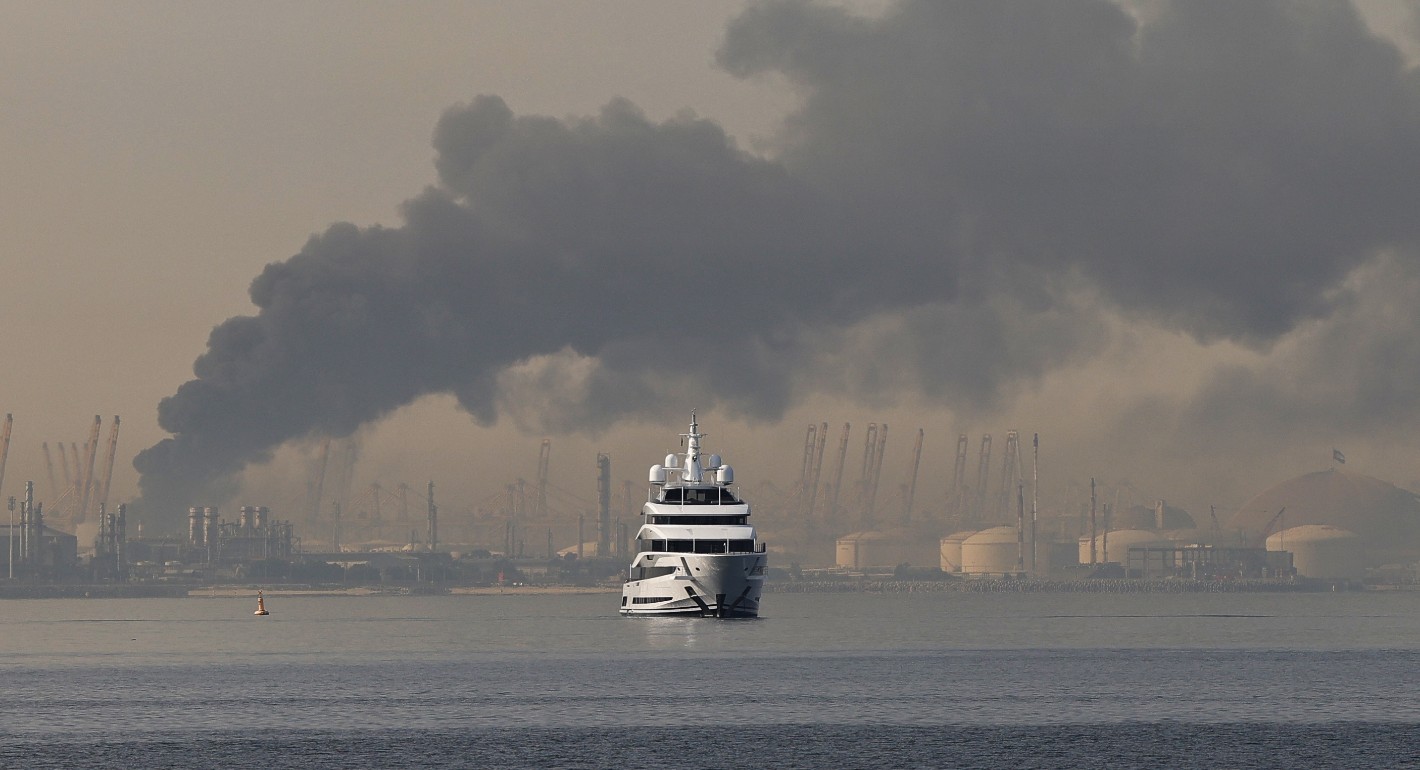
Only collective security can protect fragile economic models.

Andrew Leber
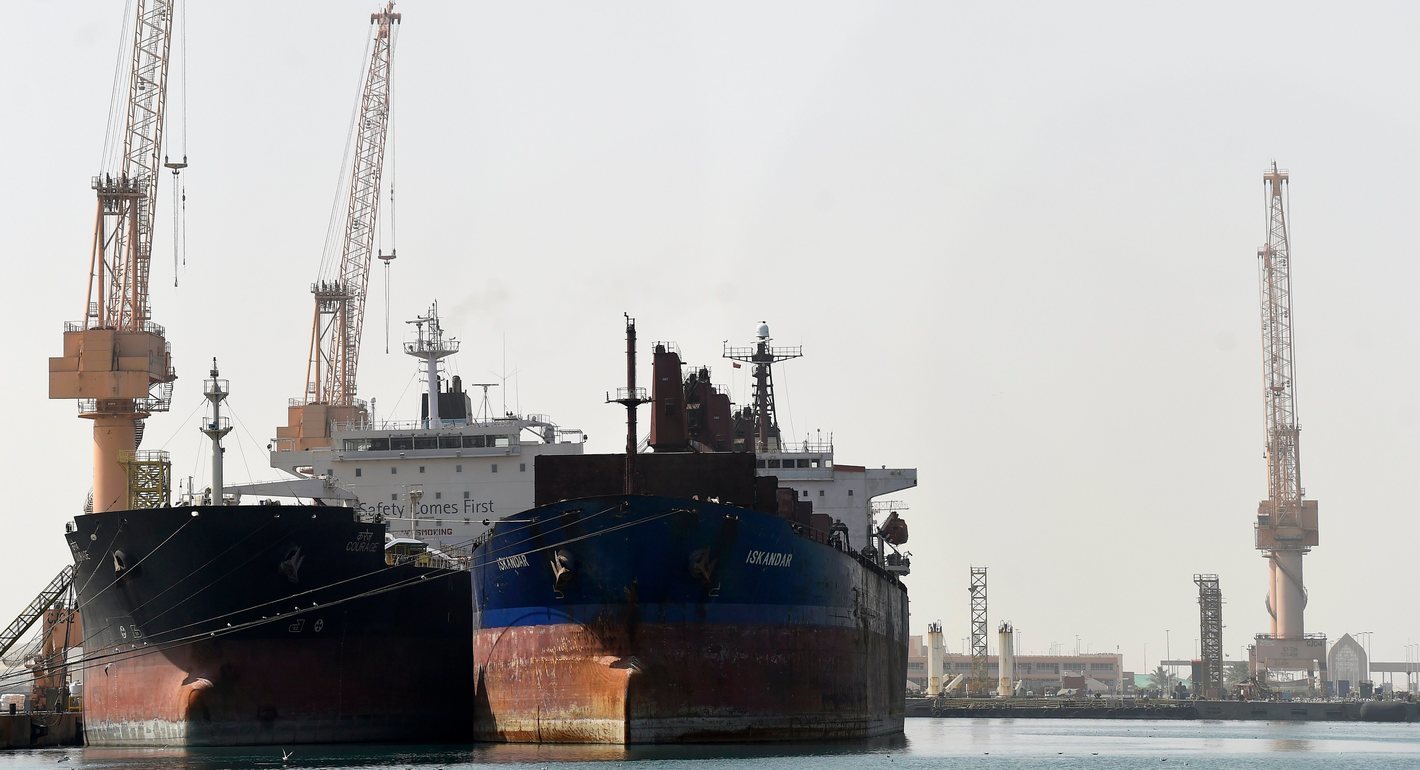
In a volatile Middle East, the Omani port of Duqm offers stability, neutrality, and opportunity. Could this hidden port become the ultimate safe harbor for global trade?
Giorgio Cafiero, Samuel Ramani
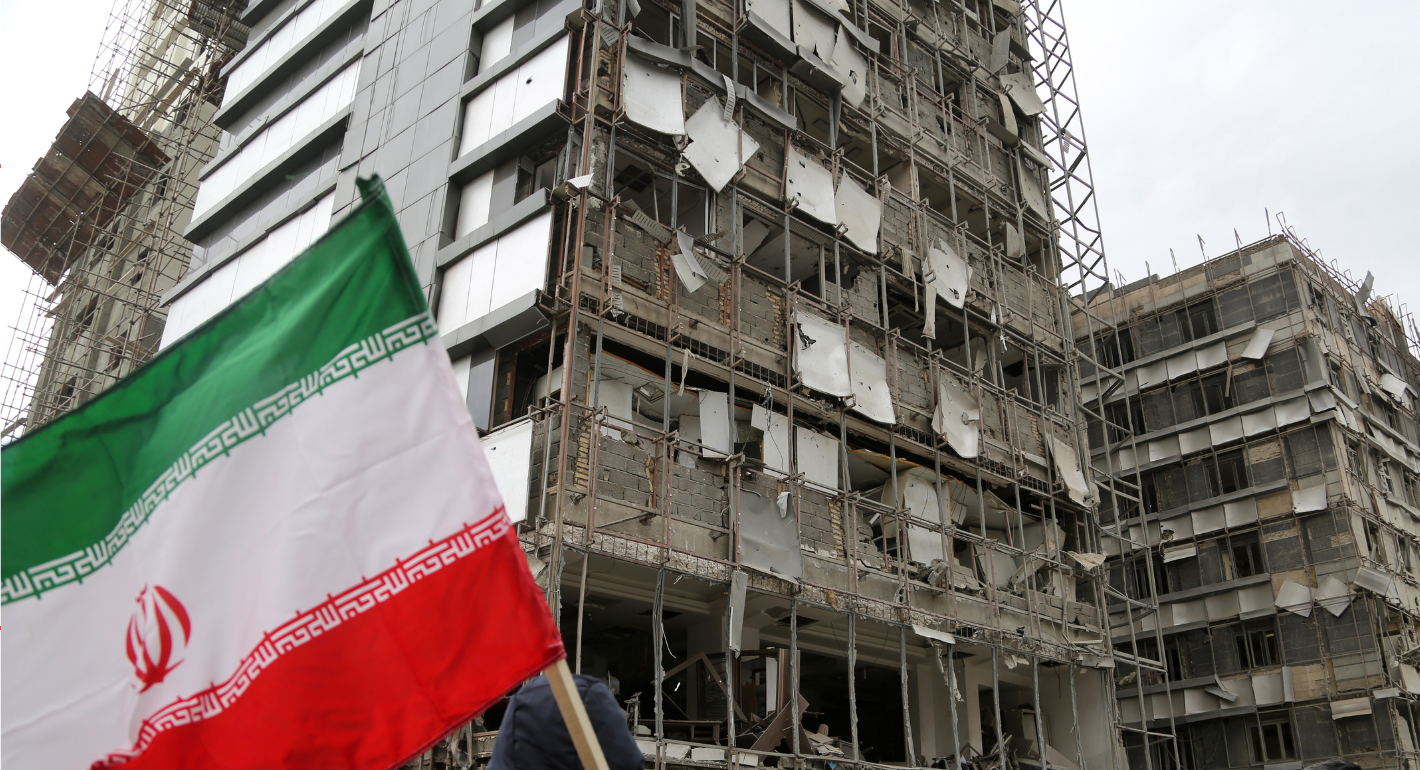
Europe’s reaction to the war in Iran has been disunited and meek, a far cry from its previously leading role in diplomacy with Tehran. To avoid being condemned to the sidelines while escalation continues, Brussels needs to stand up for international law.

Pierre Vimont
Two experts discuss how drone technology is shaping yet another conflict and what the United States can learn from Ukraine.


Steve Feldstein, Dara Massicot
As Iran defends its interests in the region and its regime’s survival, it may push Hezbollah into the abyss.

Michael Young