

Q&A
Aaron David Miller, Karim Sadjadpour, Robin Wright
{
  "authors": [
    "Karim Sadjadpour"
  ],
  "type": "legacyinthemedia",
  "centerAffiliationAll": "dc",
  "centers": [
    "Carnegie Endowment for International Peace",
    "Carnegie Europe"
  ],
  "collections": [],
  "englishNewsletterAll": "menaTransitions",
  "nonEnglishNewsletterAll": "",
  "primaryCenter": "Carnegie Endowment for International Peace",
  "programAffiliation": "MEP",
  "programs": [
    "Middle East"
  ],
  "projects": [],
  "regions": [
    "Middle East",
    "Iran"
  ],
  "topics": [
    "Political Reform",
    "Foreign Policy",
    "Nuclear Policy"
  ]
}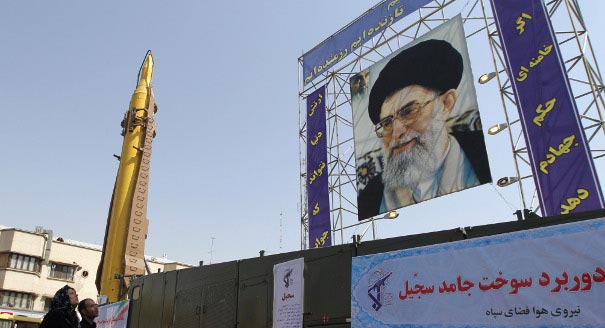
Source: Getty
The goal of coercive diplomacy should be to slow Iran’s nuclear progress and contain its political influence in the region until the regime is eventually transformed or changed through the weight of its internal contradictions and economic malaise.
Source: Washington Post

Khamenei’s aversion to compromise is well-established. He has long said that Washington’s underlying goal in Tehran is not behavior change but regime change. “If you supplicate, withdraw and show flexibility, arrogant powers will make their threat more serious,” he has said. Just as perestroika hastened the demise of the Soviet Union, Khamenei believes that compromising on revolutionary ideals could destabilize the foundations of the Islamic Republic.
Contemporary history has validated his worldview. To Khamenei’s thinking, it was Libyan dictator Moammar Gaddafi’s abdication of his nuclear program that made him vulnerable to the NATO intervention that ended his regime, and his life, last year. By contrast, Pakistan’s nuclear weapons tests in 1998 helped turn foreign pressure and sanctions against it into foreign engagement and incentives.While Khamenei may shun compromise, however, his path to a bomb would be perilous. Overt signs of weaponization — the expulsion of nuclear inspectors or the enrichment of weapons-grade uranium — are likely to trigger U.S. or Israeli military action. Unless Khamenei wants to provoke a military attack on Iran for domestic expediency — an improbable but not implausible prospect — he will continue to favor a deliberate, incremental approach. Such a pace leaves the regime at least two years from a bomb.
But time may no longer be Khamenei’s friend. He must calculate whether his regime can sustain severe and escalating economic pressure for the period it would take to acquire a weapon.
Nor will the path toward a weapon be a straight line. Khamenei must consider that foreign intelligence services have probably penetrated Iran’s nuclear facilities and prepared various obstacles and pitfalls — computer viruses, “accidental” explosions, mysterious assassinations and defections — that could set Iran’s nuclear clock back even further.
Are these challenges enough to force Khamenei into a compromise?
The very few instances in which Iran has made significant compromises — such as ending its war with Iraq in 1988 or suspending uranium enrichment in 2003 — have come when the regime has perceived existential angst. While Iran is under enormous pressure today, two factors are different.
First, when Iran felt compelled to compromise in the past, oil cost less than $25 a barrel. Today, oil prices hover around four times that amount, softening the blow of sanctions.
Second, instances in which Iran has compromised were spearheaded not by the obstinate Khamenei but by wily former president Akbar Hashemi Rafsanjani or his acolytes. In the past few years, however, Khamenei has purged these pragmatic elements from positions of authority and surrounded himself with sycophants who share his cynical hard-line worldview.
It’s possible that in the near term Khamenei will attempt a tactical and temporary compromise to stave off pressure and sow divisions among Britain, China, France, Germany, Russia and the United States (the P5+1), namely to peel China and Russia away from the United States and the European Union. There are no indications now, however, that Khamenei feels forced to make the types of meaningful and binding nuclear compromises that would reassure the United States and potentially placate Israel. (Such steps would probably include capping at 5 percent the level to which Tehran enriches uranium, sending out stockpiles of low-enriched uranium and agreeing to an intrusive inspections regime.)
It is often asserted that to persuade Tehran not to pursue a nuclear weapon, Washington must reassure Khamenei that the United States seeks merely a change in Iranian behavior, not in its leadership. While this makes sense in theory, it is complicated in practice by Khamenei’s deep-seated conviction that U.S. designs to overthrow the Islamic Republic hinge not on military invasion but on cultural and political subversion intended to foment a soft, or “velvet,” revolution from within.
For this reason a binding nuclear accommodation with Tehran is unlikely to take place absent a broader political accommodation. But an accommodation with the United States that reintegrates Iran into the global political and economic order could unleash unpredictable changes that undermine Khamenei’s authority. Like the longtime North Korean dictator Kim Jong Il and Syrian despot Bashar al-Assad, Khamenei appreciates that he can only rule over a closed domain. In other words, Khamenei’s opposition to the United States is cloaked in ideology but driven by self-preservation.
Herein lies Washington’s policy conundrum: No nuclear deal with Tehran can be made without Khamenei, yet it is almost as unlikely that any deal can be made with him. In effect, Khamenei’s obstinance due to his belief that U.S. policy is regime change, not behavior change, is becoming a self-fulfilling prophecy.
In this context, the utility of continued dialogue and negotiations will not be to resolve our differences with Iran but to prevent our cold conflict from turning hot. The Obama administration’s unprecedented and unreciprocated overtures to Iran helped expose — to the world and to the Iranian people — the fact that Tehran, not Washington, is the intransigent actor in this equation. This has served to strengthen the breadth and the depth of the international coalition.
The goal of coercive diplomacy should be to slow Iran’s nuclear progress and contain its political influence in the region until the regime is eventually transformed or changed through the weight of its internal contradictions and economic malaise. When this might happen is entirely unpredictable, but events in the Arab world over the past two years remind us that the line between the seeming invincibility of dictators and their inevitable demise is thin.

Senior Fellow, Middle East Program
Karim Sadjadpour is a senior fellow at the Carnegie Endowment for International Peace, where he focuses on Iran and U.S. foreign policy toward the Middle East.
Recent Work


Aaron David Miller, Karim Sadjadpour, Robin Wright
Aaron David Miller, David Petraeus, Karim Sadjadpour
Carnegie does not take institutional positions on public policy issues; the views represented herein are those of the author(s) and do not necessarily reflect the views of Carnegie, its staff, or its trustees.
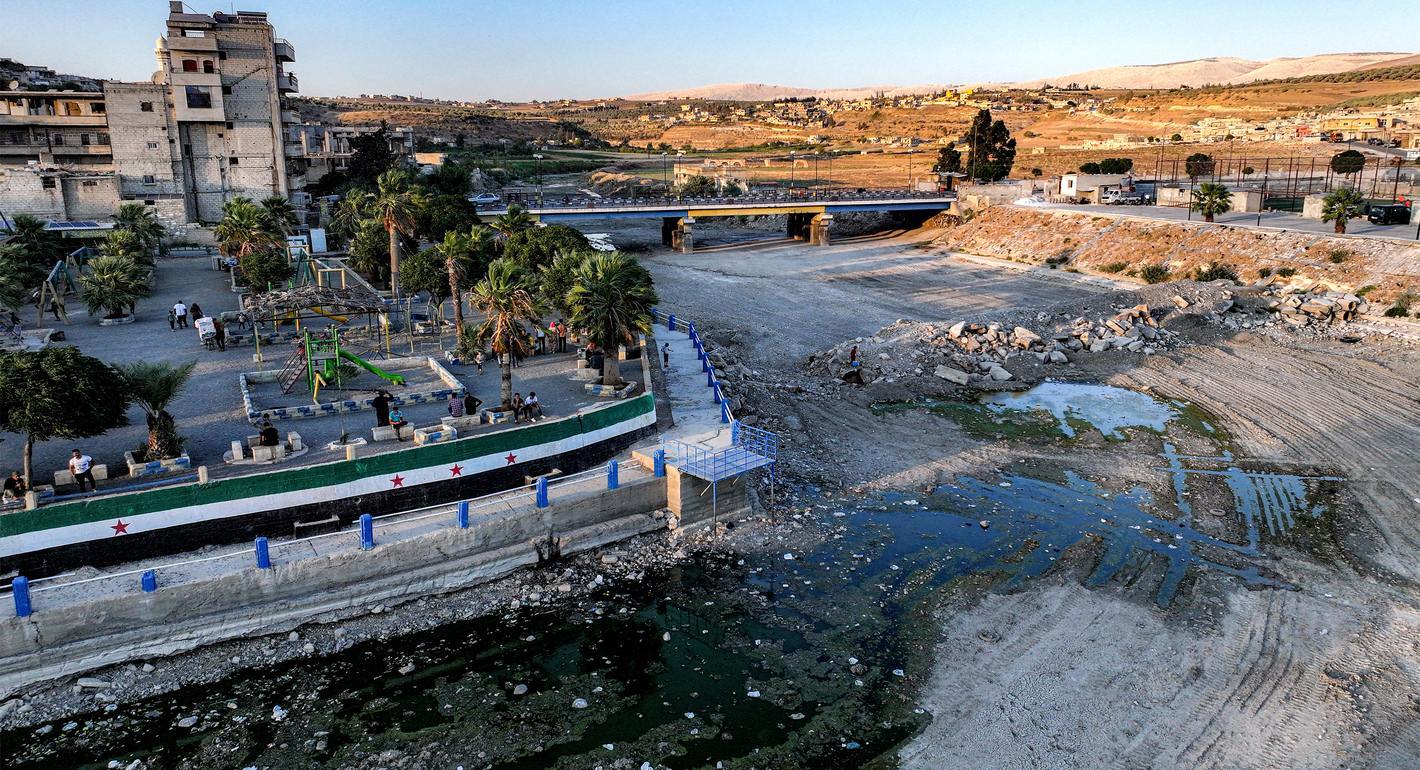
Syria’s worsening drought is no longer a seasonal crisis. This report explains what climate change is doing to rainfall, groundwater, and food security, and what solutions experts say are still possible.
Milia Esper
Power assessments shape our perceptions of the limits of the possible, but quantitative rankings and dashboards can provide false confidence.
Nicholas Kitchen
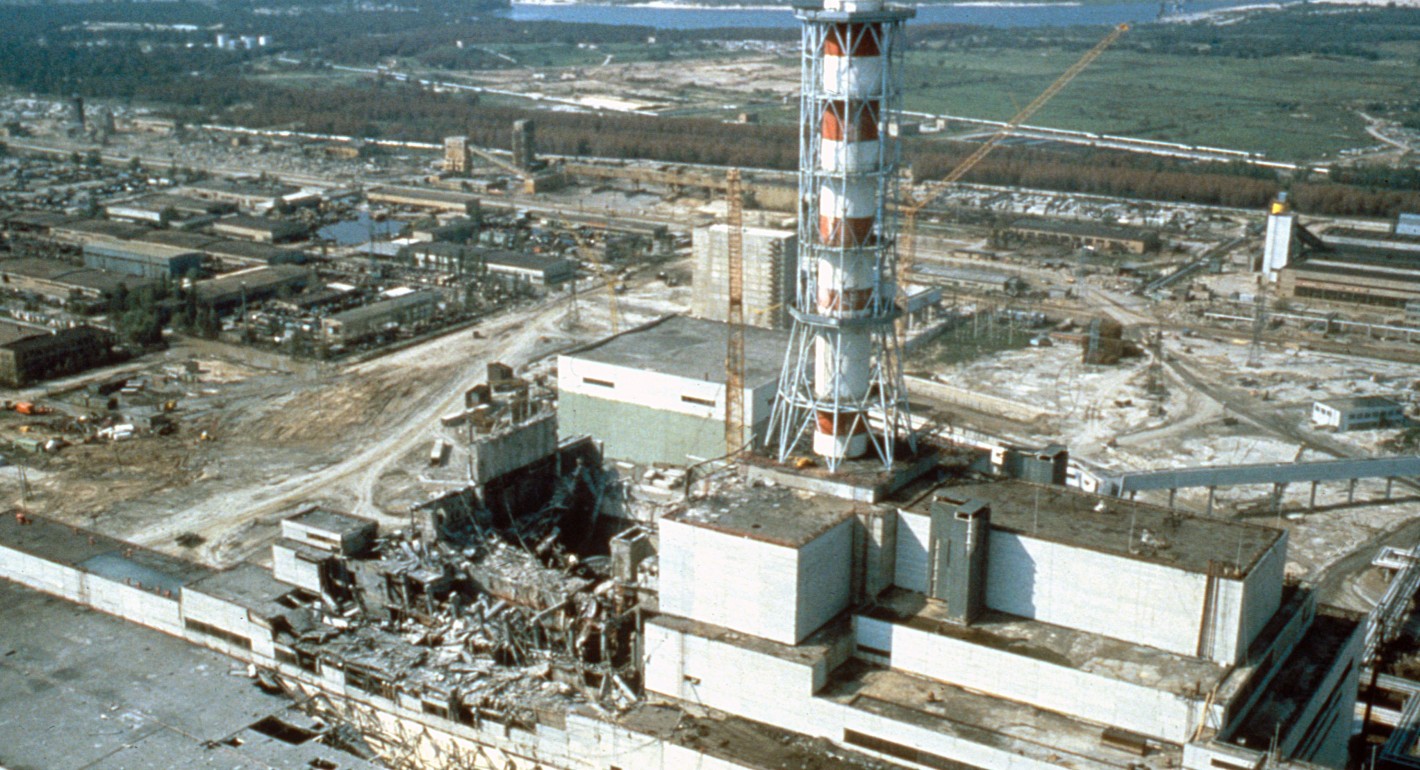
The 1986 incident showed that a nuclear accident anytime is a nuclear accident for all time.
Corey Hinderstein
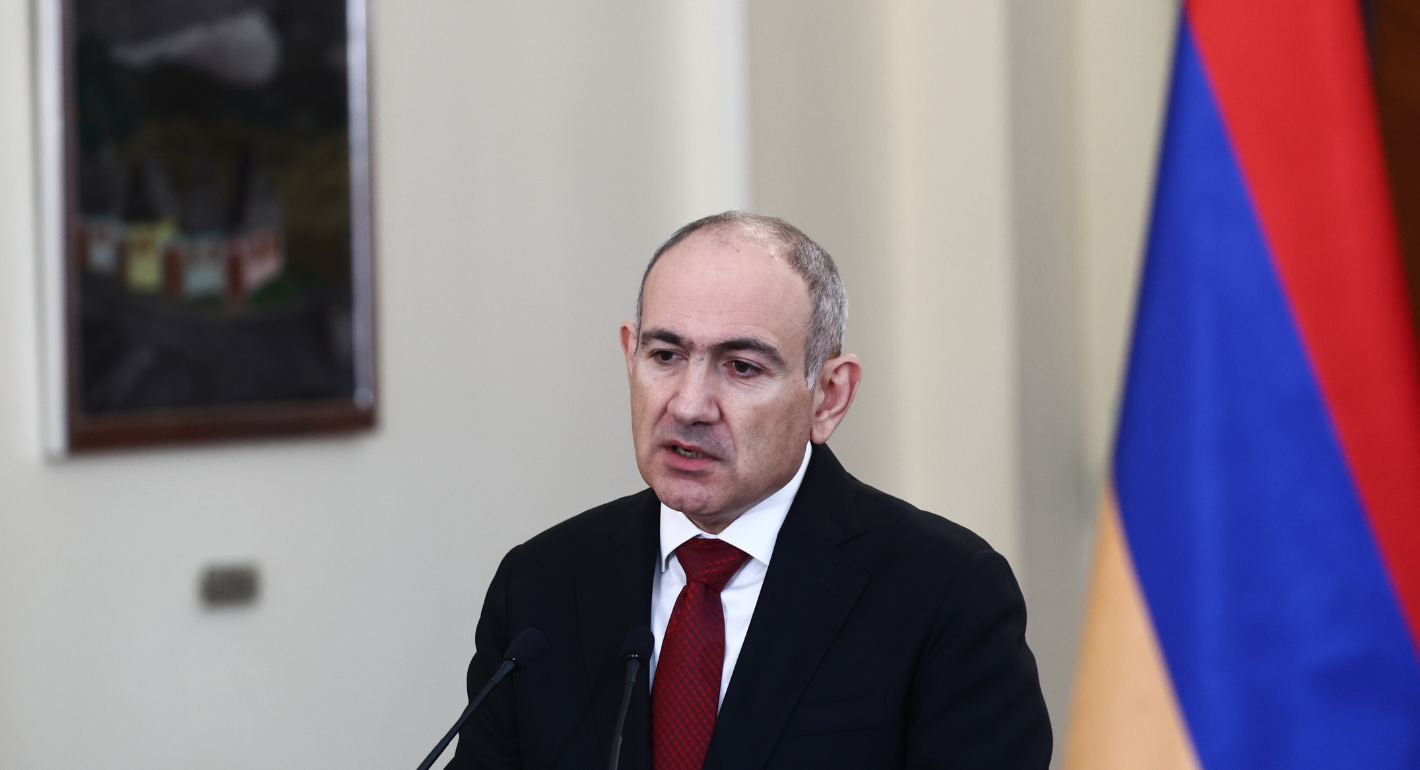
Europe has an interest in supporting Armenian leader Nikol Pashinyan as he tries to make peace with neighbors and loosen ties with Russia. But it is depersonalized support in the long term, not quickfire flash, that will win the day.

Thomas de Waal
In its version of an AI middle power strategy, Seoul is pursuing alignment with the United States not as an endpoint but as a strategy to build industrial and geopolitical leverage. Whether this balance holds remains an open question.
Darcie Draudt-Véjares, Seungjoo Lee