

Article
- +1
Toby Dalton, Mark Hibbs, Nicole Grajewski, …
{
  "authors": [
    "Mark Hibbs"
  ],
  "type": "legacyinthemedia",
  "centerAffiliationAll": "dc",
  "centers": [
    "Carnegie Endowment for International Peace"
  ],
  "collections": [
    "U.S. Nuclear Policy"
  ],
  "englishNewsletterAll": "ctw",
  "nonEnglishNewsletterAll": "",
  "primaryCenter": "Carnegie Endowment for International Peace",
  "programAffiliation": "NPP",
  "programs": [
    "Nuclear Policy"
  ],
  "projects": [],
  "regions": [
    "North America",
    "United States",
    "East Asia",
    "Taiwan"
  ],
  "topics": [
    "Nuclear Policy",
    "Nuclear Energy"
  ]
}
Source: Getty
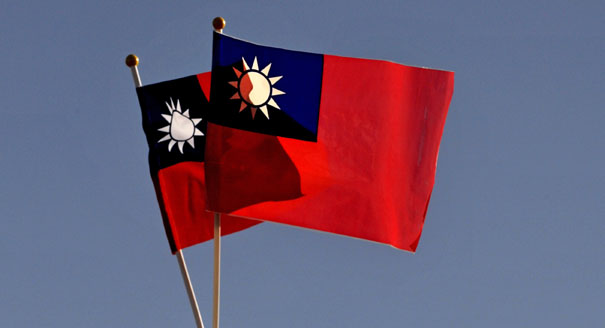
Taiwan's resolve not to enrich or reprocess has nothing to do with the "gold standard" and nearly everything to do with U.S. leverage over Taiwan's security arrangements.
Source: Arms Control Wonk

But Taiwan’s resolve not to enrich or reprocess has nothing to do with the “gold standard” and nearly everything to do with U.S. leverage over Taiwan’s security arrangements (a somewhat watered-down argument might also be made for the UAE).
The bottom line is that any forthcoming decision by Taiwan and the U.S. to adopt the language of the UAE 123 agreement on reprocessing or enrichment in a new 123 agreement will more or less reiterate a very firm bilateral understanding reached long ago by Taiwan and the U.S. that Taiwan will not enrich uranium or reprocess spent fuel. For over 40 years, the U.S. has been rigorously enforcing that understanding.
Taiwan’s current 123 agreement–as the US government e-mail traffic referred to in Elaine’s article correctly suggests–does not categorically exclude reprocessing and enrichment by Taiwan. Since the 1970s, the U.S. has been party to a bilateral 123 agreement with Taiwan (which says the U.S. has prior consent rights over the “alteration” of nuclear material by Taiwan), to a trilateral safeguards agreement with Taiwan and the IAEA (Infcirc/158), and to a bilateral safeguards agreement. This 1980 U.S. government non-paper spells out that U.S. rights over Taiwan’s nuclear activities are indeed so extensive that the U.S. could instruct the German government that any nuclear items supplied to Taiwan by a German exporter would be subject to U.S. “control rights” which included U.S. “fallback safeguards rights” if deemed necessary. Beyond this, I’m told that there is a bilateral understanding–which may not be public–that enrichment and reprocessing by Taiwan are categorically off the table.
During the 1970s the U.S. confirmed that Taiwan had been involved on several occasions in undeclared and unreported nuclear R&D activities. Whenever that happened–the last case I know about was in the mid-1990s when Taiwan processed some uranium- and thorium-bearing sands–officials from U.S. DOE and State arrived quickly on the scene and were rubbernecking around installations on Taiwan, including locations which Taiwan never declared to the IAEA under Taiwan’s IAEA safeguards agreements.
Taiwan’s civilian nuclear program was launched decades ago by the KMT leadership under circumstances which, to put it mildly, didn’t exactly encourage political participation by Taiwan’s indigenous population. Since 2000, when the DPP won a national election and took power for the first time, the KMT’s legacy has threatened Taiwan’s nuclear power program and, in the wake of Fukushima, it might ultimately prove fatal to it. The DPP has adopted an antinuclear plank on its platform and since the accident in Japan DPP politicians have been fanning the flames. So it isn’t a surprise that right now Taiwan government officials want to quickly and without fanfare close on the terms of a new 123 agreement with the U.S. Given Taiwan’s historical dependence upon technology, equipment, and nuclear fuel from the U.S., the absense of a new bilateral agreement in 2014 would halt Taiwan’s nuclear program in its tracks.
Unlike in some other countries which are expanding their peaceful nuclear programs to include nuclear fuel processing (just think about Brazil, for example) in Taiwan the U.S. has lots of leverage over its nuclear program. All the power reactors on Taiwan are based on U.S. intellectual property. Taiwan’s nuclear regulatory agency is a virtual clone of the U.S. NRC. And Taiwan Power Co., which owns and operates all the power reactors on Taiwan, processes uranium fuel using U.S. vendors.
Above and beyond this looms the 1979 Taiwan Relations Act which is the bible for U.S. bilateral affairs with Taiwan. It says that the U.S. “will consider any effort to determine the future of Taiwan by other than peaceful means…a threat to the peace and security of the Western Pacific area and of grave concern to the United States.” The TRA puts the U.S. military juggernaut front-and-center in defense of Taiwan, but it doesn’t reflexively imply that any specific threat to Taiwan would be interpreted by Washington as a casus belli. That important distinction increases still further Washington’s political leverage over Taiwan’s nuclear program. Would Taiwan put its security relationship with the U.S. at risk to enrich uranium, especially given that the Taiwan government after Fukushima proclaimed that nuclear power’s days on the island may be numbered? Don’t bet on it.

Nonresident Senior Fellow, Nuclear Policy Program
Hibbs is a Germany-based nonresident senior fellow in Carnegie’s Nuclear Policy Program. His areas of expertise are nuclear verification and safeguards, multilateral nuclear trade policy, international nuclear cooperation, and nonproliferation arrangements.
Recent Work


Toby Dalton, Mark Hibbs, Nicole Grajewski, …
Mark Hibbs
Carnegie does not take institutional positions on public policy issues; the views represented herein are those of the author(s) and do not necessarily reflect the views of Carnegie, its staff, or its trustees.
China has showcased its engineering prowess with small modular reactor demonstration projects. But turning these technological achievements into commercial success will be a greater challenge.

Tong Zhao

Despite public disputes over trade and immigration, the strategic partnership’s foundations remain sturdy.

Sameer Lalwani

It signals a new era of tech diffusion and warfare.

Steve Feldstein

Ahead of a tough winter for Ukraine, Donald Trump’s swing back toward Russia bodes ill. But instead of panicking, Kyiv’s European allies are focusing on action.

Rym Momtaz

Despite its flop at the box office, the film raises important questions for the climate community to answer.

Leonardo Martinez-Diaz