

Paper
Ibrahim Saif, Ahmed Ghoneim
{
  "authors": [
    "Ibrahim Saif"
  ],
  "type": "legacyinthemedia",
  "centerAffiliationAll": "",
  "centers": [
    "Carnegie Endowment for International Peace",
    "Carnegie Europe",
    "Malcolm H. Kerr Carnegie Middle East Center"
  ],
  "collections": [],
  "englishNewsletterAll": "",
  "nonEnglishNewsletterAll": "",
  "primaryCenter": "Malcolm H. Kerr Carnegie Middle East Center",
  "programAffiliation": "",
  "programs": [],
  "projects": [],
  "regions": [
    "Egypt",
    "Middle East"
  ],
  "topics": [
    "Economy"
  ]
}
Source: Getty
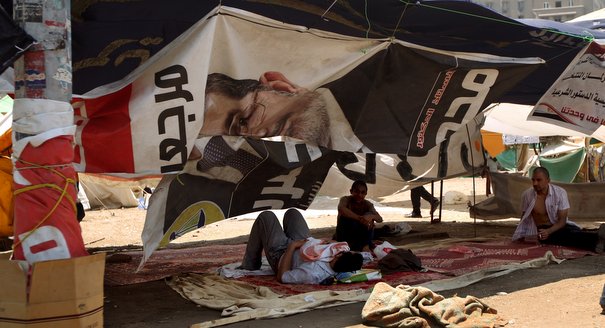
The biggest hurdle for Mohammed Morsi, Egypt's new president, will be the country's mounting economic woes. The flow of foreign cash has slowed for the past year and a half, raising the risk of a collapse of the Egyptian pound.
Source: Al-Monitor

The biggest challenge facing the new president is how to restore growth and market confidence, and how to coax investors into financing projects again. The jump in Egypt’s stock indexes after Mohammed Morsi was declared the victor in the presidential elections was a fairly clear signal that investors are looking for the return of a confident and stable political environment where they can predict what will happen next.
The second challenge facing the president will be addressing the Egyptian street’s high — and mounting — expectations. The sharp economic downturn is translating onto a budget deficit and depressing state revenues. The question now is how the need for more spending can be reconciled with the desire to limit the deficit, which rose by about 10% in the approved 2012–2013 budget. Managing the state budget will be one of the most difficult issues to address, especially taking into account some of the fixed public expenditure items, including salaries for about 6 million public sector employees and servicing the public debt in addition to subsidies. These items represent 78% of public expenditures and not much immediately can be done about them.
The third challenge is the absence of a general framework identifying future economic trends. Many economic analyses are unclear about the role each of Egypt’s political and economic actors should play in the coming phase, adding to uncertainty. Will policies be determined by the [Muslim Brotherhood’s] Freedom and Justice Party? Or will they be controlled by the Supreme Council of the Armed Forces, which has a firm grip over Egypt’s destiny? Uncertainty when it comes to who actually has what power is limiting the ability of decision makers to implement long-term reforms.
Compounding the difficulties facing Egypt’s economy and its new president is the reluctance of the international community to work with the existing government. How Egypt will receive a $3.2 billion International Monetary Fund (IMF) loan has not yet been resolved. This loan is a test; and Egypt’s behavior will determine if it will be offered additional loans from various development funds. If Egypt is unable to secure the IMF loan, the new president will have an even more difficult time. It is not yet clear how President Morsi will deal with this issue, given the tenuous conditions attached to that long-dormant loan.
These challenges and the mismanagement of the economy in general have had several repercussions, the most prominent of which is the decline in the central bank reserves by $1.4 billion per month. The reserves are now at about 40% of what they were in January 2011. This has prompted the central bank to lower the minimum reserve ratio for local banks from 20% to 14% in March 2012 and then again to 10% in May. The government also tried to boost liquidity by issuing bonds to foreigners. But these attempts failed. The cost of borrowing from local banks, according to the most recent treasury bills auction, has reached its highest level in fifteen years.
These indicators have raised serious concerns about the exchange rate in Egypt, which has remained relatively stable over the past eighteen months. However, it is unclear whether it will be possible to continue protecting the Egyptian pound given the deteriorating indicators regarding the country’s ability to attract foreign currency, including the significant decline in tourism.
Given these challenges, how should the new president approach these issues?
First, he should send signals that restore confidence in the government’s economic policies, especially as regards the private sector. This sector has so far been absent from the political scene, primarily due to its poor record and the public’s low opinion of it. The government should clarify its stance on many issues and specify the roles expected of economic actors.
The image of the private sector needs to be rehabilitated; it cannot continue to be associated with Hosni Mubarak and his son Gamal if it is to be a productive player in Egypt. In Egypt, the term “private sector” continues to carry negative connotations — it is synonymous with corruption and collusion with the security services.
The government should also stop borrowing from the domestic market. By doing so, it is absorbing a significant amount of liquidity that otherwise could benefit other economic sectors. Continued government borrowing raises borrowing rates, contributes to the budget deficit and postpones many pressing decisions, such as reconsidering the tax structure and government subsidies. These two policy areas consume a large portion of public expenditures. Only a government with real political legitimacy can address subsidy and tax policies, and only the new president is capable of leading such a transformation.
Giving more attention to small and medium size enterprises, which employ the largest number of workers in Egypt, can further help to restore economic growth. It is difficult for these projects to receive funding or access to markets. Allocating a portion of development funds to these projects will ease pressure on the government and reduce the need for increased public spending.
In the long term, there must be a rehabilitation of the agricultural sector, whose productivity is declining but is able to absorb a large number of workers. The manufacturing sector — considered the single largest source of employment — requires similar treatment. With the new situation in Egypt, there is nothing preventing the implementation of new manufacturing and agricultural policies to help restore balance to the economy after the neglect and misguided policies of the past decades.
In any eventuality, economic issues — from the transportation and traffic crises to the decline in foreign currency reserves — will be the most pressing items facing the new president. He will need to move fast.
This article originally appeared in Al-Monitor.
Former Senior Associate, Middle East Center
Saif is an economist specializing in the political economy of the Middle East. His research focuses on international trade and structural adjustment programs in developing countries, with emphasis on Jordan and the Middle East.
Recent Work
Ibrahim Saif, Ahmed Ghoneim
Ibrahim Saif, Muhammad Abu Rumman
Carnegie does not take institutional positions on public policy issues; the views represented herein are those of the author(s) and do not necessarily reflect the views of Carnegie, its staff, or its trustees.

As the U.S. stumbles in its war with Iran, we are likely to see an acceleration of its disengagement from the region.

Michael Young
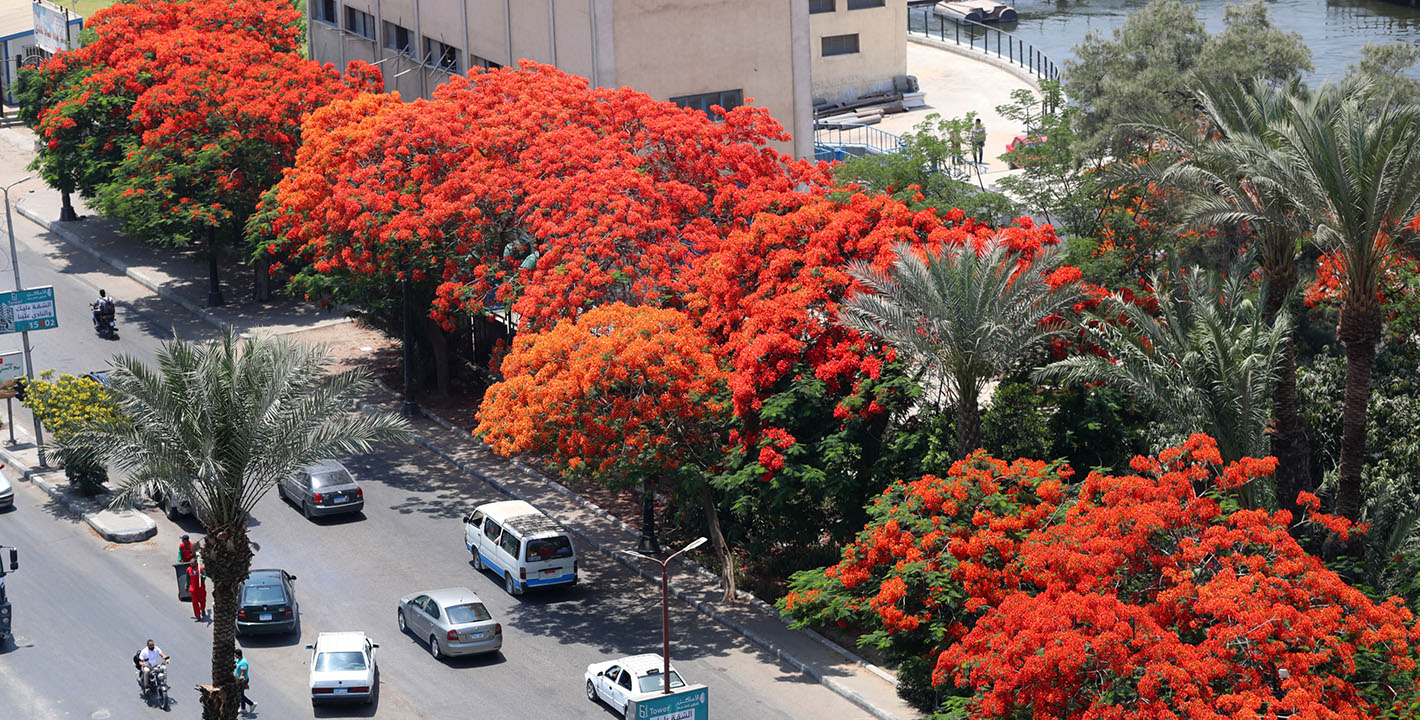
In Egypt’s dense cities, the disappearance of foliage has health implications and punishes daily commuters.

Angie Omar

The Bureau of Industry and Security needs to adjust its focus and practices to maintain its position as the U.S. government’s primary champion of international technological competition.

Geoffrey Irving

Depleted financial reserves and a shrinking tax base mean it is no longer possible to simultaneously deliver high defense spending, price stability, and economic growth.

Alexandra Prokopenko

Understanding the climatic pain points is necessary for policymakers hoping to minimize the war’s negative environmental consequences.



Alejandro Martin Rodriguez, Joy Arkeh, Sarah Yerkes