

Commentary
With the growth in points of friction between the great powers, organizations like the SCO will continue to play a role in the strategic adaptation of the smaller powers caught between them.
Temur Umarov
{
  "authors": [
    "Evan A. Feigenbaum",
    "Robert A A. . Manning"
  ],
  "type": "legacyinthemedia",
  "centerAffiliationAll": "dc",
  "centers": [
    "Carnegie Endowment for International Peace"
  ],
  "collections": [],
  "englishNewsletterAll": "asia",
  "nonEnglishNewsletterAll": "",
  "primaryCenter": "Carnegie Endowment for International Peace",
  "programAffiliation": "AP",
  "programs": [
    "Asia"
  ],
  "projects": [],
  "regions": [
    "East Asia",
    "Southeast Asia"
  ],
  "topics": [
    "Economy",
    "Security"
  ]
}
Source: Getty
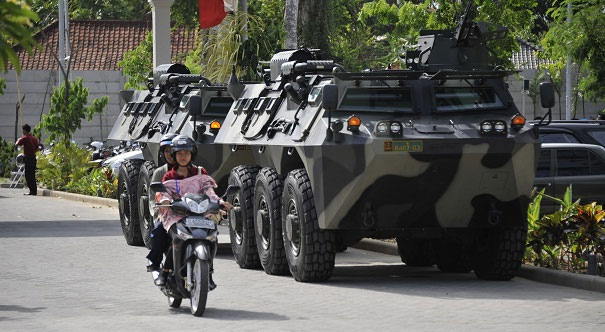
There is a growing body of evidence that security competition risks undermining economic integration in Asia.
Source: World Politics Review

On some points, we agree with Acharya. For example, he notes that Japan “started the process” of economic integration in Asia, or what we call “Economic Asia,” and “still plays a vital role in it.” We made precisely this point when we argued that “Tokyo has long been an exemplar of Economic Asia and a motive force behind the quest for greater regional economic integration.”
But this only reinforces our argument about the emergence of two increasingly irreconcilable Asias. Postwar Japan has incubated a variety of pan-Asian regional ideas and ideologies, especially with respect to Asian monetary integration. Still, if Japan truly privileged economic integration over nationalism and political competition, it would surely find ways to finesse the political tensions that have increasingly hindered its cooperation with South Korea.
Our principal point is that Asia’s incredible economic dynamism and growing integration are at risk because of debilitating security competition and sharpening political disputes within the region, not just between the United States and China but among Asia’s major economies as well. There is a growing body of evidence that security competition risks undermining economic interchange, from attacks on and boycotts of Japanese firms in China to Beijing’s apparent use of economic levers to restrict farm trade with the Philippines over territorial disputes in the South China Sea.
If this is a harbinger of what is to come, it cannot possibly bode well for the region, especially in the context of a fragile global financial and economic situation. Yes, Asia’s economic links “have significant drivers and dimensions beyond the region,” as Acharya states, but Asian economies have become increasingly reliant on pan-Asian regional trade. Fifty-three percent of Asia’s trade is now conducted on an intraregional basis, and this interdependence may become more pronounced amid protracted austerity in Europe and slow growth in the United States.
It is difficult, therefore, for us to understand how a sharpening of contradictions between economics and security in Asia could be, in Acharya’s words, ultimately “to the region’s advantage.”
To the contrary, we cannot afford to presume an economic determinism that suggests that economic interdependence between the United States and China, and among Asian economies, will automatically serve as “conflict-mitigating mechanisms.” That is why our essay noted Norman Angell’s 1910 bestseller, "The Great Illusion," which similarly argued that globalization and economic interdependence made war in Europe obsolete.
Nor do we share Acharya’s confidence in the “conflict-mitigating” power of Asia’s regional institutions. For one thing, form rather than function has been the principal driver of nearly all Asian multilateralism for more than two decades. Senior officials meet regularly through Asia’s many regional institutions, and that is a good thing. But none of these groups has truly taken collective action in the face of Asia’s most urgent problems.
As a result, East Asia’s security challenges have not become any easier to address because these forums exist. And if new groups capable of mitigating the region’s debilitating security competition are to emerge, they will need to enable those actors with the greatest capacity to tackle specific problems, and they will require a greater focus on function than on form. Sadly, security and political contradictions, what we call “Security Asia,” are making this harder to achieve as well.
We agree with Acharya that Asia needs a U.S. policy that “pursues balancing without containment.” But after four decades during which Washington has enabled China’s rise through large-scale economic interchange, technology transfer and support for a larger Chinese role in global institutions, the idea that the United States is “containing China” is fanciful.
For reasons that many are still trying to comprehend, China is itself driving many of the balancing behaviors in Asia to which Beijing so strenuously objects. Clearly, China has scared some of its neighbors silly. And that is why doors to security cooperation with the United States are now open across Asia, in ways that were simply unimaginable when we served as officials working on East Asia during the George W. Bush administration.
Some of this Chinese behavior predates the so-called U.S. rebalancing. China’s efforts have intensified since the Obama administration’s policy was announced, but Beijing’s forceful assertion of its nine-dotted line in the South China Sea, and its increased maritime presence in both the East and South China Seas, is having an undeniable effect on the security calculations of other states in Asia.
The reaction across the Indo-Pacific has been an increased desire to cooperate with the United States and a strong willingness to see Washington serve not as a hegemon but as a credible balancer. China has thus been a more effective enabler of America’s reinforced security role in Asia than has the U.S. strategic rebalancing, which, in security terms, is still modest.
Ultimately, a bipolar Asia would not be a good thing. But if we aim to avoid it, then we need to address the dynamic that we termed “two Asias” in our essay.
The U.S. and China are the dominant players now shaping Asian security. Acharya describes China’s underlying strategy as “denial without dominance,” but this strikes us as simply wrong: Beijing’s strategy of denying access to the US Navy, if successful, would by definition leave it dominant. If others in Asia viewed China’s strategies and actions as defensive and focused solely on “denial,” then Beijing would not be causing such anxiety across the region. And since the U.S. is still viewed by most as an essential strategic balancer vital to stability, the more that security fears trump economic hopes, the more the region risks drifting into the debilitating bipolarity nobody seeks.
Put simply, competing nationalisms and the scars of national memory remain potent forces in Asia. And they risk undermining the economic gains that have done so much to promote integration, boost growth, and foster opportunity. If military conflict becomes a prerequisite for China and Japan to reconcile as France and Germany did after World War II, then our “tale of two Asias” has the potential to become tragedy.
This article was originally published by World Politics Review.

Vice President for Studies
Evan A. Feigenbaum is vice president for studies at the Carnegie Endowment for International Peace, where he oversees work at its offices in Washington, New Delhi, and Singapore on a dynamic region encompassing both East Asia and South Asia. He served twice as Deputy Assistant Secretary of State and advised two Secretaries of State and a former Treasury Secretary on Asia.
Robert A A. . Manning
Carnegie does not take institutional positions on public policy issues; the views represented herein are those of the author(s) and do not necessarily reflect the views of Carnegie, its staff, or its trustees.

With the growth in points of friction between the great powers, organizations like the SCO will continue to play a role in the strategic adaptation of the smaller powers caught between them.

Temur Umarov
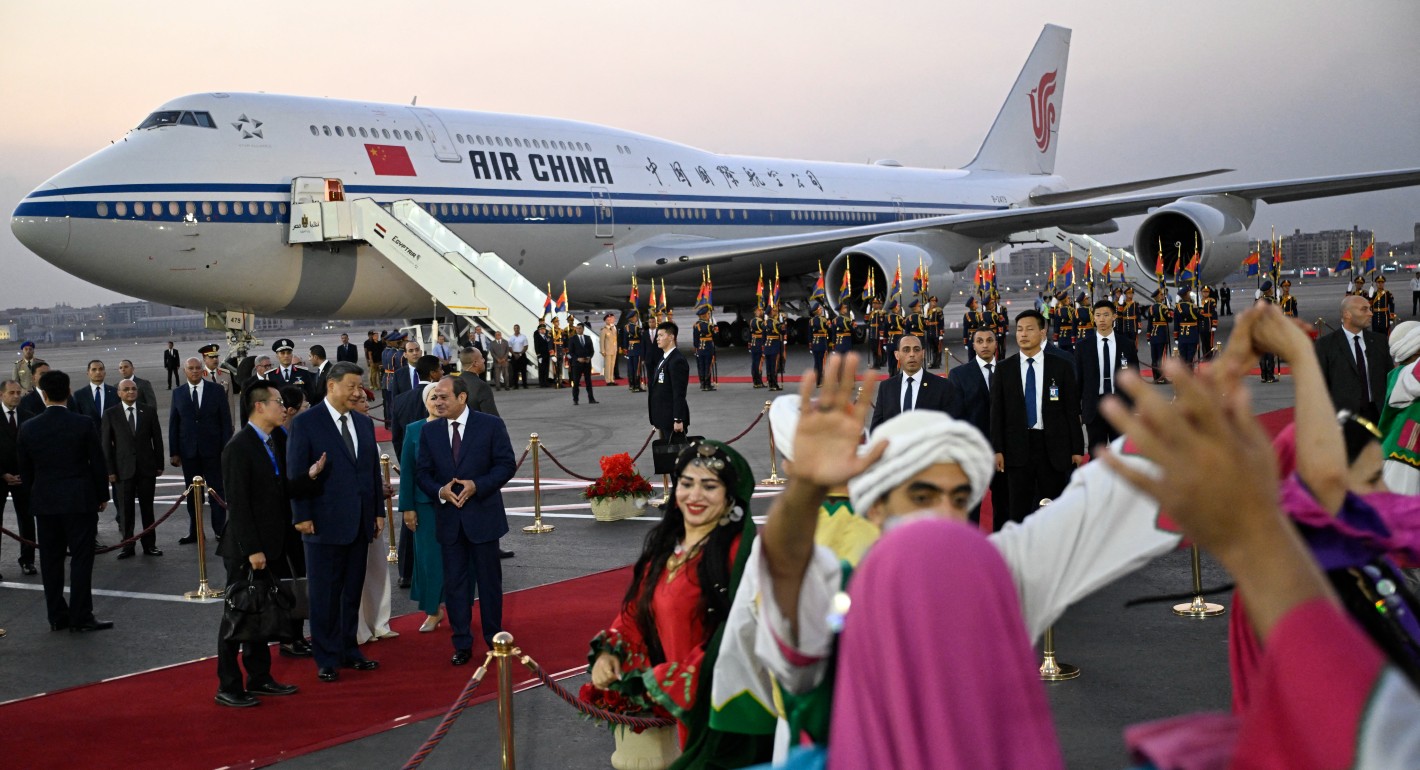
Amid celebrations of bilateral ties was a deeper focus on stability in the Middle East.

Amr Hamzawy
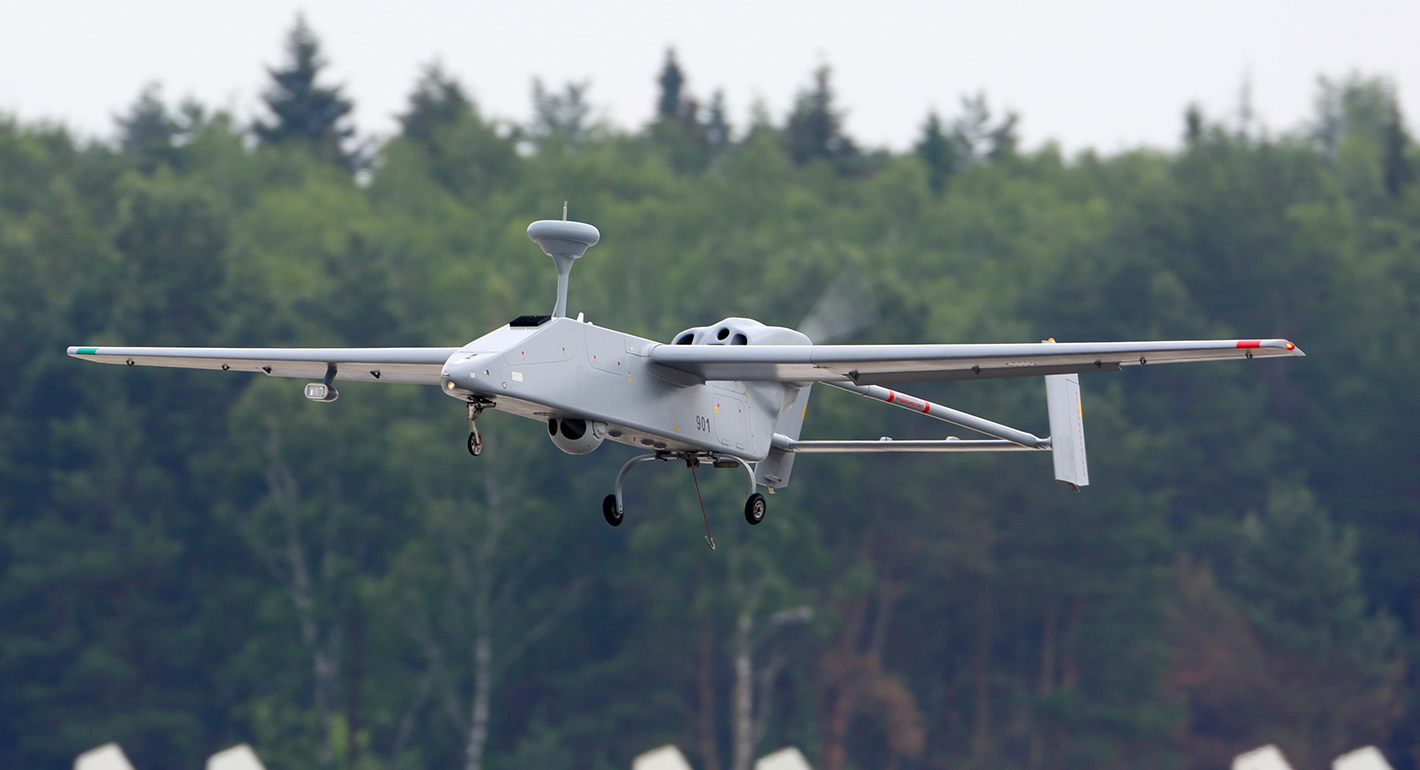
Moscow is testing Europe’s defenses with drone incursions and could decide to use drones against the continent on a much larger scale once the war in Ukraine pauses. European countries will need Kyiv to help them prepare for such a possibility.

Pavlo Zvenyhorodskyi

Xi, Putin, and other regional leaders are back-slapping in Bishkek, but the SCO has yet to answer the most serious questions about continental Asia's economic future.
Evan A. Feigenbaum

European states control several Overseas Countries and Territories around the world that carry strategic, economic, and environmental weight. As great powers challenge the rules-based order, defending them is a geopolitical imperative for Europe.

Marc Pierini