

Article
Deborah Gordon, Stephen D. Ziman
{
  "authors": [
    "Deborah Gordon"
  ],
  "type": "legacyinthemedia",
  "centerAffiliationAll": "dc",
  "centers": [
    "Carnegie Endowment for International Peace"
  ],
  "collections": [],
  "englishNewsletterAll": "ctw",
  "nonEnglishNewsletterAll": "",
  "primaryCenter": "Carnegie Endowment for International Peace",
  "programAffiliation": "SCP",
  "programs": [
    "Sustainability, Climate, and Geopolitics"
  ],
  "projects": [
    "Carnegie Oil Initiative"
  ],
  "regions": [
    "North America",
    "United States"
  ],
  "topics": [
    "Climate Change"
  ]
}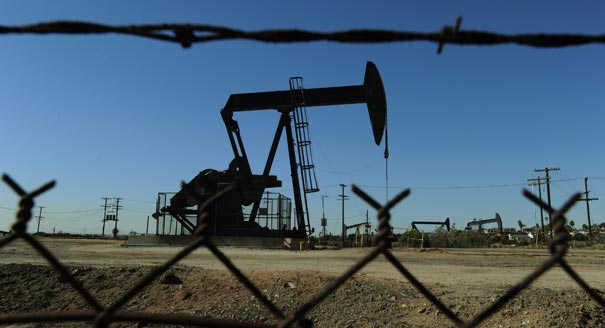
Source: Getty
As President Obama continues to reconstitute his cabinet, he must keep in mind that an understanding of unconventional oils will be essential for those in his top team.
Source: Hill
As President Obama continues to reconstitute his cabinet he should keep in mind that an understanding of the changing nature of oil will be essential for those in his top team well beyond the Secretary of Energy.
Tomorrow’s oils are not the same as twentieth century crude, or each other. Unconventional oils range from ancient tacky oils that resist flow to ultra-light petroleum liquids trapped in tight shale rocks to immature solids that must be retorted into oil. They require vastly different extraction methods, processing techniques, geographies, petroleum product slates, oil prices, energy markets, and trade patterns.
Policy guidance must be formulated to strike a balance between exploiting these energy assets, ensuring national security, and protecting the climate. This entails more than simply tapping the bounty of new supplies. The president and others in his team will need to acquire further knowledge to parse oils, economically and environmentally, given the current information vacuum surrounding them in Washington.America is situated to become the world’s largest global oil producer — potentially surpassing Saudi Arabia and Russia within five years. But first, enormous investments are required to safely tap and restructure markets around newfound resources. The world is looking to the U.S. to manage new "opportunity" oils.
But do all oils convey equal opportunities? Probably not. Investment decisions are therefore crucial because it is difficult to change course once infrastructure is built.
Prioritizing some oils over others seemingly runs counter to President Obama’s vision to ensure energy supplies through an "all-of-the-above" approach. But when it comes to different oils, treating them as if they are interchangeable could be an expensive lose-lose proposition.
A coordinated federal policy approach to oil is complicated by the fact that no single government agency is in charge. Rather, responsibilities fall haphazardly on numerous departments including Energy, State, Defense, Interior, Commerce, Transportation, Treasury, and the Environmental Protection Agency (EPA) — each with its own mission and many set to have new Administrators.
Given the combination of actors and complexity of oils, the chemistry of the Cabinet cannot be ignored. Oil infiltrates most federal Agencies’ missions regarding different facets of American security. From State’s focus on a secure and prosperous world to the Department of Energy’s mission to ensure security and prosperity by addressing America’s energy, environmental, and nuclear challenges. Defense sets its sights on deterring war and protecting the security of our country. Commerce promotes economic growth and sustainable development. Treasury promotes economic growth through job creation, investment, and economic stability. Transportation aims to provide fast, safe, efficient, accessible, and convenient transportation to meet our vital national interests. Interior supplies the energy to power America’s future while protecting our natural resources and heritage. And the EPA’s mission is to protect human health and the environment.
Given these interconnected — yet distinct — oil-related goals, President Obama will need to refine his Administration’s approach to oil by building on his 2011 Blueprint for a Secure Energy Future. Perhaps the first step is to convene an interagency committee as soon as cabinet members are confirmed to decide how best to approach oil in a way that ensures a safe, reliable, affordable, equitable, and sustainable future. U.S. national, energy, economic, and climate security rests on establishing a new global oil order.
The politics of oil obscures an honest assessment of different resources’ prospects and trade-offs. Oil has a long and complicated history in the United States, and it has been politically front and center since at least 1970 when the U.S. became a net oil importer. Every president since has pledged U.S. oil independence. But President Obama is the first to oversee oil production on such a significant scale, it expanded more in 2012 than in any year since the first commercial well was drilled in 1859.
Unprecedented leadership is required to develop a strategy that offers full disclosure about different oils, distinguishes between resource plays, prices the varying carbon contained in oil, implements increasing vehicle fuel economy standards, and stimulates innovations that shrink the environmental footprints of opportunity oils.
New oils present an amazing reversal of fortune for the world’s largest oil consumer. In a world chalked full of resource restrictions, this is an enviable position — but one that is too important to squander or use toward destructive ends. Now is the time for the president to refine his approach on oil.

Former Director and Senior Fellow, Energy and Climate Program
Gordon was director of Carnegie’s Energy and Climate Program, where her research focuses on oil and climate change issues in North America and globally.
Recent Work
Deborah Gordon, Stephen D. Ziman
Deborah Gordon, Smriti Kumble, David Livingston
Carnegie does not take institutional positions on public policy issues; the views represented herein are those of the author(s) and do not necessarily reflect the views of Carnegie, its staff, or its trustees.

Despite its flop at the box office, the film raises important questions for the climate community to answer.

Leonardo Martinez-Diaz

In an interview, Rozina Ali discusses her new book on the rise and manifestations of Islamophobia in the United States.

Michael Young

While the EU and European governments are embracing the much-lauded middle-power moment, this entails three difficult conundrums.

Richard Youngs

Europe is facing rising populism internally as well as external pressures from Russia, China, Turkey, and the United States.

Dimitar Bechev

The acknowledgment has sparked fears of a new arms race with China and Russia.

Chris O’Meara