

In The Media
John Judis
{
  "authors": [
    "John Judis"
  ],
  "type": "legacyinthemedia",
  "centerAffiliationAll": "",
  "centers": [
    "Carnegie Endowment for International Peace"
  ],
  "collections": [],
  "englishNewsletterAll": "",
  "nonEnglishNewsletterAll": "",
  "primaryCenter": "Carnegie Endowment for International Peace",
  "programAffiliation": "",
  "programs": [],
  "projects": [],
  "regions": [
    "North America",
    "United States"
  ],
  "topics": [
    "Security",
    "Foreign Policy"
  ]
}
Source: Getty
There is something about the sheer idea of a compulsory or semi-compulsory or semi-semi-compulsory national service program that doesn’t sit well with most Americans.
Source: New Republic
It’s time for the biannual, or is it quadrennial, push for a national program. The old Democratic Leadership Council made this a major priority in the 1990s. Now the Aspen Institute seems to have come on board with a column in Politico declaring that “national service is the key to national strength.” Joe Klein echoes these sentiments in a new issue of Time. “Imagine the impact a robust national-service program—like the service corps proposed by the Aspen Institute's Franklin Project—would have on our nation of couch dwellers,” Klein asks.
I can’t tell exactly how the Aspen Institute plan works. It seems to be voluntary, but uses the promise of prestigious certification to induce 18- to 28-year-olds to join. I’m all in favor of national service. It would bind Americans together. I’d go farther. I’d be for reinstituting a military draft. It’s the best guarantee for the country pursuing a responsible foreign policy. If there had not been a draft in the 1960s, we might still be fighting in Southeast Asia. Richard Nixon ended the draft in order to curtail protests against the war from young people and their parents who didn’t want to risk their lives for a cause they didn’t believe in.
But I don’t think anything like a universal national service plan is going to work. I was at a small conference of liberals in suburban Washington about a year after September 11. The conveners were looking for support for a national service program as a way to direct the spirit of patriotism and community engendered by the September 11 attacks toward progressive ends. All the invitees were middle aged or older. And most of us agreed with the conveners’ plan. But then a young woman who was an intern for one of the conveners and was a student at the University of Maryland asked if she could say something. She explained while she thought the plan was a good idea, no one that she knew at college would actually support it. They didn’t want to be pressured or required to do some national program.The discussion went on, but I thought it should have ended then, or at least begun entirely anew. We have had drafts in time of national peril, but there is something about the sheer idea of a compulsory or semi-compulsory or semi-semi-compulsory national service program that doesn’t sit well with most Americans. That’s why, I think, these bursts of enthusiasm for national service come and then go.

Former Visiting Scholar
As a visiting scholar at Carnegie, Judis wrote The Folly of Empire: What George W. Bush Could Learn from Theodore Roosevelt and Woodrow Wilson.
Recent Work
John Judis
John Judis
Carnegie does not take institutional positions on public policy issues; the views represented herein are those of the author(s) and do not necessarily reflect the views of Carnegie, its staff, or its trustees.

To carry out its global AI agenda, Washington will need strategic relationships with emerging markets in Africa, starting with Kenya.
Jane Munga

Europe’s industrial supply chains leave it vulnerable to global shocks. The EU needs a pragmatic green industrial strategy that balances durable partnerships and bolsters homegrown clean tech without sacrificing low-carbon ambition.


Milo McBride, Pauline Gerard

Defense tech innovations will be at the heart of Europe’s new security strategy. But so far, Brussels has been making moves without a broader plan, undermining readiness and credibility.

Raluca Csernatoni
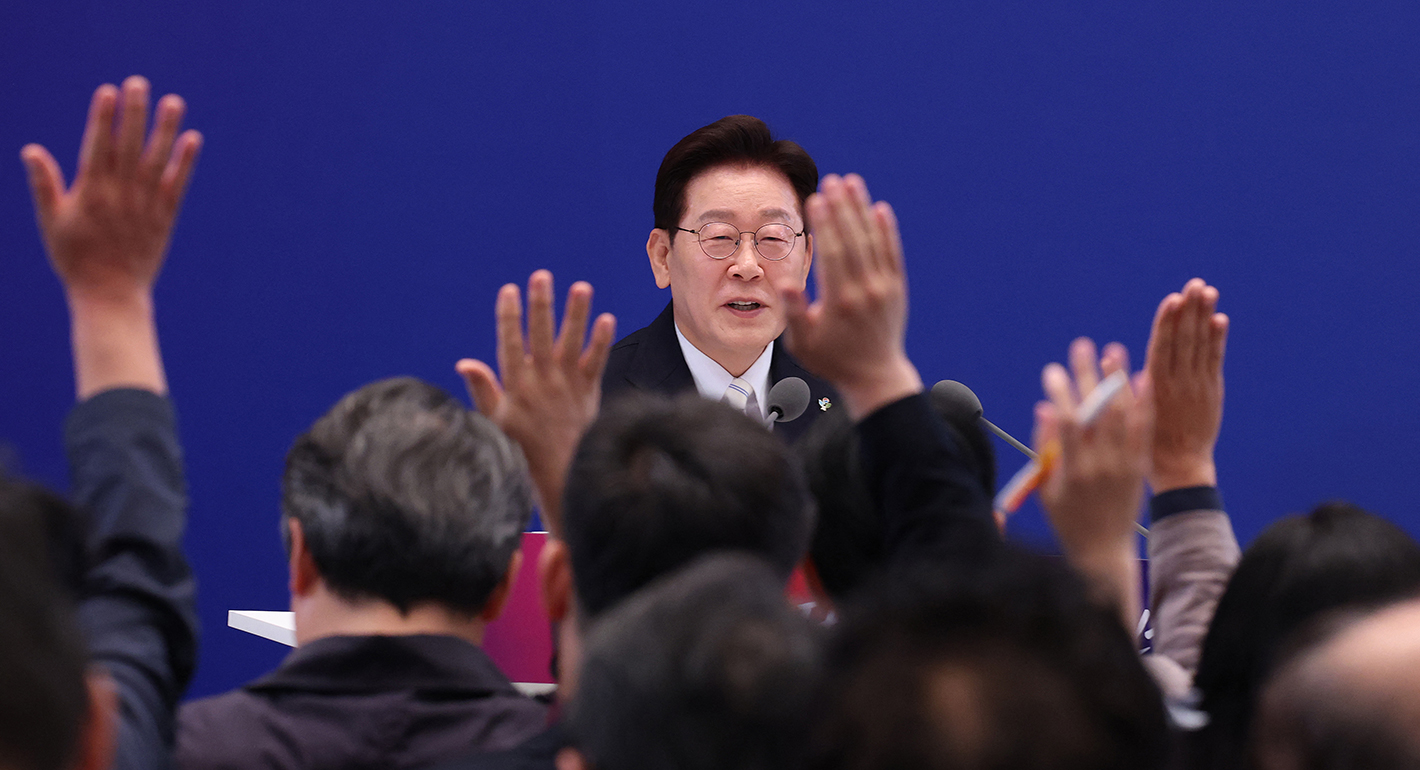
President Lee marked his first year in office after one of the most tumultuous periods in South Korean politics. Though Lee has enjoyed a high approval rating, a large majority in the National Assembly, and foreign policy victories, Lee and his party’s political fortunes depend on generating economic growth, learning the right lessons from the recent local elections, and managing contentious factional strife within his political base.
Chung Min Lee

This year’s wars have made alternative routes to transit through Russia no less risky for Central Asian countries.

Galiya Ibragimova