

Commentary
For every ruble allocated to social policy, health, and education in 2027, double that amount is earmarked for the army, the police, and the security services.
Alexandra Prokopenko
{
  "authors": [
    "Ruan Zongze",
    "Dmitri Trenin"
  ],
  "type": "legacyinthemedia",
  "centerAffiliationAll": "dc",
  "centers": [
    "Carnegie Endowment for International Peace",
    "Carnegie China",
    "Carnegie Russia Eurasia Center"
  ],
  "collections": [
    "China’s Foreign Relations"
  ],
  "englishNewsletterAll": "ctw",
  "nonEnglishNewsletterAll": "",
  "primaryCenter": "Carnegie Russia Eurasia Center",
  "programAffiliation": "russia",
  "programs": [
    "Russia and Eurasia"
  ],
  "projects": [],
  "regions": [
    "East Asia",
    "China",
    "Russia"
  ],
  "topics": [
    "Foreign Policy"
  ]
}
Source: Getty
The Chinese Dream, an idea floated by Chinese President Xi Jinping, has far-reaching implications for every part of society in China.
Source: China Radio International’s People In the Know
The Chinese Dream, an idea floated by Chinese President Xi Jinping, has far-reaching implications for every part of society in China. On the China Radio International, Carnegie Moscow Center’s Dmitri Trenin discussed this issue with Zheng Chenguang. He was joined by Ruan Zongze, senior fellow and vice president of the China Institute of International Studies.According to Trenin, the Chinese Dream program is a sign of recognition by Xi Jinping of a global trend that gives more and more attention to certain values in the foreign policy. For example, he explained that China has realized the importance of being perceived as an attractive state by foreign audiences. In order to create this popular image, Beijing has begun promoting China as an open country, dedicated to peaceful conflict management and diplomacy backed by active investment and a growing economy.
Turning to the bilateral relationship between China and Russia, Trenin suggested that current efforts toward Russian-Chinese cooperation should be continued and added that the future demands closer economic relations and more ties between ordinary people.
This interview was originally broadcast on China Radio International.
Ruan Zongze
Former Director, Carnegie Moscow Center
Trenin was director of the Carnegie Moscow Center from 2008 to early 2022.
Carnegie does not take institutional positions on public policy issues; the views represented herein are those of the author(s) and do not necessarily reflect the views of Carnegie, its staff, or its trustees.

For every ruble allocated to social policy, health, and education in 2027, double that amount is earmarked for the army, the police, and the security services.

Alexandra Prokopenko

The acknowledgment has sparked fears of a new arms race with China and Russia.

Chris O’Meara

Smaller powers cannot go it alone, but Canadian history shows that integration with the United States will not always be benign.
Paul Samson

The European Commissioner for Trade is headed to China. But after President Xi’s bridge-building visit to Washington, can a more isolated EU overcome Beijing’s stranglehold on critical raw materials? Who will blink first?

Rym Momtaz, ed.
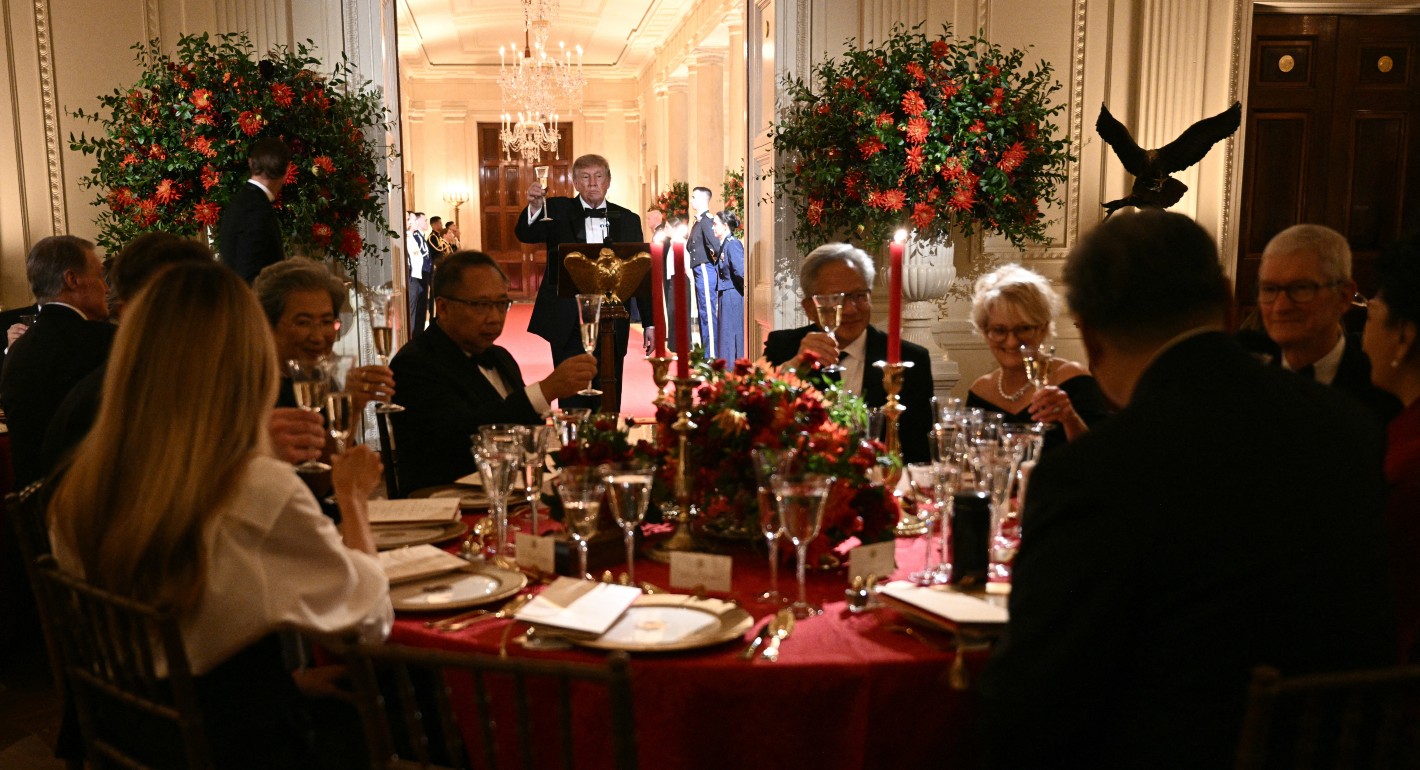
The summit may be remembered as a fatal blunder, when Washington, Beijing, and the AI industry collectively chose ceremony over action.
Jeffrey Prescott