

Article
C. Raja Mohan, Darshana M. Baruah
{
  "authors": [
    "C. Raja Mohan"
  ],
  "type": "legacyinthemedia",
  "centerAffiliationAll": "dc",
  "centers": [
    "Carnegie Endowment for International Peace",
    "Carnegie India"
  ],
  "collections": [],
  "englishNewsletterAll": "ctw",
  "nonEnglishNewsletterAll": "",
  "primaryCenter": "Carnegie India",
  "programAffiliation": "SAP",
  "programs": [
    "South Asia"
  ],
  "projects": [],
  "regions": [
    "South Asia",
    "Afghanistan",
    "Pakistan"
  ],
  "topics": [
    "Security",
    "Foreign Policy"
  ]
}
Source: Getty
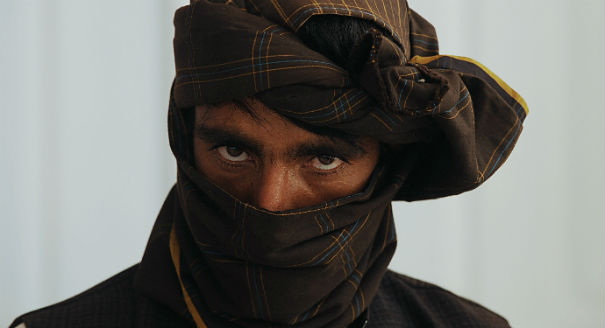
There is no evidence to suggest Nawaz Sharif has persuaded the Pakistani Inter-Services Intelligence to change its strategy to install the Taliban in power and turn Afghanistan into a protectorate of the Pakistan Army.
Source: Indian Express
The release of seven Afghan prisoners by Pakistan over the weekend has raised hopes, once again, for a formal dialogue between Kabul and the Taliban leaders under the protection of Pakistan.
As so often in the past, the latest move could yet end up disappointing Kabul and the Western governments so eager for a political reconciliation with the Taliban, before the international forces pull out of Afghanistan by the end of 2014.
Pakistan's release of the Taliban leaders followed Afghan President Hamid Karzai's visit to Islamabad late last month. This was the first journey by Karzai to Pakistan after the election of Nawaz Sharif as Prime Minister earlier this year.Karzai has been pressing for the release of Mullah Mohammad Baradar, who is said to be the most influential Taliban leader after Mullah Omar. Pakistani intelligence had arrested Baradar in 2010 as Karzai was attempting to negotiate, behind Pakistan's back, with the Taliban.
While Baradar was not among the Afghan leaders let out by Pakistan, there is speculation that the ISI might soon release him. Talks between Kabul and Islamabad on Baradar's release "are now in an advanced stage", Monday's reports in Pakistani media said.
Officials in Islamabad have been quoted as saying that Baradar may be transferred either to Saudi Arabia or Turkey and could well lead the talks with the High Peace Council appointed by Karzai.
But there is no indication so far, at least in the public domain, that the Taliban leadership is ready to talk to Kabul. Until now they have been dismissing him as a puppet of the American occupation forces.
Nor is the Taliban's record of keeping promises made to international interlocutors any good. The earlier attempt at engagement with the Taliban in Doha, Qatar collapsed last June. Violating the initial agreement, the Taliban sought to project its Doha office as an "embassy" of its "government".
Afghan critics of Pakistan say it is by no means certain if those released recently are credible interlocutors. They suspect those let out by Pakistan might represent the interests of the ISI rather than of the Taliban. The critics also insist that only those Taliban leaders who are free and are not under any pressure from Pakistan can be trusted to seriously negotiate the terms of peace with Kabul.
While Pakistan says it has no influence over the Taliban leaders holed out on its territory, the ISI has sought carefully control the contacts between the movement's leaders and the international community and set the terms of the peace process in Afghanistan.
There is no evidence out in the open suggesting Nawaz Sharif has persuaded the ISI to change its long-standing strategy that seeks to install the Taliban in power and turn Afghanistan into a protectorate of the Pakistan Army.
This article was originally published in the Indian Express.
Former Nonresident Senior Fellow, Carnegie India
A leading analyst of India’s foreign policy, Mohan is also an expert on South Asian security, great-power relations in Asia, and arms control.
Recent Work

C. Raja Mohan, Darshana M. Baruah


Alexander Gabuev, Paul Haenle, C. Raja Mohan, …
Carnegie does not take institutional positions on public policy issues; the views represented herein are those of the author(s) and do not necessarily reflect the views of Carnegie, its staff, or its trustees.
Despite the agreement’s uncertainty, it’s still a significant development in regional and nuclear policy.


Andrew Leber, Jane Darby Menton
“AI safety in parallel” is modest and pragmatic but vital.

Matt Sheehan
Trump is distracted and Ukraine wants Europe to step up. The continent’s leaders must find their voice and assert it in talks with Russia.

Alissa de Carbonnel
Unresolved tensions within the AfD may ultimately constrain the its potential as a leader among European and global populist forces.
Jeremy Cliffe
There is a deeply rooted assumption in post–Cold War American statecraft that overwhelming military and economic power translates directly into favorable political outcomes. But force alone is rarely enough. To meet the challenges of the mid-21st century, Washington needs a cultural shift toward a mindset that takes negotiation far more seriously.
Cecily Brewer