

Commentary
Five countries staged the biggest political boycott in Eurovision history over Israel’s participation. With the FIFA World Cup and other sporting or cultural touchstones on the horizon, are boycotts effective?
Rym Momtaz, ed.
{
  "authors": [
    "Michele Dunne",
    "Thomas Carothers"
  ],
  "type": "legacyinthemedia",
  "centerAffiliationAll": "dc",
  "centers": [
    "Carnegie Endowment for International Peace",
    "Malcolm H. Kerr Carnegie Middle East Center"
  ],
  "collections": [
    "Arab Awakening",
    "Democracy and Governance"
  ],
  "englishNewsletterAll": "democracy",
  "nonEnglishNewsletterAll": "",
  "primaryCenter": "Carnegie Endowment for International Peace",
  "programAffiliation": "DCG",
  "programs": [
    "Democracy, Conflict, and Governance",
    "Middle East"
  ],
  "projects": [],
  "regions": [
    "North Africa",
    "Egypt"
  ],
  "topics": [
    "Political Reform",
    "Democracy"
  ]
}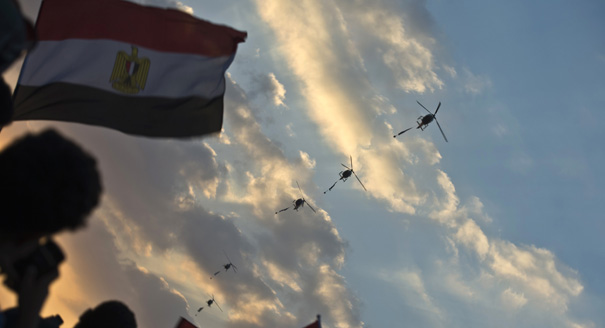
Source: Getty
Washington must not pretend that some empty imitations of democratic processes, such as the recent referendum, constitute a meaningful return to the path toward “bread, freedom and social justice” that Egyptians rightfully demanded in 2011.
Source: Washington Post
In the half-year since the Egyptian military ousted President Mohamed Morsi, U.S. officials from President Obama on down have repeatedly said that the United States seeks to advance “Egypt’s transition to democracy .” Unfortunately, given Egypt’s downward political spiral, what is probably intended to be a principled policy formulation sounds either dangerously naive or deeply cynical — and is pointing U.S. policy down the wrong path.
Supporting Egyptian democracy is certainly the right thing to do. Unlike in some countries where U.S. interests pull in conflicting directions, the achievement of democracy in Egypt would advance the critical U.S. security interest in longer-term stability as well as peace with Israel and would help to contain violent extremism. Only an inclusive, pluralistic political order that respects Egyptians’ aspirations for a voice, accountability and justice would put an end to the repeated paroxysms of mass public protest and signs of incipient extremism. Supporting Egyptian democracy is not a pleasing idealistic extra; it is essential to an effective, hard-nosed policy for security and regional peace.But there is a serious problem with the constant U.S. references to supporting Egypt’s democratic transition: There is no democratic transition in Egypt. That formulation was appropriate after President Hosni Mubarak’s fall in February 2011, when open political contestation took place despite undemocratic steps by various actors. It may have been plausible, briefly, after the military’s ouster of Morsi last July. But in recent months the true colors of the military’s political project have become clear. Through a bruising cascade of actions, laws and decrees that violate basic rights and freedoms, constrain political space and sharpen polarization, Egypt’s security apparatus has defined the boundaries of a new semi-authoritarian system. Last week’s referendum on a new constitution, marred by the exclusion of dissenting views, cemented in place a foundation stone for that project: The constitution gives extensive autonomy and immunity to the army, as well as the right to try civilians in military courts.
In this context, continued U.S. references to the “democratic transition” in Egypt are problematic, especially when accompanied, as they often are, by references to “progress on Egypt’s road map” and the “shared goals” of the U.S. and Egyptian governments. At a minimum, the administration sounds seriously out of touch. (Imagine if throughout the political gridlock and polarization in Washington last year, President Obama had repeatedly stated his support for Congress’s “constructive bipartisanship.”) Worse, these references, however well-intentioned, give the impression that Washington is doing the opposite of supporting democracy — that it is backing the Egyptian military’s project and playing along by depicting it as a democratic path.
Getting the words right on Egypt has become all the more important in the past month — recent U.S. legislation says that nearly $1 billion in U.S. military and economic assistance can be released only if the secretary of state certifies that the Egyptian government “is taking steps to support a democratic transition.” The remaining allocated aid is half a billion dollars and can be spent only if the secretary makes a similar certification about a new Egyptian government after presidential and parliamentary elections, which are scheduled to take place over the next few months. Unlike with previous legislation, the administration may not waive those conditions on national security grounds. A hedge is still possible: the administration could choose to highlight a few strands of political progress while playing down major backward steps, such as the massive ongoing crackdown against Islamists and secular critics of the military in which hundreds have been killed and thousands imprisoned. But would that be wise, and would the relevant congressional committees accept such a certification?Rather than continuing to describe Egypt’s political conditions with words that have less and less to do with reality, the Obama administration and Congress ought to be forthright and accurate about what is happening. While continuing to look for concrete, meaningful ways to weigh in in favor of pluralism, openness and justice in Egypt, the administration should stop using aspirational language that can be misconstrued as supporting current Egyptian political realities. Clarifying our words would also help clarify our policy.
The administration is likely to feel compelled to maintain certain kinds of security cooperation with Egypt and to support the Egyptian people directly via educational or other assistance. But it should make clear that it does so despite strong disapproval of the political path the military is following and serious concern about that path’s implications for the Egyptian people and for U.S. interests, which might well be threatened by reinvigorated Islamic extremism. Washington must not pretend that some empty imitations of democratic processes, such as the recent referendum and what are likely to be equally flawed parliamentary and presidential elections, constitute a meaningful return to the path toward “bread, freedom and social justice” that Egyptians rightfully demanded in 2011.
This article was originally published in the Washington Post.

Former Nonresident Scholar, Middle East Program
Michele Dunne was a nonresident scholar in Carnegie’s Middle East Program, where her research focuses on political and economic change in Arab countries, particularly Egypt, as well as U.S. policy in the Middle East.

Harvey V. Fineberg Chair for Democracy Studies; Director, Democracy, Conflict, and Governance Program
Thomas Carothers, director of the Carnegie Endowment for International Peace’s Democracy, Conflict, and Governance Program, is a leading expert on comparative democratization and international support for democracy.
Carnegie does not take institutional positions on public policy issues; the views represented herein are those of the author(s) and do not necessarily reflect the views of Carnegie, its staff, or its trustees.
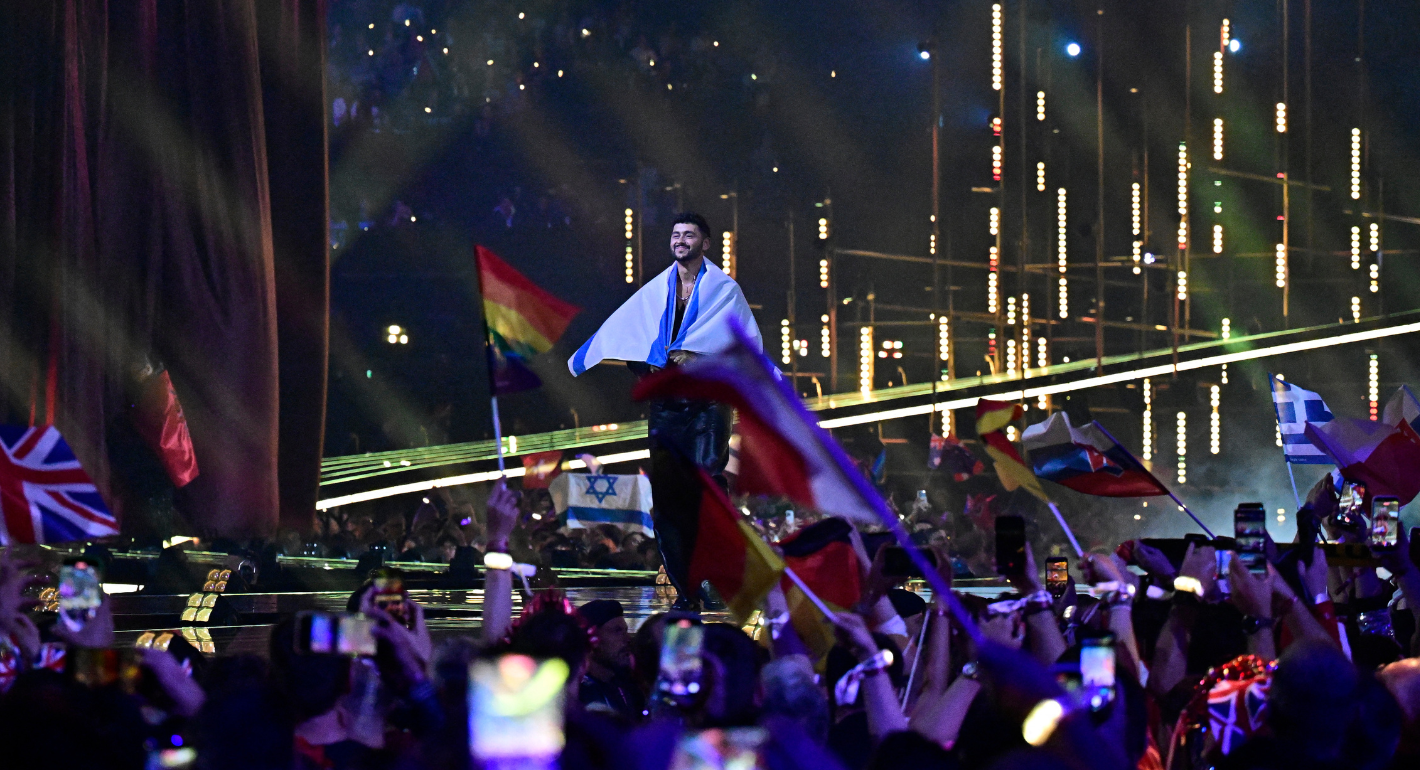
Five countries staged the biggest political boycott in Eurovision history over Israel’s participation. With the FIFA World Cup and other sporting or cultural touchstones on the horizon, are boycotts effective?

Rym Momtaz, ed.

Democratic institutions currently lack the capacity needed to govern AI-augmented deliberation in ways that serve democratic imperatives.

Micah Weinberg

A partnership between India, a country of subcontinental size, and Africa, a continent of fifty-four countries, may seem asymmetric until one notes that both are home to nearly the same number of people—1.4 billion. This essay spells out the existing challenges to the partnership, its optimal potential, and the possible pathways to realize it over the next quarter-century.

Rajiv Bhatia
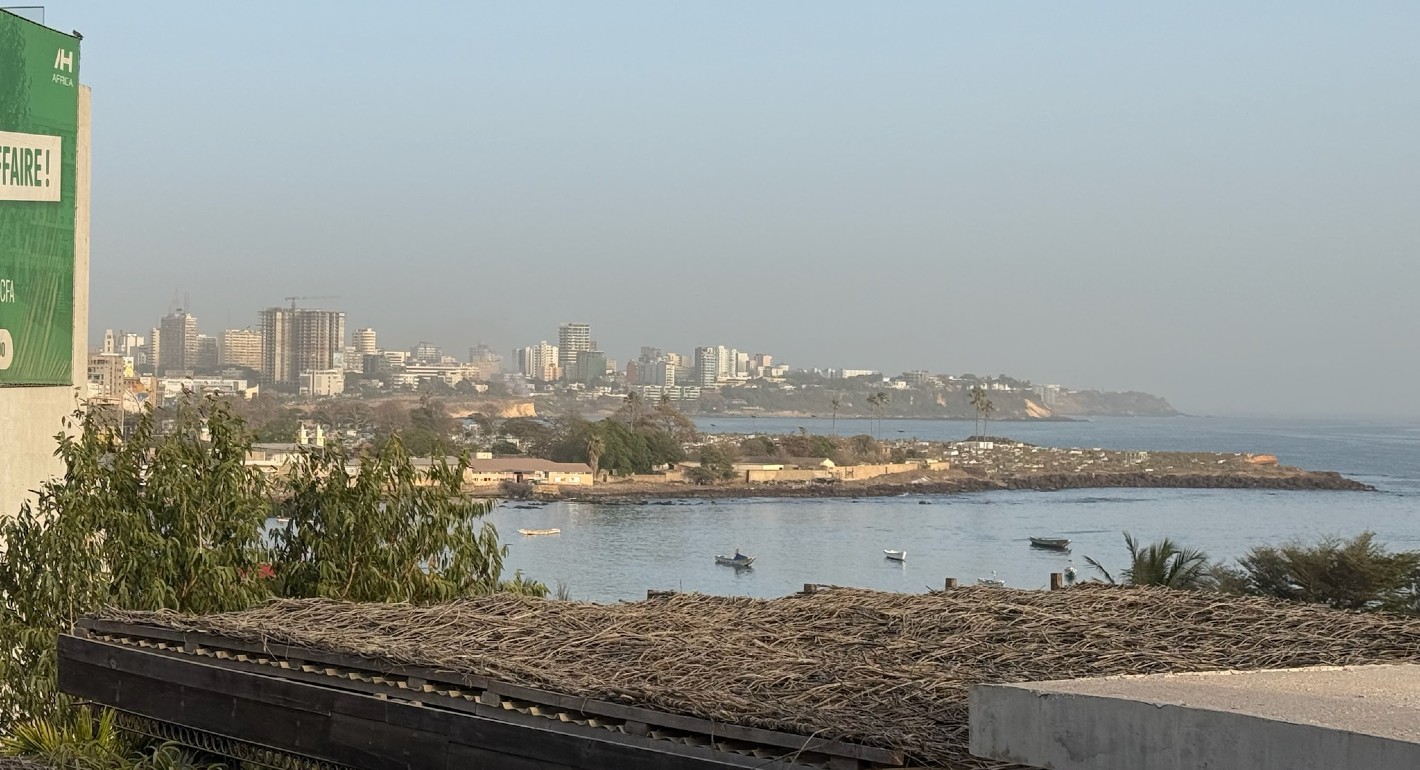
During our visit, we observed a democracy that has learned from its difficult past and is working toward an even more dynamic future.
Sarah Yerkes, Natalie Triche
The battle over representation and regional power has been delayed—not resolved—and will shape the future of India’s federal balance.


Louise Tillin, Milan Vaishnav, Andy Robaina