

Q&A
Dara Massicot, Aaron David Miller, Andrew S. Weiss
{
  "authors": [
    "Andrew S. Weiss"
  ],
  "type": "legacyinthemedia",
  "centerAffiliationAll": "dc",
  "centers": [
    "Carnegie Endowment for International Peace"
  ],
  "collections": [],
  "englishNewsletterAll": "ctw",
  "nonEnglishNewsletterAll": "",
  "primaryCenter": "Carnegie Endowment for International Peace",
  "programAffiliation": "russia",
  "programs": [
    "Russia and Eurasia"
  ],
  "projects": [],
  "regions": [
    "Caucasus",
    "Russia"
  ],
  "topics": [
    "Security"
  ]
}
Source: Getty
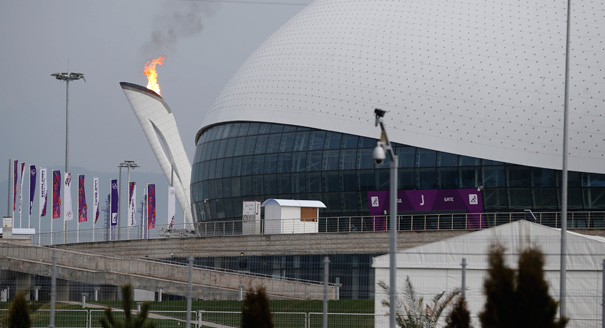
In advance of the Sochi Winter Olympics, mounting security threats are worrying guests and athletes alike.
Source: MSNBC
Speaking with MSNBC’s Andrew Mitchell, Carnegie’s Andrew Weiss discussed Russian security preparations for the Sochi Olympics. He explained that the Kremlin has spared no expense in creating an intrusive “ring of steel” around Sochi, but this may leave Moscow and other Russian cities vulnerable to an attack. The typical modus operandi of terrorist groups in the region makes them more likely to plan an attack on a soft target, likely outside Sochi, said Weiss. He added that “this is Russia’s show and that that’s why U.S. officials, when you speak to them privately, are still pretty worried.” The U.S. presence in Sochi is very small, primarily a liaison function, so evacuating people and dealing with an attack or the aftermath of a crisis would fall to the Russians.

James Family Chair, Vice President for Studies
Andrew S. Weiss is the James Family Chair and vice president for studies at the Carnegie Endowment for International Peace, where he oversees research on Russia, Ukraine, and Eurasia. His graphic novel biography of Vladimir Putin, Accidental Czar: the Life and Lies of Vladimir Putin, was published by First Second/Macmillan in 2022.
Recent Work


Dara Massicot, Aaron David Miller, Andrew S. Weiss

Frances Z. Brown, Nate Reynolds, Priyal Singh, …

Russian strikes are weakening the economy sustaining Ukraine’s war effort. Closing the growing funding gap will require more European support and politically contentious reforms in Kyiv.

Balázs Jarábik

Europe is facing rising populism internally as well as external pressures from Russia, China, Turkey, and the United States.

Dimitar Bechev

Despite a new textbook, an influx of Russian teachers and managers, and an end to the teaching of Ukrainian, the Kremlin is unlikely to have “reprogrammed” locals.

Konstantin Skorkin

For every ruble allocated to social policy, health, and education in 2027, double that amount is earmarked for the army, the police, and the security services.

Alexandra Prokopenko
The acknowledgment has sparked fears of a new arms race with China and Russia.

Chris O’Meara