

Commentary
Uri Dadush
{
  "authors": [
    "Uri Dadush"
  ],
  "type": "other",
  "centerAffiliationAll": "",
  "centers": [
    "Carnegie Endowment for International Peace"
  ],
  "collections": [],
  "englishNewsletterAll": "",
  "nonEnglishNewsletterAll": "",
  "primaryCenter": "Carnegie Endowment for International Peace",
  "programAffiliation": "",
  "programs": [],
  "projects": [],
  "regions": [
    "North America",
    "United States",
    "Middle East",
    "North Africa",
    "Western Europe"
  ],
  "topics": [
    "Economy"
  ]
}
Source: Getty
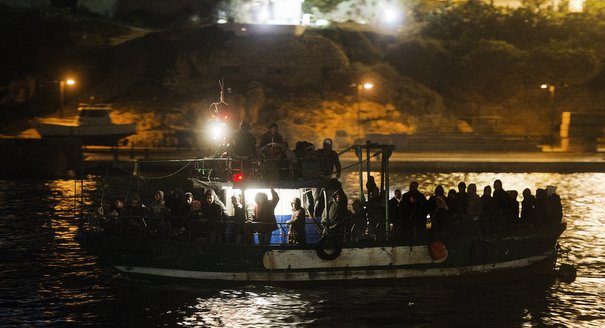
Migration of low-skilled workers into advanced countries remains a highly contentious issue, despite high demand for such workers to carry out a range of essential tasks, especially services.
Source: Knomad Working Paper
Migration of low-skilled workers into advanced countries remains a highly contentious issue, despite high demand for such workers to carry out a range of essential tasks, especially services. This systematic survey of the empirical literature on the effect of low-skilled migration on host countries suggests that fears of an adverse impact on the wages, unemployment and living standards of native low-skilled workers are largely misplaced, while the positive effects on the broad economy are significant and typically underestimated. The empirical literature is underpinned by a robust theoretical framework which suggests that migration will spur investment, induce task specialization of natives and, under certain plausible conditions, ultimately raise the demand for all workers. Host countries should recognize that they need low-skilled migrants and adjust their policies accordingly. Because migrants respond to demand, opening up new avenues for legal migration of low-skilled workers need not necessarily result in increased total immigration provided they are combined with enforcement of labor regulations among employers.This paper was originally published by the World Bank-led Knomad partnership on migration.

Former Senior Associate, International Economics Program
Dadush was a senior associate at the Carnegie Endowment for International Peace. He focuses on trends in the global economy and is currently tracking developments in the eurozone crisis.
Recent Work
Uri Dadush
Uri Dadush
Carnegie does not take institutional positions on public policy issues; the views represented herein are those of the author(s) and do not necessarily reflect the views of Carnegie, its staff, or its trustees.

European Commission President Ursula von der Leyen is about to give her annual address on the state of the EU. Here’s what she won’t—but should—say.

Rym Momtaz

Depleted financial reserves and a shrinking tax base mean it is no longer possible to simultaneously deliver high defense spending, price stability, and economic growth.

Alexandra Prokopenko
Understanding the climatic pain points is necessary for policymakers hoping to minimize the war’s negative environmental consequences.



Alejandro Martin Rodriguez, Joy Arkeh, Sarah Yerkes

Huawei pushed hard to enter the Egyptian data centers market, until the Americans made a better offer.

Angie Omar

Radical-right parties are expected to do well in upcoming elections in four of the EU's biggest member states. If successful, they could prevent the union from addressing key challenges ahead.

Stefan Lehne