

In The Media
Petr Topychkanov
{
  "authors": [
    "Petr Topychkanov"
  ],
  "type": "commentary",
  "centerAffiliationAll": "",
  "centers": [
    "Carnegie Endowment for International Peace",
    "Carnegie Russia Eurasia Center"
  ],
  "collections": [],
  "englishNewsletterAll": "",
  "nonEnglishNewsletterAll": "",
  "primaryCenter": "Carnegie Russia Eurasia Center",
  "programAffiliation": "",
  "programs": [],
  "projects": [],
  "regions": [
    "South Asia",
    "India"
  ],
  "topics": [
    "Political Reform",
    "Economy"
  ]
}
Source: Getty
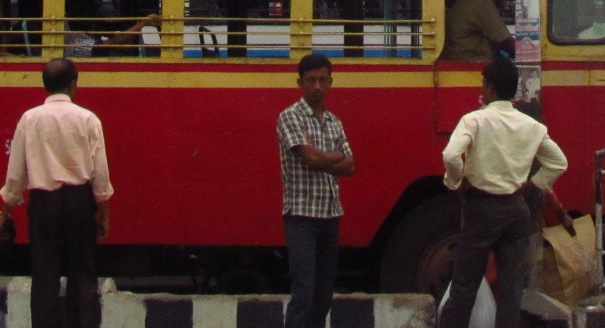
The Indian parliamentary election is in full swing. The name of the future prime minister and the party he will represent are not all that important. It is far more important to the voters that the new government be efficient and professional.
The Indian parliamentary election is in full swing. The sixth round of voting will take place in a number of states on April 24. The last, ninth round is scheduled for May 12. At these elections, the name of the future prime minister and the party he will represent are not all that important. It is far more important to the voters that the new government be efficient and professional.
Indian voters already went to the polls in 24 of India’s 35 states and territories: Arunchal Pradesh, Assam, Goa, Haryana, Karnataka, Kerala, Madhya Pradesh, Maharashtra, Manipur, Meghalaya, Mizoram, Nagaland, Odisha, Punjab, Rajasthan, Sikkim, Tamil Nadu, Tripura, Chhattisgarh, Jharkhand, Andaman & Nicobar Islands, New Delhi, Lakshadweep, and Puducherry.
As of early 2014, India’s electorate totaled 815 million people; 143 million of them (17.5 percent) are first-time voters, as The Hindu periodical reports.
Several pre-election polls rank combating corruption, economic growth, and efficiency as the major concerns of the voters. According to a Pew Research Center survey conducted in late 2013—early 2014, 70 percent of Indians are dissatisfied with the way things are going in the country. The majority of the respondents say inflation, joblessness, and inequality “are not just problems for the country, but very big problems.”
The voters’ opinions reflect the economic hardship India is facing. The declining GDP indicators also point to the problem: 7.9 percent (2004), 9.3 percent (2005), 9.3 percent (2006), 9.8 percent (2007), 3.9 percent (2008), 8.5 percent (2009), 10.5 percent (2010), 6.3 percent (2011), and 3.2 percent (2012). The global economic crisis was not the only culprit responsible for the downward turn; there were domestic causes as well. The growth potential of the service and information technology sectors, which was the main engine driving GDP growth, has been tapped to the extent that India’s conditions allowed it.
In 2013, the share of the industrial sector in India’s GDP reached its 10-year low (15.1 percent). Further economic growth is questionable unless the authorities are able to stimulate industrial development, which requires labor and land reforms. However, such reforms are extremely difficult to implement within the framework of a weak coalition government that faces stiff opposition in the parliament and state legislative assemblies.
Everyone in India expects the Indian National Congress (INC), which has been in power since 2004, to lose the election. This outcome will be quite natural given the fact that most voters associate rising prices, corruption, and other day-to-day problems with Manmohan Singh’s government. Narendra Modi of Bharatiya Janata Party and Arvind Kejriwal of the new Aam Aadmi Party are among Singh’s possible successors. Predicting election results is a thankless job; nevertheless, Modi probably has better chances to win. He enjoys the support of a strong party with an organizational network across the country—a luxury which Kejriwal’s party does not have.
Whatever the case may be, the name of the future prime minister is not so important (I wrote about it earlier). It is far more important that the government be efficient and professional. Essentially, the new government should be able to carry out some long-overdue economic steps. No prime minister will be able to change India’s economic development course without the support of strong parliamentary coalition and regional parties. It makes no difference how strong and charismatic of a figure this prime minister will be.
None of the favorites should expect a carefree term after being elected. Neither Modi nor Kejriwal satisfy all of the regional parties. They will have to make deals with regional leaders even if they form a coalition government together. Not every regional leader would have an easy time dealing with Modi given the reputation he earned after anti-Muslim and anti-Christian violence in Gujarat. The INC’s role should also be taken into account—it will most probably reorganize itself after the election to stay in the game. The Congress will attempt to set itself apart from the Modi government through secular slogans, which may help it to attract the support of left-wing parties and religious minorities.
Thus, Modi’s probable victory may bring about polarization of the country’s political forces. Such conditions make economic reforms hardly possible. Therefore, any politician that will come to power will need to be a skillful compromiser. Convincing regional elites of the dire need for economic transformation and getting their support will enable the future prime minister to create conditions necessary for implementing economic reforms. Doing this will require help from professionals in the government and crafty politicians in the parliament. While the old parliamentary guard may be up for the task, the new government will definitely need some new blood. The 143 million first-time voters should light some new stars in India’s political sky. The government that lacks young professionals is unlikely to consider the interests of India’s changing electorate.

Former Fellow, Nonproliferation Program, Moscow Center
Topychkanov was a fellow in the Carnegie Moscow Center’s Nonproliferation Program.
Recent Work
Petr Topychkanov
Petr Topychkanov
Carnegie does not take institutional positions on public policy issues; the views represented herein are those of the author(s) and do not necessarily reflect the views of Carnegie, its staff, or its trustees.
The war in Iran proves the United States is now a destabilizing actor for Europe and the Arab Gulf. From protect their economies and energy supplies to safeguarding their territorial integrity, both regions have much to gain from forming a new kind of partnership together.

Rym Momtaz
Even if the Iran war stops, restarting production and transport for fertilizers and their components could take weeks—at a crucial moment for planting.

Noah Gordon, Lucy Corthell
Domestic mobilization, personalized leadership, and nationalism have reshaped India’s global behavior.

Sandra Destradi
European reactions to the war in Iran have lost sight of wider political dynamics. The EU must position itself for the next phase of the crisis without giving up on its principles.

Richard Youngs
Tehran’s attacks are reshaping the security situation in the Middle East—and forcing the region’s clock to tick backward once again.

Amr Hamzawy