

Commentary
- +8
Sophia Besch, Eric Ciaramella, Steve Feldstein, …
{
  "authors": [
    "Milan Vaishnav"
  ],
  "type": "legacyinthemedia",
  "centerAffiliationAll": "dc",
  "centers": [
    "Carnegie Endowment for International Peace"
  ],
  "collections": [],
  "englishNewsletterAll": "ctw",
  "nonEnglishNewsletterAll": "",
  "primaryCenter": "Carnegie Endowment for International Peace",
  "programAffiliation": "SAP",
  "programs": [
    "South Asia"
  ],
  "projects": [],
  "regions": [
    "North America",
    "United States",
    "South Asia",
    "India"
  ],
  "topics": [
    "Foreign Policy"
  ]
}
Source: Getty
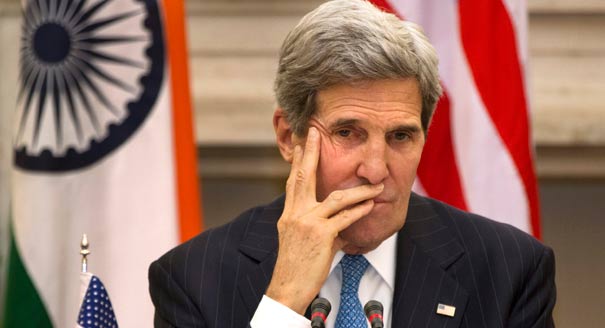
The primary purpose of Kerry’s trip to India is symbolic, but that does not make it unimportant. The Obama administration is looking to reset its relationship with India as a whole as well as with Modi the individual.
Source: Deutsche Welle
The US is hoping that the visit, followed by a trip of Defense Secretary Chuck Hagel to New Delhi next month, will help further deals in defense projects and investments in nuclear energy. India is seen by the US as an essential partner to counter China's rising influence in the region. However, Modi, whose Hindu nationalist Bharatiya Janata Party won a landslide victory in the April/May parliamentary election, has yet to unveil how much he intends to cooperate with the US.
In a DW interview, Milan Vaishnav, political analyst in the South Asia Program at the Carnegie Endowment for International Peace, says that during his three-day visit to India Kerry will reiterate the Obama's Administration's desire to work with Modi's government and move beyond the stumbling blocks in bilateral ties, but adds that Indo-US ties will improve or deteriorate based on the performance of India's economy.Milan Vaishnav: Kerry's trip to India is quite important as it marks his first full-blown interaction with the new government in Delhi and with India's newly elected Prime Minister Narendra Modi.
In my judgment, the primary purpose of Kerry's trip is symbolic, but that does not make it unimportant. The Obama Administration is looking to 'reset' its relationship with India as a whole as well as with Modi the individual.
For almost a decade, following Modi's US visa denial in 2005 in the wake of the 2002 Gujarat riots, the US had no formal diplomatic relationship with Modi. After the BJP's landslide election victory in May, the US moved quickly to signal its willingness to re-engage with Modi - in fact, the US had dispatched its Ambassador in Delhi to meet Modi even before the elections began. Modi will be visiting Washington in September and the strategic dialogue serves as an important intermediate step for laying the groundwork for that engagement.
Given the historically icy relationship between Modi and the United States, Kerry has two main objectives. First, he will reiterate the Obama Administration's desire to work with the new government to strengthen the bilateral partnership between the two countries. In a speech delivered before he left for India, Kerry spoke of his desire that India and the US should become "indispensable partners" for the 21st century.
Beyond the Modi factor, US-India relations have soured in recent years as a host of irritants in the relationship - from trade and intellectual property issues to the spat over the arrest of Indian diplomat Devyani Khobragade - have dominated the narrative. Kerry wants to move beyond these stumbling blocks.
Second, Kerry will finalize arrangements for Modi's historic visit to Washington in late September, where he will meet President Obama. In terms of concrete deliverables, I would expect that the two countries will announce that a number of stalled bilateral dialogues, such as the Trade Policy Forum or the dialogue on higher education, will be resuscitated. These are small, but important steps. The two sides will also discuss a host of critical issues of mutual concern, from energy and climate change to post-2014 Afghanistan. I do not expect this meeting to produce major concrete results, but it will be an opportunity for the two to feel one another out on these contentious policy matters.
From India's point of view, the Modi government swept into office with a mandate for economic renewal. The United States is critical to realizing this mandate as US investment flows and, more generally, the signaling effect US investment has for business as a whole, are of great importance. On the economy, India is looking for two things: capital and technology.
On the former, the US government is not well-positioned to make large commitments of capital because, unlike the Japanese for example, the US government does not have access to large pools of money it can tap into to invest in foreign countries. It can encourage US private investment, but private capital is likely to flow (or not) to India on the basis of the investment climate; the US government can at best play a supporting role.
On technology, there are tangible things the United States can do with India. I expect that defense cooperation will be on the agenda as this is an area where the new government appears keen to deepen ties with the United States. In its maiden budget, the Modi government announced it will allow up to 49 percent foreign direct investment (FDI) in the defense sector.
While the US defense industry welcomed this announcement, without management control - which requires a majority stake - this change may not be enough to spur co-production and development of new technologies.
The US is looking to hear more from the new government on its economic and foreign policy agendas, which are still at a nascent stage of development. I expect that one big sticking point will be on trade, where India has recently thrown a wrench into ongoing World Trade Organization (WTO) negotiations with its recent decision to block a trade facilitation agreement painstakingly negotiated by WTO members until its demands on food security and subsidies are met.
This has raised the ire of most WTO members, including the United States. Given the host of existing trade disputes between the two countries, this development comes at a particularly inauspicious time.
Relations have hit a road bump in the last few years as India's economy has flagged. On India's part, slowing growth and several policy missteps on the part of the previous Indian government damaged ties. On America's part, the Khobragade incident, trade disputes and a perceived lack of attention to the Asia-Pacific on the part of the administration all raised hackles in India.
Having said that, not all of the news between the two countries has been bad. In fact, in 2013 US trade in goods with India hit an all-time high. FDI and foreign institutional investment (FII) flows were also actually quite strong. In addition, cooperation on a range of issues, from counter-terrorism to science and technology, has proceeded apace.
The US government has made a 180-degree turn on Modi over the past few months. It has moved from diplomatic isolation to issuing a presidential invitation to visit the White House, all in just a few months. Irrespective of whether one believes the rapprochement should have come earlier or perhaps should not have occurred at all, either way it is a remarkable turn-around.
The US expects that Modi will live up to the promises he made on the campaign trail to review India's economy and make it a more hospitable place for domestic as well as foreign investors to do business. If Modi succeeds in quickening India's growth rate, curbing high inflation and tackling corruption in government, the US stands to benefit enormously.
The main purpose of his trip, according to officials in India, will be to personally signal his commitment to realizing the transformative potential of US-India relations. Indeed, Secretary Kerry himself has used the same phrase - "transformative" - to describe the potential of the present political and economic moment for both sides.
What we do not know, at this point, is what that means in practice. The strategic dialogue is being urgently put together precisely so the two sides can formulate a realistic agenda.
My belief is that Indo-US ties will improve or deteriorate based on the performance of India's economy. If the new government is unable to improve India's growth performance, then the nagging economic disputes between the two sides will once again threaten to sap the energy underlying the partnership.There is a risk also that India turns inwards, as a result. But if the economy picks up steam, which most analysts expect it to, these irritants may not totally disappear, but there is a lesser likelihood that they will derail deepening ties between the two countries.

Director and Senior Fellow, South Asia Program
Milan Vaishnav is a senior fellow and director of the South Asia Program and the host of the Grand Tamasha podcast at the Carnegie Endowment for International Peace. His primary research focus is the political economy of India, and he examines issues such as corruption and governance, state capacity, federalism, and electoral behavior. He also conducts research on the Indian diaspora.
Recent Work



Sophia Besch, Eric Ciaramella, Steve Feldstein, …

Louise Tillin, Milan Vaishnav, Andy Robaina
Carnegie does not take institutional positions on public policy issues; the views represented herein are those of the author(s) and do not necessarily reflect the views of Carnegie, its staff, or its trustees.
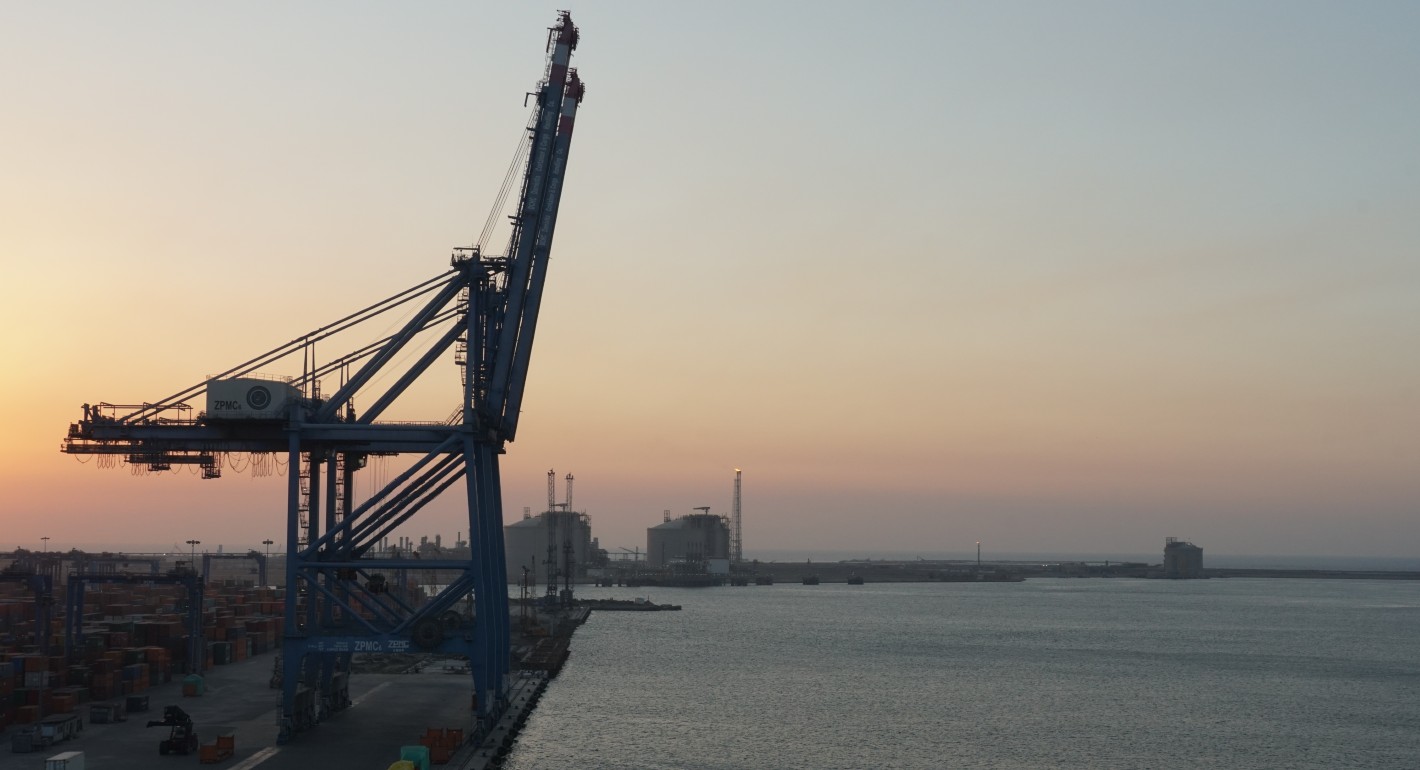
The targeting of Damietta Port appears to be more than a mere security message.

Amr Hamzawy
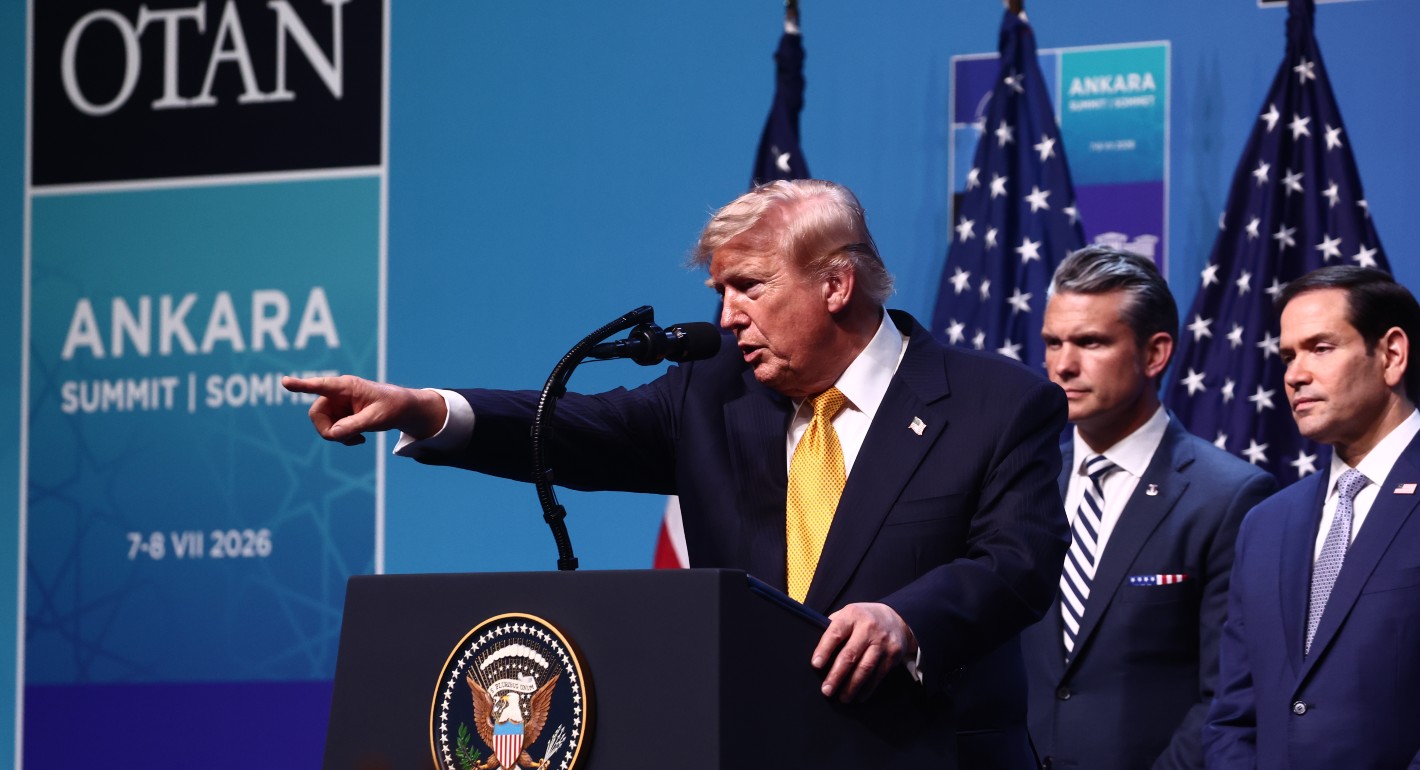
Does Donald Trump want to redraw the map of the world? Historian and geopolitical thinker Stephen Wertheim tries to parse the logic behind current American foreign policy

Stephen Wertheim

As AI grows more sophisticated, as the supply chains that power it become more contested, and as access to frontier models becomes geopolitically charged, India must begin to ask a different set of questions. Not what applications it can build on someone else’s infrastructure but what the world needs.

Konark Bhandari
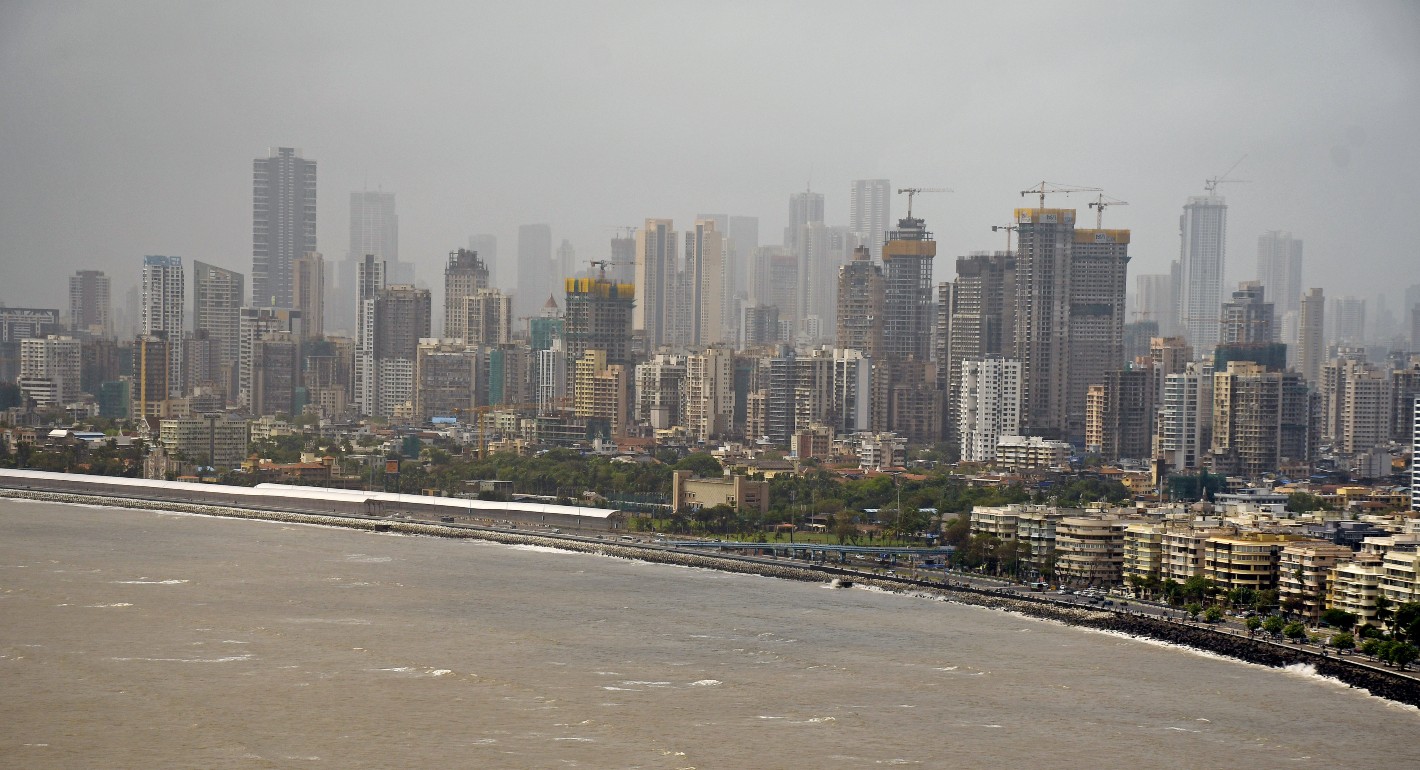
As India undergoes a demographic transition, its cities will be its economic powerhouse—but only if it accurately captures city growth and empowers cities to support their citizens.
Apoorva Jadhav

As we close out another season of Strategic Europe, it is worth taking stock of the deep shifts underway.

Rym Momtaz