

Commentary
Balázs Jarábik
{
  "authors": [
    "Balázs Jarábik"
  ],
  "type": "commentary",
  "centerAffiliationAll": "",
  "centers": [
    "Carnegie Endowment for International Peace",
    "Carnegie Russia Eurasia Center"
  ],
  "collections": [],
  "englishNewsletterAll": "",
  "nonEnglishNewsletterAll": "",
  "primaryCenter": "Carnegie Endowment for International Peace",
  "programAffiliation": "",
  "programs": [],
  "projects": [],
  "regions": [
    "Russia",
    "Eastern Europe",
    "Ukraine",
    "Belarus"
  ],
  "topics": [
    "Security",
    "Foreign Policy"
  ]
}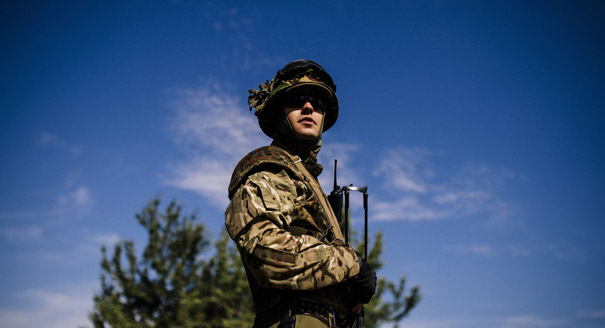
Source: Getty
In the short term, Belarus benefits from the Ukrainian crisis and the stand-off between the West and Russia. However, the worry in Minsk is that Ukraine may yet collapse, dragging Russia along with it.
On Sunday, the Ukrainian military marched through the streets of central Kyiv to celebrate 23 years of tumultuous independence. Some 700 kilometers to the southeast, pro-Russian separatists staged their own spectacle by parading destroyed Ukrainian army vehicles and prisoners of war through Donetsk’s Lenin Square. Amid such divergent realities in today’s Ukraine, the prospect of a breakthrough peace deal at today’s Minsk meeting between Russian President Vladimir Putin and Ukrainian President Petro Poroshenko appears unlikely.
German Chancellor Angela Merkel's first-ever visit to Kyiv sought to reinvigorate the diplomatic track ahead of the Minsk meeting. Berlin and other European capitals appear concerned that Putin, who also is also facing pressure at home, will not let Kyiv win the war against insurgents in the east outright. Western fears are bolstered by the Russian humanitarian and military convoys that have openly entered Ukraine in recent days. It appears that both the Ukrainian government and the Russia-backed separatists are trying to strengthen their position in the east to have greater negotiating power at the meeting in Minsk. The push to regain territory has been costly for the teetering Ukrainian economy; Western military and financial support for Kyiv remains more rhetorical than tangible, even as Russia has brazenly and routinely violated Ukraine’s sovereignty.
In Minsk, Moscow aims to freeze the conflict, despite the latest escalation. By recalling Russian proxies serving as political leaders in eastern Ukraine, toning down demands for federalization (which would allow the region to veto Kyiv’s foreign policy decisions), letting the OSCE monitor the border, and emphasizing the humanitarian dimension of the conflict, the Kremlin has intimated that it is ready for de-escalation. Kyiv and Moscow have opened new diplomatic channels, as illustrated by recent meetings between Putin’s and Poroshenko’s staff. This push toward conciliation may betray a concession to Russian public opinion: whereas up to 90 percent of Russians supported the annexation of Crimea, only about 13 percent support a similar move in the Donbas (Luhansk and Donetsk).
Russia does not want more territory; it seeks to guarantee the preservation of Russian identity in southeastern Ukraine. Moscow would likely compromise on autonomy for the Donbas, perhaps conceding an independent budget and elections of local officials and top law enforcement officers. The lack of pro-Russian elites in eastern Ukraine underscores what many in the Kremlin have long feared: that Russia is losing Ukraine. This fear has been strong enough to inspire the annexation of Crimea and semi-covert intervention in the Donbas, but it also belies weakness. If Putin were “winning” in Ukraine he might not have felt obligated to take such aggressive measures. Proud patriotism plays a more important role in Kremlin politics today than Putin’s past reliance on pragmatism and risk-avoidance in the foreign policy realm.
Military and human considerations in Kyiv may also tip the balance toward a “controlled” conflict. Although the country, including its military, has shown remarkable resilience, victory in the Donbas is a distant hope. The conflict is getting bloodier and more expensive by the day. The death toll now stands at well over two thousand and Kyiv lacks the financial means to re-build the east. Ukraine faces economic collapse if the war continues indefinitely, and its bureaucracy remains dysfunctional. As elites prepare for a crucial parliamentary election in October, large swaths of the Donbas constituencies are displaced internally or have fled to Russia.
Therefore, the Minsk meeting may produce an agreement if Moscow is willing to lower its original demands and allow Kyiv, with OSCE assistance, to control the border. Such a “controlled” conflict may be the lesser of two evils for politicians and would allow Kyiv to focus on Ukraine`s looming economic and social disasters. But many in Ukraine, including the nascent armed forces and semi-autonomous paramilitary groups, will not accept solution that look like concessions. Thus, Poroshenko is walking a fine line. The combination of social and political tensions and the militarization of society could lead to Maidan 3.0.
It is clear that Moscow wants Kyiv’s revolutionary experiment to fail. If Ukrainians' European aspirations are crushed again, the aftertaste will linger. Demands for stability will trump the current thirst for rights and freedoms. Ukrainians are increasingly wary of Western support (or the lack thereof) and tired of what they perceive to be empty promises and posturing. It is also clear that Washington is increasingly focused on foreign policy issues like the Middle East and the beginning of the presidential election cycle. The EU, which has never been united on Ukraine, is demonstrating once again that the higher the stakes are, the more confused it becomes. Still, Western attention and assistance based on Ukraine's real needs are as important as ever.
The fact that the Putin-Poroshenko meeting is hosted by Minsk, alone, shows how fast Eastern Europe is changing. Minsk, long deemed the “last dictatorship of Europe,” has not changed. But geopolitics in the region have. Belarus for ages has been focusing on building up the strength of the state at the expense of democratic institutions. That is a stark contrast with Ukraine, which is intent on pursuing a democratic path but has neglected governance. In the short term, Belarus benefits from the Ukrainian crisis and the stand-off between the West and Russia. However, the worry in Minsk is that Ukraine may yet collapse, dragging Russia along with it. Given its dependence on both, the longer the conflict continues, the more it affects Belarus. Minsk, basically the only rational regional actor in the conflict, seems to understand just how high the stakes actually are.

Political analyst, former Slovak diplomat, and consultant specializing in Eastern Europe
Recent Work
Balázs Jarábik
Balázs Jarábik
Carnegie does not take institutional positions on public policy issues; the views represented herein are those of the author(s) and do not necessarily reflect the views of Carnegie, its staff, or its trustees.
Regardless of the outcome, there’s another path to ensuring that progress doesn’t stall.

Zaur Shiriyev
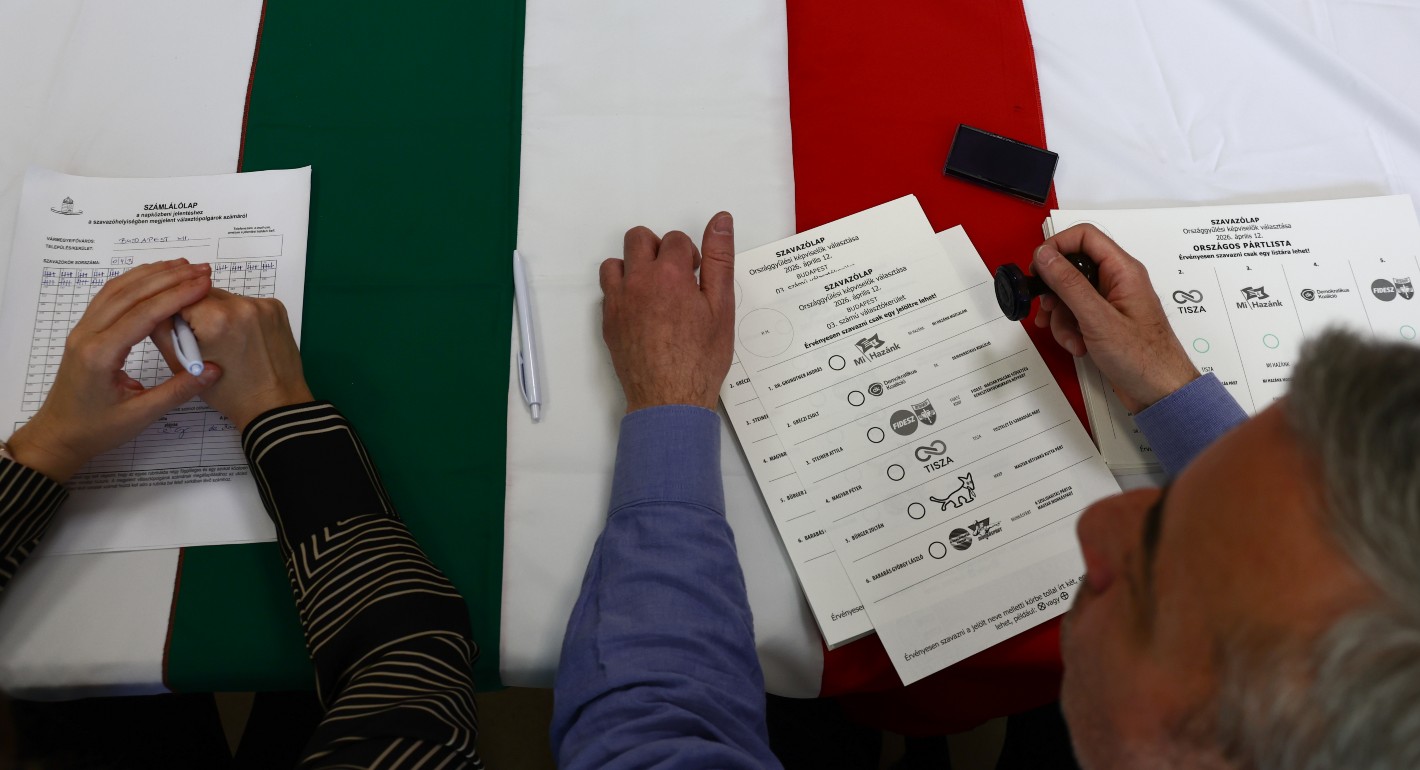
An innovative grassroots civic initiative helped defend the integrity of Hungary’s recent elections, with significant impact on the results and positive lessons for other contexts of democratic backsliding.

Hanna Folsz

But their "principal to principal" model will only be as effective as the political strength of each leader back home.

Damien Ma
China’s Ministry of Public Security is often portrayed as a domestic law enforcement agency, but it is also a global security actor. This paper explores how MPS has used international law enforcement and security cooperation agreements—over 200 since 2006—to advance China’s vision of security in a changing global environment.


Sophie Zhuang, Sheena Chestnut Greitens, Cameron Waltz

The demands of the Kremlin’s war in Ukraine, demographic problems, and public hostility toward Central Asians mean Russia does not have enough workers.
Salavat Abylkalikov