

Paper
Christopher S. Chivvis, Rohan Mukherjee, Milan Vaishnav
{
  "authors": [
    "Milan Vaishnav"
  ],
  "type": "legacyinthemedia",
  "centerAffiliationAll": "dc",
  "centers": [
    "Carnegie Endowment for International Peace"
  ],
  "collections": [],
  "englishNewsletterAll": "ctw",
  "nonEnglishNewsletterAll": "",
  "primaryCenter": "Carnegie Endowment for International Peace",
  "programAffiliation": "SAP",
  "programs": [
    "South Asia"
  ],
  "projects": [],
  "regions": [
    "South Asia",
    "India"
  ],
  "topics": [
    "Political Reform",
    "Economy"
  ]
}
Source: Getty
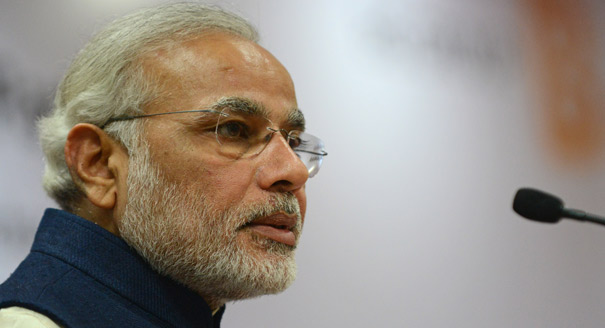
While Indian Prime Minister Narendra Modi has improved the quality of governance in his first hundred days in office, he has yet to pursue major economic policy reforms.
Source: Deutsche Welle
Indian Prime Minister Narendra Modi won a landslide victory in the April-May parliamentary elections on promises to transform India's troubled economy and replicate his phenomenal performance as chief minister of the western Gujarat state on the national level. But has the PM and his Hindu nationalist Bharatiya Janata Party (BJP) been able to lay the foundations for strong economic growth during his first 100 days in office?
Milan Vaishnav, an associate in the South Asia Program at the Washington-based Carnegie Endowment for International Peace, says in a DW interview that Modi has definitely made headway on some fronts, but needs to do a better job on others.
When it comes to administration, Modi has reduced the number of layers in decision-making at the centre, dissolved several cabinet committees with dubious or overlapping mandates, cracked the whip on the Delhi bureaucracy and spoken out about his willingness to curb venality in government. These steps alone will have a positive impact on the economic situation.
However, in order to regain the high growth rates experienced in the mid-2000s on a sustained basis, there is no escaping major policy reform. Administrative tinkering will boost short-term growth and provide greater certainty to investors, but it does not change the fundamentals. Here, Modi has seemed tentative.
While he has taken some positive steps, such as lifting FDI caps in some sectors and raising rail tariffs, on the big policy questions - subsidy reform, privatization and reform of state-owned enterprises, tax policy - the government has been largely silent. In fact, on some areas - trade policy comes to mind - India has regressed, for instance by scuttling the WTO trade facilitation agreement.
I think there is much more convergence on economic policy between the two major parties, Congress and the BJP, which is commonly acknowledged. Indeed, many commentators had said this during the course of the campaign as well. Again, we need to distinguish between administration and policy choices. On the former, while it has experienced some stumbles to be sure, the Modi government should get credit for helping to make government work better.
There are limits to what the central government can do sitting in New Delhi, but simply projecting leadership and control, holding ministers accountable, making sure government officers show up to work - these may sound like small matters, but they can have a very real impact. It is on policy that the NDA has not yet distinguished itself from its predecessor. I emphasize the "yet" because it is still early days.
The new government is benefitting from a cyclical upturn in India's economic fortunes; to some extent, any government - barring perhaps an unwieldy, fragmented coalition - would have enjoyed the same. On top of this, the government's administrative fixes have certainly helped revive the investment cycle. There is no doubt - barring an unforeseen shock - that growth is going to rebound.
The question is whether such momentum can be sustained; that will depend on policy reform. Here, tackling inflation is obviously a priority. To this end, the Reserve Bank of India has maintained a disinflationary stance, while government has tried to curb exports and clam down on hoarding. The measures the Modi government has pursued thus far are fairly modest but it is not clear how much they can actually do in the short term. The real supply-side issues require deeper structural change to cut out the role of middlemen - issues the new government has not fully grappled with.
Finance Minister Arun Jaitley introduced the budget by claiming it would help lay the foundation for India to achieve sustained high growth rates of seven or eight percent, akin to what it enjoyed in the mid-2000s. While the budget was certainly pro-growth in its orientation, it failed to connect the dots. That is, it failed to outline the steps the government would take in order to meet Jaitley's lofty objectives.
On subsidies, the government deferred action until a blue ribbon panel delivered its recommendations. On a potential Goods and Services Tax (GST), the government refused to issue a timeline for implementation. And on the actual budget numbers, the new government largely stuck with the unrealistic fiscal math its predecessor handed down. On the whole, the budget was serviceable, but perhaps an opportunity lost.
This is one of the more promising spots thus far. In addition to using his bully pulpit to talk about the importance of probity in public life, the Modi government is contemplating a number of reforms that could clean up politics. One such idea involves amending the Representation of the People Act, the key law that governs the conduct of elections, to bar politicians who have been charge sheeted with committing a "heinous" crime from standing for elections. At this stage, this is only a draft bill - it has a long way to go - but it is a welcome start.
For starters, Modi has not rolled back - much to the dismay of many of his backers - the expansion in the welfare regime enacted by the former UPA government. Instead, he has talked about finding ways to make this regime more effective. He took a gamble early on to stick with the UPA's ambitious biometric identification scheme, Aadhaar, which has the potential to reduce leakage in the provision of welfare benefits and services.
On the massive National Rural Employment Guarantee Scheme, Modi has suggested keeping the scheme but linking it to the creation of productive assets. On Thursday, August 28, the government announced a new universal financial inclusion scheme that aims to make sure every household has not one, but two, bank accounts. Although the details of the scheme are not yet totally clear, the idea has the potential to be transformative.
Finally, as discussed at some length in his Independence Day speech, Modi has also made sanitation one of his key policy priorities - which is a key driver of health, economic and educational outcomes.
Thus far, the picture is mixed. A big stumble was the government's decision to block the implementation of a new Trade Facilitation Agreement (TFA), painstakingly negotiated through the World Trade Organization (WTO), over fears its agricultural policies (namely, its extensive system of price supports and subsidies) would be adversely affected. The irony is that many economists believe India's concerns have merit; but its tactics left it isolated and could damage future trade deals, not to mention call into question the future of the WTO itself.
To make matters worse, last week, the commerce minister announced she would cancel her trip to Myanmar where India was to finally sign the ASEAN services trade pact. While the reason given for the cancellation was that the trip conflicted with the announcement of the Prime Minister's new financial inclusion scheme, the government has also sent signals that it is not necessarily enthusiastic about moving forward on the trade accord.
Going forward, Prime Minister Modi has to move beyond piecemeal initiatives and outline a broader vision of policy reform. He spoke with clarity and conviction during his Independence Day address on very sensitive social issues, but he needs to harness these same skills when it comes to the economy.
Dithering on reforms or pursuing reform by stealth are both unsatisfying strategies. Modi has succeeded in breathing new life into government; this is no small accomplishment. But he is still wrestling with exactly to channel this newfound dynamism.

Director and Senior Fellow, South Asia Program
Milan Vaishnav is a senior fellow and director of the South Asia Program and the host of the Grand Tamasha podcast at the Carnegie Endowment for International Peace. His primary research focus is the political economy of India, and he examines issues such as corruption and governance, state capacity, federalism, and electoral behavior. He also conducts research on the Indian diaspora.
Recent Work
Christopher S. Chivvis, Rohan Mukherjee, Milan Vaishnav



Sophia Besch, Eric Ciaramella, Steve Feldstein, …
Carnegie does not take institutional positions on public policy issues; the views represented herein are those of the author(s) and do not necessarily reflect the views of Carnegie, its staff, or its trustees.

China’s banking crisis in the 2000s was resolved by transferring the costs to households through financial repression—a decision that recapitalized the banks while exacerbating the structural imbalances that continue to shape the Chinese economy today.

Michael Pettis

In the discussions made possible by the State Duma election campaign, one question is being asked more and more loudly. “What next?”

Andrey Pertsev
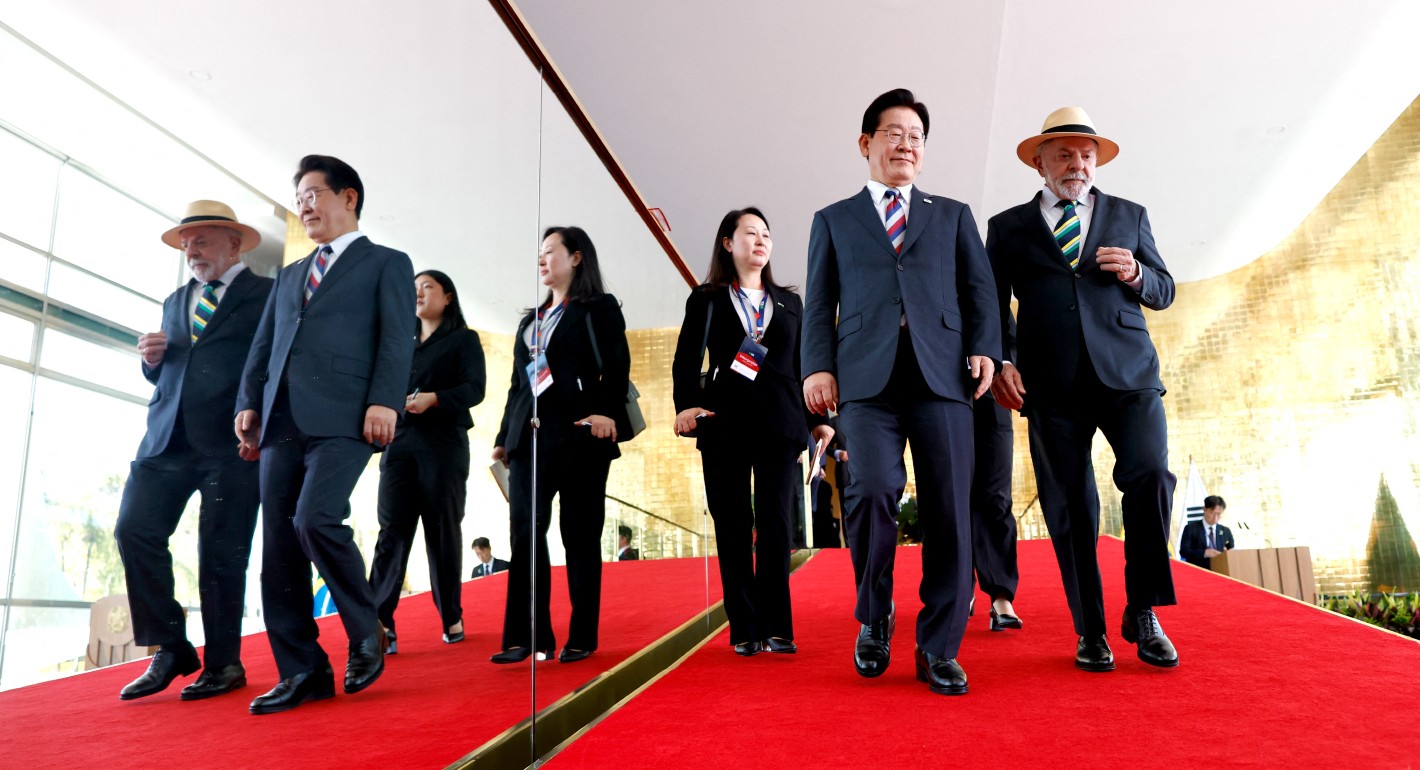
Lee’s tour shows how Seoul is reorganizing its diplomacy away from Pyongyang and toward industrial networks and the geography of the compute economy.

Darcie Draudt-Véjares

Most migrants may have left Ceuta, but the effects may linger.


Alejandro Martin Rodriguez, Sarah Yerkes
Saied’s main accomplishment has been to destroy a decade’s worth of democratic progress.
Sarah Yerkes