

Commentary
Dmitri Trenin
{
  "authors": [
    "Dmitri Trenin"
  ],
  "type": "legacyinthemedia",
  "centerAffiliationAll": "",
  "centers": [
    "Carnegie Endowment for International Peace",
    "Carnegie Russia Eurasia Center",
    "Carnegie China"
  ],
  "collections": [],
  "englishNewsletterAll": "",
  "nonEnglishNewsletterAll": "",
  "primaryCenter": "Carnegie Endowment for International Peace",
  "programAffiliation": "",
  "programs": [],
  "projects": [],
  "regions": [
    "North America",
    "United States",
    "Russia",
    "Eastern Europe",
    "Ukraine",
    "Western Europe",
    "Germany"
  ],
  "topics": [
    "Security",
    "Foreign Policy"
  ]
}
Source: Getty
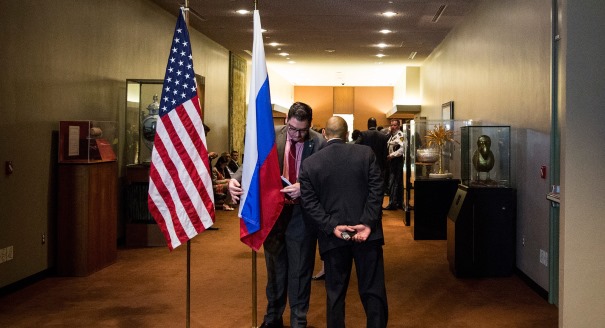
Ukraine is not a cause, but a symbol of the serious and deepening crisis between the United States with its allies and Russia. As this crisis may become a permanent state, it is time for permanent crisis management.
Source: Global Times
Economic sanctions work both ways. Russia, the object of the latest round of sanctions, evidently suffers from its recent exclusion from Western financial markets, new restrictions on the transfer of technology and the drying up of foreign investment. The EU, which has imposed sanctions on Russia alongside the US, Japan, Canada and Australia, has also incurred losses, both from the fall in its industrial exports to Russia, and from Russia's counter-ban on importing European agricultural products.
The US and Russia share a common threat in the Islamic State. It is easy to see that the only beneficiaries from the lack of cooperation and coordination between Russia and the West in the Middle East are local extremists, who, for their part, make little distinction between Westerners and Russians.
Time and again, since the beginning of the Ukraine crisis, hopes have been raised about a de-escalation of the current tensions, leading to the easing and eventually lifting of sanctions. Yet, time and again, these hopes have been exposed as wishful thinking.November 2014 will witness two major international summits, the APEC meeting in Beijing and the G20 event in Brisbane, Australia. Both gatherings will include US President Barack Obama and Russian President Vladimir Putin. Is this a chance to reverse the tide? Will it be used?
The answer is probably no. The main reason for this sad conclusion is that Ukraine is not a cause, but a symbol of the serious and deepening crisis between the US and Russia. Essentially, Russia, in dealing with Ukraine, has broken out of the US-dominated international system. Moreover, it has materially challenged the global order that the US strives to uphold.
For both sides, the stakes are exceedingly high. For Moscow, it is the survival of the Russian state. For Washington, it is the continuity and credibility of the US hegemony. Given these conditions, a compromise is virtually impossible, because any compromise, by its very nature, will necessarily favor Russia, a nonstarter for the US.
It is likely that the US-Russian crisis, rather than being promptly resolved through some new reset, will become a permanent state. In the foreseeable future, Ukraine will be the geopolitical focus of the new confrontation, but much of the struggle will be waged elsewhere: in the realms of geoeconomics, information, culture, and cyberspace.
It is also clear that this confrontation has already expanded beyond the US-Russia relationship. Moscow's relationship with the EU, starting with Germany, is irreparably damaged, as are its relations with other US allies, from Australia to Canada to Japan.
Conflict resolution is not on the agenda. It is time for permanent crisis management. In contrast to the Cold War with which the present Russian-Western confrontation is often compared, the current situation lacks agreed, if unwritten, rules, is characterized by gross asymmetry in power, and is utterly devoid of mutual respect. There is also a near-universal lack of strategic thinking. It is thus more prone than the US-Soviet conflict to lead to a collision in the style of 1914. The Cold War, after all, stayed largely cold. There is no such certainty about the present situation.
Crisis management must ensure, at minimum, that there is no resumption of hostilities in eastern Ukraine. Should Kiev, with Washington's blessing or its acquiescence, attempt to retake Donetsk and Lugansk, the Kremlin may not confine itself to restoring the status quo. It may be that the Russian military will then receive an order to go for Kiev.
The best one can do now is to engage in practical steps to make life less miserable for the people directly affected. The trilateral Russia-Ukraine-EU agreement on gas supplies to Ukraine finally concluded at the end of October is a useful first step. Ukraine will get gas, Russia will get the money, and Europe will have to support Ukraine. Russia, of course, will have to support Donbass on its own: fair enough.
Ukraine and Europe, then, should not overreact to the November 2 elections in Donbass. They would be wise to engage with newly elected leaders of the region. Talking with people, including adversaries, and dealing with them does not imply recognition of an entity, but can be useful in managing important practical issues.
Europeans need to find a way to relate to Russians, even if, in Germany Chancellor Angela Merkel's memorable phrase, Putin may "live in another world." If Europe and Germany want to be a serious player, and they need to become one, for their own security, they have to build a relationship with Russia on a new foundation of realism and pragmatism, without the sweet illusions and false expectations of the past.
Former Director, Carnegie Moscow Center
Trenin was director of the Carnegie Moscow Center from 2008 to early 2022.
Recent Work
Dmitri Trenin
Dmitri Trenin
Carnegie does not take institutional positions on public policy issues; the views represented herein are those of the author(s) and do not necessarily reflect the views of Carnegie, its staff, or its trustees.
Ultimately, Zelensky sided neither with the reform camp nor with the military establishment as such, but with political control.

Balázs Jarábik
Despite the agreement’s uncertainty, it’s still a significant development in regional and nuclear policy.


Andrew Leber, Jane Darby Menton
“AI safety in parallel” is modest and pragmatic but vital.

Matt Sheehan

Trump is distracted and Ukraine wants Europe to step up. The continent’s leaders must find their voice and assert it in talks with Russia.

Alissa de Carbonnel
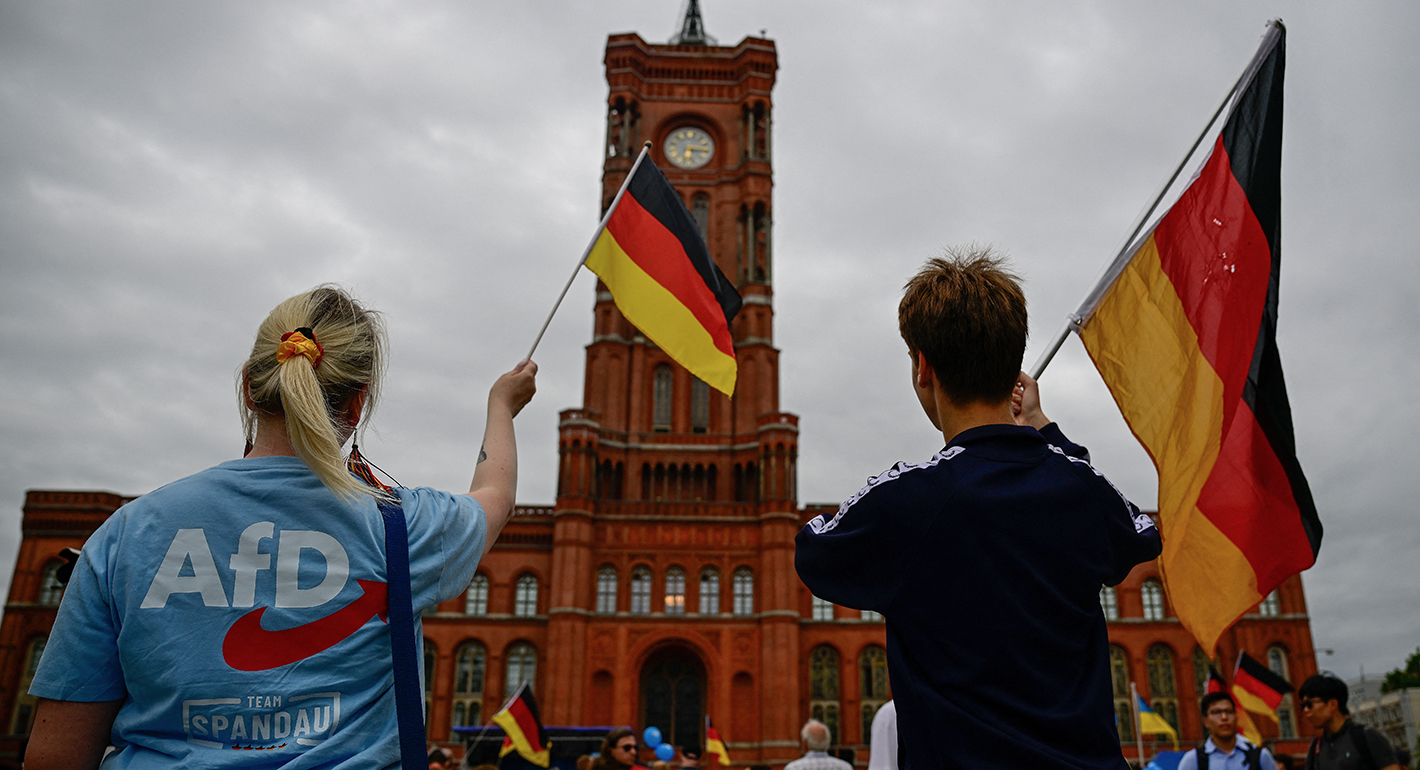
Unresolved tensions within the AfD may ultimately constrain the its potential as a leader among European and global populist forces.
Jeremy Cliffe