

Paper
Richard Youngs, Thomas Carothers
{
  "authors": [
    "Thomas Carothers"
  ],
  "type": "legacyinthemedia",
  "centerAffiliationAll": "dc",
  "centers": [
    "Carnegie Endowment for International Peace"
  ],
  "collections": [
    "Democracy and Governance"
  ],
  "englishNewsletterAll": "democracy",
  "nonEnglishNewsletterAll": "",
  "primaryCenter": "Carnegie Endowment for International Peace",
  "programAffiliation": "DCG",
  "programs": [
    "Democracy, Conflict, and Governance"
  ],
  "projects": [],
  "regions": [
    "North America",
    "United States",
    "Middle East",
    "North Africa",
    "Egypt"
  ],
  "topics": [
    "Political Reform",
    "Democracy",
    "Civil Society"
  ]
}
Source: Getty
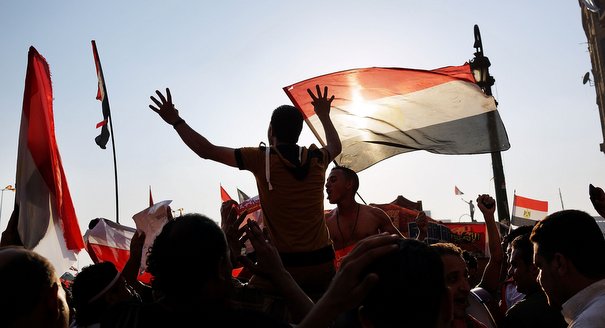
Egypt’s principal political actors have repeatedly violated almost all of the received ‘best practices’ of democratic transitions. In fact, the very lessons that the visiting experts most frequently emphasized are among the most glaring failures of Egypt’s attempted democratic transition to date.
Source: Alliance Magazine
Following the ousting of President Hosni Mubarak in February 2011, Egypt experienced a surge of conferences, workshops and other events featuring comparative lessons about democratic transitions, sponsored by a wide range of foreign organizations. Many of these events highlighted experiences from post-1989 Central and Eastern Europe, invoking the optimism that ensued after the fall of the Berlin Wall. Transition veterans arrived from other parts of the world as well – including South African experts on transitional justice, South American specialists on civil-military relations, Indonesian politicians knowledgeable about democratic inclusion of political Islamists, Indian advisers on transitional elections, and UN and EU advisers on constitutional and legal reform. Several years down the road the results of this wave of lesson sharing appear uncertain, at best.
Undoubtedly some Egyptians gained useful pieces of knowledge from other countries about post-authoritarian pitfalls. But the larger picture with regard to impact is not encouraging: Egypt’s principal political actors have repeatedly violated almost all of the received ‘best practices’ of democratic transitions. In fact, the very lessons that the visiting experts most frequently emphasized – such as the importance of transitional justice, civilian control over the military, inclusive political approaches, and avoiding winner-takes-all strategies – are among the most glaring failures of Egypt’s attempted democratic transition to date.How did the efforts at lesson sharing fall short? To start with, they inadequately addressed the natural resistance among many people in almost any country to embrace foreign ideas about sensitive political issues, even at a time of political opening. Such resistance was especially marked in Egypt, given the country’s strong sense of national identity combined with the negative legacy of past episodes of foreign involvement in the country’s political life. Visiting transition experts typically appealed to what they believe to be a spirit of universality about political values. Although well intended, such appeals were not crafted to speak effectively to Egyptians.
Various shortcomings afflicted the basic methods of these initiatives. The countless conferences and workshops sometimes attracted significant numbers of serious participants. But they rarely fostered badly needed dialogues within the different segments of the overall political scene. Participants were usually the converted or at least the curious with respect to the featured issues. They were infrequently drawn from those circles unenthusiastic about or actively opposing the issues at stake, whether it was transitional justice, gender equality, or civilian control of the military. The audience often did not include the political actors who would be necessary to create a broader political will to absorb lessons or senior and middle management in the very institutions that needed to apply those lessons.
Moreover, the events often presented transitional lessons as generalized wisdom extracted from multiple national experiences rather than focusing on the specific features of the Egyptian scene. Thus, for example, presentations of how Brazil managed to put its military ‘back in the barracks’ failed to examine the significant differences between the role of the Egyptian and Brazilian militaries in the formation of each country’s state. Lectures on Indonesia’s incorporation of moderate Islamists did not probe the significant differences between Indonesia’s and Egypt’s political Islamists.
A related shortcoming was the tendency of outside actors seeking to support democratization in Egypt to assume that those who had mobilized and driven Mubarak out of power would continue to drive the new post-Mubarak political process. In fact, others, especially the Muslim Brotherhood and ‘deep state’ power structures, actively contested for and took over control of the transition process. As a result, assistance efforts designed to help moderate, pro-reform actors identify and choose appropriate policies neglected the much more basic need to help strengthen these actors vis-à-vis tenacious challengers.
Various lessons follow from this brief retrospective look:

Harvey V. Fineberg Chair for Democracy Studies; Director, Democracy, Conflict, and Governance Program
Thomas Carothers, director of the Carnegie Endowment for International Peace’s Democracy, Conflict, and Governance Program, is a leading expert on comparative democratization and international support for democracy.
Recent Work

Richard Youngs, Thomas Carothers

Thomas Carothers, McKenzie Carrier
Carnegie does not take institutional positions on public policy issues; the views represented herein are those of the author(s) and do not necessarily reflect the views of Carnegie, its staff, or its trustees.
Ongoing uncertainty in the Middle East allows Moscow to both increase its influence in Tehran and continue to enjoy the financial windfall of higher oil prices.

Nikita Smagin

To carry out its global AI agenda, Washington will need strategic relationships with emerging markets in Africa, starting with Kenya.
Jane Munga
President Lee marked his first year in office after one of the most tumultuous periods in South Korean politics. Though Lee has enjoyed a high approval rating, a large majority in the National Assembly, and foreign policy victories, Lee and his party’s political fortunes depend on generating economic growth, learning the right lessons from the recent local elections, and managing contentious factional strife within his political base.
Chung Min Lee

This year’s wars have made alternative routes to transit through Russia no less risky for Central Asian countries.

Galiya Ibragimova

By burying disagreements in imprecision, the new deal risks same fate as its predecessors.

James M. Acton