

Article
C. Raja Mohan, Darshana M. Baruah
{
  "authors": [
    "C. Raja Mohan"
  ],
  "type": "legacyinthemedia",
  "centerAffiliationAll": "dc",
  "centers": [
    "Carnegie Endowment for International Peace",
    "Carnegie India"
  ],
  "collections": [],
  "englishNewsletterAll": "ctw",
  "nonEnglishNewsletterAll": "",
  "primaryCenter": "Carnegie India",
  "programAffiliation": "SAP",
  "programs": [
    "South Asia"
  ],
  "projects": [],
  "regions": [
    "South Asia",
    "India"
  ],
  "topics": [
    "Foreign Policy",
    "Political Reform",
    "Religion"
  ]
}
Source: Getty
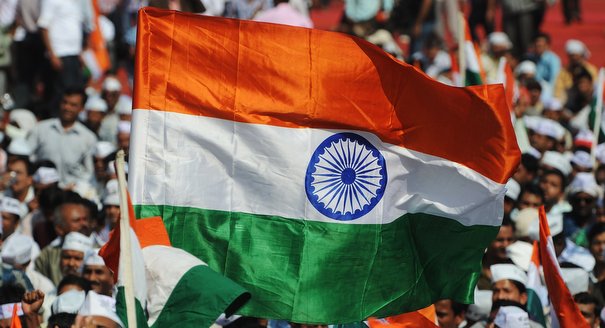
The United Nations General Assembly recently declared an annual International Day of Yoga. This small step underlines the immense possibilities for projecting India’s soft power under Modi.
Source: Indian Express
The United Nations General Assembly last week declared June 21 as the annual ‘International Day of Yoga’, following an appeal by Prime Minister Narendra Modi three months ago. This small but interesting step underlines the immense possibilities for projecting India’s soft power under Modi.
But the extremist Hindutva groups are undermining Modi’s soft power strategy with their aggressive promotion of a culture of intolerance and the politics of hate. It is not clear if the government is computing the external costs of lending political impunity to these groups at home.
When he addressed the UN General Assembly in September, Modi urged the United Nations to support the promotion of yoga around the world. Calling “yoga is an invaluable gift of our ancient tradition”, Modi argued that “yoga embodies unity of mind and body; thought and action; restraint and fulfilment”Modi insisted that yoga is about “harmony between man and nature; a holistic approach to health and wellbeing. It is not about exercise but to discover the sense of oneness with yourself, the world and the nature”. “By changing our lifestyle and creating consciousness”, Modi suggested, yoga “can help us deal with climate change”, he said.
The Foreign Office quickly mobilised support for the proposal and won the support of 175 sponsors at the UNGA for the resolution on international day of yoga. The resolution was adopted through an acclamation.
The extraordinary support that the proposal won at the United Nations underlines the growing popularity of yoga worldwide. It is only in a few places that yoga is seen as a Hindu religious ritual and viewed with great suspicion.
Yoga’s international popularity has little to do with the government in Delhi. A variety of factors, including the spread of the Indian diaspora, the globalisation of popular culture and the recognition of its health benefits, helped generate near universal interest in yoga.
One can only hope Modi does not introduce the heavy hand of the Indian bureaucracy into the promotion of yoga around the world. Whether it is yoga or Bollywood, Indian soft power has steadily grown over the decades precisely because the government had nothing do with it.
The Modi government should also distance itself from the efforts of Hindu groups at home and abroad that want to “take back yoga”. The attempt to claim exclusive Hindu ownership will only invite a backlash, from state and non-state actors, elsewhere in the world.
Yoga is not the only focus of Modi’s soft power strategy. During his travels to Bhutan, Nepal, Japan, the United States, Myanmar, Australia and Fiji, Modi has consistently emphasized the importance of Indian democracy. Along with economic ‘demand’ and a youthful ‘demography’, Modi has affirmed, “democracy” makes India a valuable partner for the world.
To be sure, Modi is not the first Indian leader to identify democracy as central to India’s international identity. Soon after independence, non-alignment and anti-Western orientation came to define India’s international personality. It was Atal Bihari Vajpayee who began to inject democracy into India’s international engagement.
The NDA government then offered support to the U.S. initiative to develop a “community of democracies” at the global level. His successor, Manmohan Singh took a step forward by arguing that democracy is central to India’s identity in the 21st century. But the Congress leadership remained ambivalent about lending such weight to Indian democracy and preferred ‘non-alignment’ and ‘socialism’ instead.
Neither Vajpyaee nor Manmohan Singh were taken in by the Western proposition that India must actively ‘promote’ democracy worldwide. They recognised that the greatest Indian contribution was in setting an example and demonstrating that democracy is the best form of governance for developing nations.
Vajpayee and Singh were ready to offer assistance to those young democracies seeking it; but they had no desire to impose it unilaterally on others. Modi has stuck to that general line even as he highlights the global relevance of Indian democracy.
Modi has not let India’s democratic beliefs to come in the way of economic engagement with an authoritarian China or strategic collaboration with communist Vietnam. The has also signaled an acute awareness of the fact that shared political values can help deepen India’s strategic partnerships with the United States, Western Europe and the Asian democracies.
If Delhi was hesitant in the past to project its rich cultural inheritance from the past or celebrate its contemporary democratic values, Modi appears bolder on both fronts.
Modi’s efforts at projecting soft power, however, are likely to come to nought if the government continues to allow a free run to groups that seek to anchor India’s rich cultural inheritance on a narrow and religious basis and infect India’s democratic culture with the virus of majoritarianism.
The creation of resentful majority and an insecure minority is a sure fire recipe for internal disharmony that is bound to generate severe external political and diplomatic costs in the region and beyond.
If unchecked, the extremist forces of the Hindutva will not only undercut India’s soft power but also overturn Modi’s hopes to rapidly enhance Delhi’s hard power through a vigorous engagement with friends and partners.
This article was originally published in the Indian Express.
Former Nonresident Senior Fellow, Carnegie India
A leading analyst of India’s foreign policy, Mohan is also an expert on South Asian security, great-power relations in Asia, and arms control.
Recent Work

C. Raja Mohan, Darshana M. Baruah


Alexander Gabuev, Paul Haenle, C. Raja Mohan, …
Carnegie does not take institutional positions on public policy issues; the views represented herein are those of the author(s) and do not necessarily reflect the views of Carnegie, its staff, or its trustees.

China’s political future will be shaped between now and next October. As the Communist Party enters its intense “campaign season” to prepare for a major political transition in 2027, reading Beijing's actions and responses may become more difficult as domestic politics weigh on its behavior more than usual.

Damien Ma

The EU can impose sanctions but struggles to enforce them without the United States. With Washington increasingly disinterested in backing European interests, the bloc must now fend for itself.


Nicu Popescu, Tiago Antunes
Global and rising powers will need to engage with Africa’s priorities and agency in order to secure the continent’s increasingly attractive partnerships.
Fonteh Akum
Rubio’s recent visit brought welcome attention, but more capital requires governance changes that may be a hard sell for regional governments.
Jennifer B. Murtazashvili

America’s foreign-policy objectives have grown more demanding while Americans have demanded greater focus on their own affairs.

Stephen Wertheim