

Article
C. Raja Mohan, Darshana M. Baruah
{
  "authors": [
    "C. Raja Mohan"
  ],
  "type": "legacyinthemedia",
  "centerAffiliationAll": "dc",
  "centers": [
    "Carnegie Endowment for International Peace",
    "Carnegie India"
  ],
  "collections": [],
  "englishNewsletterAll": "ctw",
  "nonEnglishNewsletterAll": "",
  "primaryCenter": "Carnegie India",
  "programAffiliation": "SAP",
  "programs": [
    "South Asia"
  ],
  "projects": [],
  "regions": [
    "South Asia",
    "India",
    "East Asia",
    "China"
  ],
  "topics": [
    "Domestic Politics",
    "Economy",
    "Climate Change"
  ]
}
Source: Getty
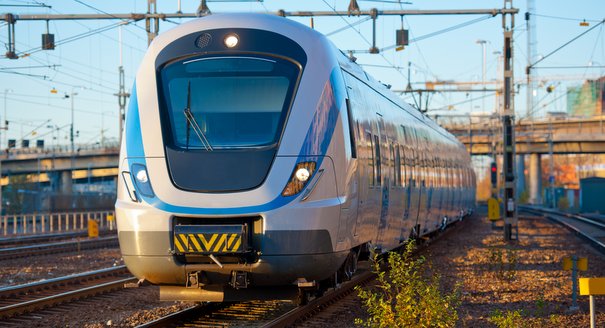
As the Indian government presents the rail budget, it is worth reflecting on the growing gap between the Indian railway system and that of its Asian peer, China.
Source: Indian Express
As the NDA presents the rail budget this week, it is worth reflecting on the growing gap between the Indian railway system and that of its Asian peer, China. Thanks to the British Raj, India had a head start over China in the 19th century. The British built the first experimental rail line in the subcontinent near Chennai in 1836. In China, it was a British company, Jardine, Matheson and Company, which laid the first tracks in Shanghai in 1876. The line connected British and American territorial settlements with the Wusong docks on the Huangpu River. But the local governor of Shanghai quickly dismantled it, accusing the British of building the line without the permission of the emperor in Beijing.
By the turn of the 20th century, the subcontinent had nearly 15,000 km of railway track, in comparison to just 600 km in China. After Partition and Independence in 1947, India’s rail network was nearly 54,000 km. China, in contrast, had about 27,000 km, of which barely 8,000 km was usable because of the civil war. Since Independence, China has nearly quadrupled its rail network to about 1,10,000 km. India has added barely 11,000 km of track.
The total span of the rail network is only one measure of India’s slowdown relative to China. Once the leader in the development of railways in the non-Western world, India is no longer at the cutting edge. As far back as the late 19th century, the Indian Railways was laying tracks in distant lands of Africa and surveying potential rail routes to China through Burma. New Delhi now desperately needs foreign collaboration to come up to speed with the rest of the world, thanks to misguided policies of self-reliance and massive mismanagement over the last many decades.The Chinese railways, in the reform era unveiled by Deng Xiaoping in the late 1970s, eagerly sought foreign collaboration, absorbed the technology, mastered it and has now begun to export it. Consider the development of high-speed railways in China. If Delhi turned its back on emerging technologies two decades ago, Beijing is now the leader. China launched its first high-speed rail line in 2003. A decade later, its high-speed network spans more than 12,000 km. China wants to expand its rapid rail network to about 25,000 km and connect all cities with a population of 500,000.
Both Chinese nationalists and the communists understood the importance of railways in unifying the nation, integrating domestic markets, promoting economic development, securing far-flung frontiers and promoting Chinese influence abroad. These were, in fact, the very motives that drove the Raj to build an expansive rail network on the subcontinent that stretched from Tinsukia in the east to Quetta in the West, and from Peshawar in the north to Dhanushkodi in the South.
If the British Raj understood the strategic significance of the railways, the rulers of independent India squandered the inherited advantage and have wrecked the system rather than build on it. In China, the first president of the first republic, Sun Yat Sen, dreamt of connecting the entire country through a massive rail network. That dream has been realised in full measure by his communist successors.
The Chinese Communist Party leadership has also built on Sun’s plans to extend the Chinese railways to far-flung corners of the Eurasian landmass. The breathtaking scope of China’s vision can be gauged by the plans to build a railway line from Northeast China to the United States through Russia and China. They want to connect China to California through Siberia. If and when it is built, the 13,000 km railway line will be the longest in the world.
The boldest part of the plan is to build a 200 km underwater tunnel in the Bering Strait, which connects Asia to North America. To cap it all, Chinese companies say they will fully fund and construct the link. From Alaska to Argentina and from Africa to Australia, railway diplomacy has become one of the central themes of China’s international engagement. Armed with technology and massive financial resources, Chinese companies are competing with each other to win railway contracts around the world.
In Delhi, the Modi government has said all the right things about the long-overdue modernisation of the Indian Railways. It has pressed the railways to look at high-speed corridors. The PM has demanded early implementation of the long-pending projects on connecting India’s border regions with railways. The NDA government has also reached out to China and Japan for collaboration on railways, including on high-speed trains and heavy haulage. But turning the talk into reality was never going to be easy. The budget this week will show if the government’s political will is strong enough to prevail over the entrenched conservatism of the Indian Railways establishment.
This article was originally published by the Indian Express.
Former Nonresident Senior Fellow, Carnegie India
A leading analyst of India’s foreign policy, Mohan is also an expert on South Asian security, great-power relations in Asia, and arms control.
Recent Work

C. Raja Mohan, Darshana M. Baruah


Alexander Gabuev, Paul Haenle, C. Raja Mohan, …
Carnegie does not take institutional positions on public policy issues; the views represented herein are those of the author(s) and do not necessarily reflect the views of Carnegie, its staff, or its trustees.

Despite its flop at the box office, the film raises important questions for the climate community to answer.

Leonardo Martinez-Diaz

Russian strikes are weakening the economy sustaining Ukraine’s war effort. Closing the growing funding gap will require more European support and politically contentious reforms in Kyiv.

Balázs Jarábik

While the EU and European governments are embracing the much-lauded middle-power moment, this entails three difficult conundrums.

Richard Youngs

Ex-president Gurbanguly Berdimuhamedov remains interested in politics, but his son Serdar, Turkmenistan’s current president, is becoming increasingly independent and willing to break with his father’s legacy. If their covert rivalry goes too far, both risk losing power.

Galiya Ibragimova

Europe is facing rising populism internally as well as external pressures from Russia, China, Turkey, and the United States.

Dimitar Bechev