

Article
Pierre Goldschmidt
{
  "authors": [
    "Pierre Goldschmidt"
  ],
  "type": "legacyinthemedia",
  "centerAffiliationAll": "dc",
  "centers": [
    "Carnegie Endowment for International Peace"
  ],
  "collections": [
    "U.S. Nuclear Policy"
  ],
  "englishNewsletterAll": "ctw",
  "nonEnglishNewsletterAll": "",
  "primaryCenter": "Carnegie Endowment for International Peace",
  "programAffiliation": "NPP",
  "programs": [
    "Nuclear Policy"
  ],
  "projects": [],
  "regions": [
    "North America",
    "United States",
    "Western Europe"
  ],
  "topics": [
    "Nuclear Policy"
  ]
}
Source: Getty
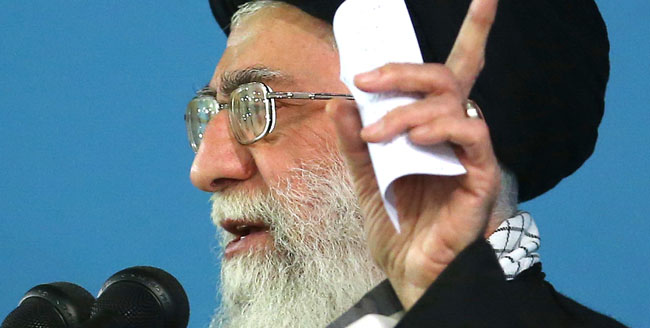
One of the main outstanding loopholes of the international nonproliferation regime that deserves prompt attention is the absence of a requirement for irreversible IAEA safeguards to remain in force should a state leave the nuclear Nonproliferation Treaty.
Source: Arms Control Today
Over time, states have endeavored to improve the effectiveness of the international nonproliferation regime. These efforts have included the adoption by the International Atomic Energy Agency (IAEA) of the Model Additional Protocol to comprehensive safeguards agreements, the tightening by the Nuclear Suppliers Group (NSG) of export criteria on sensitive nuclear fuel-cycle technology, and the adoption of UN Security Council Resolutions 1540 and 1887.
One of the main outstanding loopholes that deserves prompt attention is the absence of a requirement for irreversible IAEA safeguards to remain in force should a state leave the nuclear Nonproliferation Treaty (NPT). Today, if Iran or any other NPT non-nuclearweapon state withdraws from the treaty, its comprehensive IAEA safeguards automatically lapse under the terms of that agreement.Under Article X.1 of the treaty, an NPT party has the right to withdraw, with three months’ notice, “if it decides that extraordinary events, related to the subject matter of [the NPT], have jeopardized the supreme interests of its country.” The model comprehensive safeguards agreement, which NPT nonnuclear- weapon states are required to adopt, contains no reference to safeguards implications after a state’s withdrawal from the NPT.

Former Nonresident Senior Associate, Nuclear Policy Program
Goldschmidt was a nonresident senior associate at the Carnegie Endowment.
Recent Work
Pierre Goldschmidt
Pierre Goldschmidt
Carnegie does not take institutional positions on public policy issues; the views represented herein are those of the author(s) and do not necessarily reflect the views of Carnegie, its staff, or its trustees.

The summit may be remembered as a fatal blunder, when Washington, Beijing, and the AI industry collectively chose ceremony over action.

Jeffrey Prescott
European NATO countries are wrestling with the possibility of U.S. disengagement from the alliance. With the continent’s security increasingly uncertain, governments must restore the credibility of their collective defense.



Hans-Dieter Lucas, Adam Thomson, Pierre Vimont

Soft power on its own is insufficient to meet U.S. national security needs, but hard power also has its limits. Soft power allows for more effective and efficient use of hard power than hard power alone, as it encourages cooperation and compliance which deters the need for hard power.

Sarah Yerkes

A deep dive into the policy ecosystems behind battery development in China, South Korea, Japan, the European Union (including some of its member states), the United States, Canada, and India.



Milo McBride, Herbert Crowther, Darcie Draudt-Véjares, …

In an interview, Ian Lustick and Eli Clifton discuss their new book on why a prominent ally has so much influence in America.

Michael Young