

Commentary
Dmitri Trenin
{
  "authors": [
    "Dmitri Trenin"
  ],
  "type": "legacyinthemedia",
  "centerAffiliationAll": "",
  "centers": [
    "Carnegie Endowment for International Peace",
    "Carnegie Russia Eurasia Center"
  ],
  "collections": [],
  "englishNewsletterAll": "",
  "nonEnglishNewsletterAll": "",
  "primaryCenter": "Carnegie Russia Eurasia Center",
  "programAffiliation": "",
  "programs": [],
  "projects": [],
  "regions": [
    "North America",
    "United States",
    "East Asia",
    "China",
    "Japan",
    "Russia"
  ],
  "topics": [
    "Foreign Policy"
  ]
}
Source: Getty
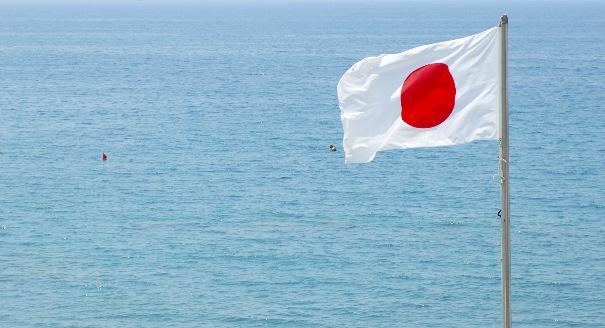
Japan’s national interests need to be front and center, rather than subordinated to the not always clear vision—or lack of it—of a particular administration in Washington. These interests demand that Tokyo keeps a viable relationship with Moscow.
Source: Japan Up Close
In the 1990s, Japan's then Prime Minister, Ryutaro Hashimoto, came up with an outline strategy for Eurasia. Thus, he was reacting both to the dissolution of the Soviet Union, a few years previously, and the emergence of new states, particularly in Central Asia, as well as to the growing importance of energy security, which he believed could be improved through an outreach to Russia and several other former Soviet republics.
Over the past almost two decades, this strategy has seen ups and downs, adjustments, regional variations and the likes. Hopes for resolving the territorial issue between Tokyo and Moscow have risen and fallen. Trade, however, has progressed, including in the energy domain, with Russia now supplying 10% of Japan's needs in oil and gas. In Central Asia, Japan has won itself a good name through its offer of public goods to the new states in the region.
Time has come, however, for the next step. The context has kept changing, resulting in a number of qualitative changes. The most salient one concerns China. The country has risen economically and militarily to a level where it claims a much greater international clout. China has turned into the dominant power of East Asia, and is well on the way to become a leading force across the great continent of Eurasia. Japan, which does not want to be swayed toward Beijing's orbit, faces a clear challenge.China's road to continental and eventually global geopolitical prominence lies through extending Beijing's influence to its vast neighborhood. President Xi Jinping's recent Silk Road initiatives aim at marching west and sailing south, engaging clients, partners and friends. If successful, much of continental Asia, Russia, and Central Asia will be linked to China economically, and increasingly aligned with it politically. This would shift the center of gravity in Eurasia eastward - for the first time since the empire of Genghis Khan.
One important key to this tectonic shift is Russia. The Ukraine crisis has ended the unprecedented quarter-century-long period of Russia seeking integration into, or at least, with the West. The failure of integration has sent Russia back to its traditional stance as a power in the center of Eurasia, but without resources to control its periphery. Moreover, Russia has come under serious political and economic pressure from both the United States and the European Union, which limit its access to the global market and external resources for modernization.
Faced with this challenge, Russia has now moved much closer to China than before. The relationship, once described as a marriage of convenience and shrugged off by many in the West, is acquiring a new quality. Energy relations are turning into a partnership, military technology transfers are becoming more sophisticated and military exercises more frequent, and Beijing-led infrastructure projects are making China and Russia better connected physically. "Greater Europe from Lisbon to Vladivostok" of Putin's dreams is being replaced by the reality of a "Greater Asia" from Shanghai to St. Petersburg.
In this context, Central Asia, which most Western analysts believe can be an apple of discord between Moscow and Beijing, effectively limiting Sino-Russian rapprochement, has a far better chance of becoming an area of closer cooperation between the two neighboring powers. A de facto merger, or at least synergy between the Eurasian Economic Union and the Silk Road Economic Belt is the likely future for the region, which also includes Mongolia.
The deepening Sino-Russian cooperation is not limited to economic pragmatism. President Xi's presence during the Victory Day parade in Red Square on May 9 as the most important foreign dignitary visiting Russia on the most important, even sacred day in the Russian national calendar will be reciprocated by Vladimir Putin's reviewing the PLA show of force in Beijing during the September 3 celebration marking the 70th anniversary of the end of World War II. The messages that the two leaders are about to give are not about history. They are about the future.
The Sino-Russian bloc is not to be resurrected, for sure. Japan, however, is hardly well served by the U.S. policies which are aimed at isolating and ignoring Russia, while driving Moscow and Beijing much closer together and placing much of continental Asia under China's soft dominance. Tokyo has to update and refresh its Eurasia strategy.
It needs to be said up front that the U.S.-Japan alliance is not in question. It provides Japan with physical security. However, as the recent developments have demonstrated, Japan cannot live by the alliance alone. The Obama Administration's foreign policy is making Japan's geopolitical environment less favorable, and potentially more dangerous for Tokyo.
While keeping the alliance alive and well, Japan needs to think harder for itself. Its national interests need to be front and center, rather than subordinated to the not always clear vision - or lack of it - of a particular administration in Washington. These interests demand that Tokyo keeps a viable relationship with Moscow. Unlike China, Russia bears no historical grudge against Japan, Russians are generally friendly toward the Japanese people, and desire for more cooperation with their Far Eastern neighbor.
If Japan's interest is to prevent Moscow from embracing Beijing's Japan agenda in its own relations with Tokyo, then keeping the channels of communications with the Kremlin open is a first priority. So far, Prime Minister Shinzo Abe has been careful in cultivating his personal relationship with President Putin. Given the decision-making practices in Russia, this is obviously the right thing to do, and needs to continue. An opportunity to cement this contact further by attending the Victory Day celebration in Moscow on May 9, the most important, even sacred day in the Russian national calendar, has been allowed to slip. The forthcoming Russian presidential visit to Japan is very important, even if it does not lead to any breakthrough: it will keep the relationship going.
A solid relationship with Japan would assure a better balance in Russia's overall Asia policy. Conversely, a stable relationship with Russia would result in Japan assuming a generally stronger foreign policy position. Should Tokyo be able to convince its American friends of the need to insulate Japan-Russia ties from the worst impact of the U.S.-Russia confrontation in order to better pursue and protect its own national interest, it will be more secure and prosperous for that. This is not impossible: suffice it to look at how successfully Turkey, a key U.S. ally in another strategically important region, has been handling its Russia connection, with Washington apparently respecting Ankara's right to deal with its neighbors.
Such an arrangement would, incidentally, be in the U.S. long-term interest. Seeking to isolate Russia and pretending to ignore it only makes a much closer Sino-Russian alignment more likely, which cannot be a goal of Washington's foreign policy. By being bolder and more persuasive with Americans in promoting its own geopolitical, economic and national security interests, Tokyo can also help its principal ally to better balance its foreign policy in Asia-Pacific. Japan faces a challenge in Eurasia which it needs to live up to.
Former Director, Carnegie Moscow Center
Trenin was director of the Carnegie Moscow Center from 2008 to early 2022.
Recent Work
Dmitri Trenin
Dmitri Trenin
Carnegie does not take institutional positions on public policy issues; the views represented herein are those of the author(s) and do not necessarily reflect the views of Carnegie, its staff, or its trustees.

Instead, governments should adopt climate-friendly measures to address the impact of rising prices.

Henok Asmelash

If U.S. policymakers continue down the path of restricting China’s access to frontier AI, they will eventually have to implement some sort of restriction on cloud access.
Noah Tan
European leaders have now not only lost faith in Donald Trump’s U.S. presidency, but also in America’s hegemony as a whole. But short-term challenges make an immediate divorce unwise.

Rym Momtaz
Baku’s backing for Ukraine is less about confronting Russia than about quietly broadening the mix of partners it relies on.

Zaur Shiriyev
As the war in Ukraine enters its fifth year, it is worth examining where accountability efforts currently stand, how U.S. policy on Russian aggression has shifted, and what the Ukrainian experience reveals about the challenges of holding international aggressors to account.

Federica D’Alessandra