

• Research
  • Emissary
  • About
  • Experts
Carnegie Global logoCarnegie lettermark logo
DemocracyIran
  • Donate
{
  "authors": [
    "Milan Vaishnav",
    "Sadanand Dhume"
  ],
  "type": "legacyinthemedia",
  "centerAffiliationAll": "dc",
  "centers": [
    "Carnegie Endowment for International Peace"
  ],
  "collections": [],
  "englishNewsletterAll": "",
  "nonEnglishNewsletterAll": "",
  "primaryCenter": "Carnegie Endowment for International Peace",
  "programAffiliation": "SAP",
  "programs": [
    "South Asia"
  ],
  "projects": [],
  "regions": [
    "South Asia",
    "India"
  ],
  "topics": [
    "Political Reform",
    "Economy",
    "Foreign Policy"
  ]
}

Source: Getty

In The Media

Exclusive: Indo-U.S. Strategic Dialogue

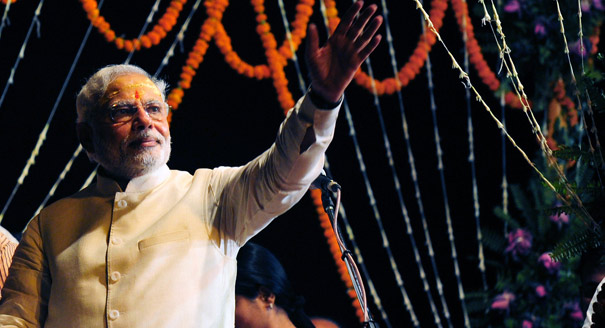
On the eve of Modi’s second visit to the United States, what are the outcomes of the U.S.-India Strategic and Commercial Dialogue and what is the status of the bilateral relationship?

Link Copied
By Milan Vaishnav and Sadanand Dhume
Published on Sep 23, 2015
Program mobile hero image

Program

South Asia

The South Asia Program informs policy debates relating to the region’s security, economy, and political development. From strategic competition in the Indo-Pacific to India’s internal dynamics and U.S. engagement with the region, the program offers in-depth, rigorous research and analysis on South Asia’s most critical challenges.

Learn More

Source: Bloomberg TV India

On the eve of Modi’s second visit to the United States, Carnegie’s Milan Vaishnav and Sandanand Dhune from the American Enterprise Institute discussed the outcomes of the U.S.-India Strategic and Commercial Dialogue, the BJP’s reform agenda, and the impact of upcoming state elections in Bihar. On U.S.-India cooperation, Vaishnav noted an increasingly convergent position regarding Pakistan. He also spoke of China, saying that whether or not the text of the joint statement has anything to say about China, the People’s Republic nonetheless looms large in the subtext of the U.S.-India relationship. On the economy, Vaishnav contended that India is trending in the right direction compared to other emerging markets, but not improving with the speed that most people hoped it would. A lot of reform, Vaishnav concluded, still needs to be done.

This broadcast originally aired on Bloomberg India.

About the Authors

Milan Vaishnav

Director and Senior Fellow, South Asia Program

Milan Vaishnav is a senior fellow and director of the South Asia Program and the host of the Grand Tamasha podcast at the Carnegie Endowment for International Peace. His primary research focus is the political economy of India, and he examines issues such as corruption and governance, state capacity, distributive politics, and electoral behavior. He also conducts research on the Indian diaspora.

Sadanand Dhume

American Enterprise Institute

Authors

Milan Vaishnav
Director and Senior Fellow, South Asia Program
Milan Vaishnav
Sadanand Dhume
American Enterprise Institute
Political ReformEconomyForeign PolicySouth AsiaIndia

Carnegie does not take institutional positions on public policy issues; the views represented herein are those of the author(s) and do not necessarily reflect the views of Carnegie, its staff, or its trustees.

More Work from Carnegie Endowment for International Peace

  • Commentary
    Sada
    Duqm at the Crossroads: Oman’s Strategic Port and Its Role in Vision 2040

    In a volatile Middle East, the Omani port of Duqm offers stability, neutrality, and opportunity. Could this hidden port become the ultimate safe harbor for global trade?

      Giorgio Cafiero, Samuel Ramani

  • Commentary
    Strategic Europe
    Europe on Iran: Gone with the Wind

    Europe’s reaction to the war in Iran has been disunited and meek, a far cry from its previously leading role in diplomacy with Tehran. To avoid being condemned to the sidelines while escalation continues, Brussels needs to stand up for international law.

      Pierre Vimont

  • Commentary
    India Signs the Pax Silica—A Counter to Pax Sinica?

    On the last day of the India AI Impact Summit, India signed Pax Silica, a U.S.-led declaration seemingly focused on semiconductors. While India’s accession to the same was not entirely unforeseen, becoming a signatory nation this quickly was not on the cards either.

      Konark Bhandari

  • Forbidden City on a cloudy day
    Commentary
    Emissary
    Beijing Doesn’t Think Like Washington—and the Iran Conflict Shows Why

    Arguing that Chinese policy is hung on alliances—with imputations of obligation—misses the point. 

      Evan A. Feigenbaum

  • China Financial Markets
    Commentary
    China Financial Markets
    A China Financial Markets Post

    Description of the post.

      Michael Pettis

Get more news and analysis from
Carnegie Endowment for International Peace
Carnegie global logo, stacked
1779 Massachusetts Avenue NWWashington, DC, 20036-2103Phone: 202 483 7600Fax: 202 483 1840
  • Research
  • Emissary
  • About
  • Experts
  • Donate
  • Programs
  • Events
  • Blogs
  • Podcasts
  • Contact
  • Annual Reports
  • Careers
  • Privacy
  • For Media
  • Government Resources
Get more news and analysis from
Carnegie Endowment for International Peace
© 2026 Carnegie Endowment for International Peace. All rights reserved.