

Commentary
Yezid Sayigh
{
  "authors": [
    "Yezid Sayigh"
  ],
  "type": "other",
  "centerAffiliationAll": "dc",
  "centers": [
    "Carnegie Endowment for International Peace",
    "Malcolm H. Kerr Carnegie Middle East Center"
  ],
  "collections": [],
  "englishNewsletterAll": "menaTransitions",
  "nonEnglishNewsletterAll": "",
  "primaryCenter": "Malcolm H. Kerr Carnegie Middle East Center",
  "programAffiliation": "MEP",
  "programs": [
    "Middle East"
  ],
  "projects": [],
  "regions": [
    "Gulf",
    "Iraq",
    "Middle East"
  ],
  "topics": [
    "Political Reform"
  ]
}
Source: Getty
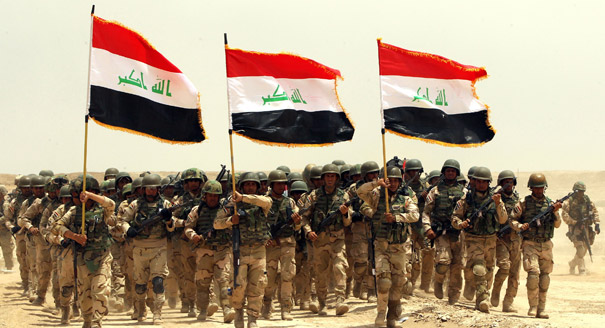
A year after his appointment, Iraqi prime minister Haidar al-‘Abadi continues to face an uphill struggle to build a politically inclusive and functionally viable state.
Source: Norwegian Peacebuilding Resource Center
A year after his appointment Iraqi prime minister Haidar al-‘Abadi continues to face an uphill struggle to build a politically inclusive and functionally viable state. His success in pushing an ambitious reform plan through parliament on August 11th 2015 was an important step forward, but will prove inadequate without genuine political backing from the most powerful domestic and external actors involved in Iraq. These, however, remain focused almost exclusively on militarily defeating the Islamic State, and are not invested in effecting meaningful political reconciliation between the country’s Sunni and Shii Arab citizens, fully pursuing structural military and financial reforms, and ensuring the equitable delivery of crucial social services. As a result, the Iraqi state may have passed the point of no return.

Senior Fellow, Malcolm H. Kerr Carnegie Middle East Center
Yezid Sayigh is a senior fellow at the Malcolm H. Kerr Carnegie Middle East Center in Beirut, where he leads the program on Civil-Military Relations in Arab States (CMRAS). His work focuses on the comparative political and economic roles of Arab armed forces, the impact of war on states and societies, the politics of postconflict reconstruction and security sector transformation in Arab transitions, and authoritarian resurgence.
Recent Work
Yezid Sayigh
Yezid Sayigh
Carnegie does not take institutional positions on public policy issues; the views represented herein are those of the author(s) and do not necessarily reflect the views of Carnegie, its staff, or its trustees.
Neither the Abraham Accords nor the presence of large U.S. bases are enough to protect Arab Gulf states.

Marwan Muasher
Not only does the fighting jeopardize regional security, it undermines Russian attempts to promote alternatives to the Western-dominated world order.

Ruslan Suleymanov
The incoming government has swept Nepal’s election. The real work begins now.
Amish Raj Mulmi
Assessing U.S. compliance with the international laws of war is essential at a time when these frameworks are already fraying.
Federica D’Alessandra
A conflict launched in the name of American security is producing the opposite effect.
Sarah Yerkes