

Commentary
Togzhan Kassenova
{
  "authors": [
    "Togzhan Kassenova"
  ],
  "type": "other",
  "centerAffiliationAll": "dc",
  "centers": [
    "Carnegie Endowment for International Peace"
  ],
  "collections": [],
  "englishNewsletterAll": "ctw",
  "nonEnglishNewsletterAll": "",
  "primaryCenter": "Carnegie Endowment for International Peace",
  "programAffiliation": "NPP",
  "programs": [
    "Nuclear Policy"
  ],
  "projects": [],
  "regions": [],
  "topics": [
    "Nuclear Policy",
    "Arms Control"
  ]
}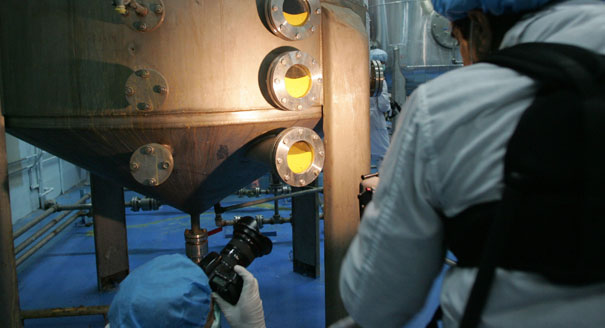
Source: Getty
To make future cooperative threat reduction (CTR) efforts effective, it is important to pay attention to the lessons of CTR programs in the former Soviet Union.
Source: University of Georgia Press
During the months prior to the collapse of the Soviet Union, various nuclear nightmare scenarios occupied the minds of U.S. policy makers: a terrorist group might acquire enough Soviet nuclear material to make a bomb, Soviet scientists might go to work for a suspected proliferator such as North Korea, or a new and inexperienced government in one of the post-Soviet states might try to seize control over Soviet nuclear weapons stationed on its territory. Concerns about these risks led to the creation of the Nunn-Lugar Cooperative Threat Reduction (CTR) program. Managed initially by the U.S. Department of Defense, CTR evolved into several different programs administered not just by DOD but also by the Department of Energy, the Department of Commerce, the State Department, and other U.S. government agencies.
CTR programs have achieved remarkable success in minimizing proliferation risks in the former Soviet Union. The programs assisted with the denuclearization of three post-Soviet republics—Belarus, Kazakhstan, and Ukraine. CTR efforts helped Russia meet its START Treaty obligations by providing equipment for dismantlement of submarines, bombers, and missiles. Other elements of CTR have secured thousands of tons of vulnerable nuclear material, strengthened physical security at scores of nuclear facilities, and enhanced detection capabilities at borders to prevent nuclear material smuggling. CTR programs have also assisted in the mitigation of bio-threats, destruction of chemical weapons, and redirection of thousands of former weapons scientists into civilian projects aimed at preventing these scientists from seeking work with states or non-state actors who might be looking to develop nuclear weapons.The CTR path was not an easy one. Both at the inception of the CTR program and over the course of two decades, CTR programs struggled with bureaucratic, political, technical, and cultural problems. The most common bureaucratic problems were conflicting organizational interests, time-consuming procedures, and a lack of interagency cooperation. The organizational culture of various CTR participants had a direct impact on the success, or lack thereof of, cooperative projects.
Conditions attached to cooperation impacted the implementation of CTR projects. The requirement to buy only U.S. equipment and expertise had both practical and political consequences. Unresolved issues in political relations further intensified bureaucratic challenges. Political and bureaucratic limitations of the CTR process were directly linked to the role both countries continued to assign to nuclear weapons. Notwithstanding the end of the Cold War, nuclear weapons have remained critical in the national security strategies of Russia and the United States, with the numbers of their nuclear weapons still set to balance against each other. In the absence of a radical restructuring of strategic postures and in an environment of incomplete transition from an adversarial relationship to a partnership, cooperation in the nuclear field remains extremely sensitive for both sides.
Given its achievements, the international community may want to use the CTR process as a model for future nonproliferation initiatives. Simply imitating the original Nunn-Lugar programs, however, is not likely to produce optimal results. To make future cooperative threat reduction efforts effective, it is important to pay due attention to the lessons from the operationalization and implementation of CTR programs in the former Soviet Union...
The chapter “Implementing Nonproliferation Programs: The Cooperative Threat Reduction Process in the Former Soviet Union” was originally published in the book International Cooperation on WMD Nonproliferation. More information about the book can be found here.

Former Nonresident Fellow, Nuclear Policy Program
Kassenova was a nonresident fellow in the Nuclear Policy Program at the Carnegie Endowment.
Recent Work
Togzhan Kassenova

Toby Dalton, Togzhan Kassenova, Lauryn Williams
Carnegie does not take institutional positions on public policy issues; the views represented herein are those of the author(s) and do not necessarily reflect the views of Carnegie, its staff, or its trustees.

The acknowledgment has sparked fears of a new arms race with China and Russia.

Chris O’Meara

The nuclear relationship between China and the United States is increasingly shaped by widening perception gaps rather than deliberate strategic design.

Tong Zhao

A look at why states without nuclear weapons are seeking naval nuclear propulsion, whether they can legally and technically deliver it, what it will cost them, and what responsible stewardship of the capability would look like.

Jamie Kwong
Congress should ask tough questions about the agreement’s more unique features and whether they advance U.S. interests or compromise them.

Jane Darby Menton
Nuclear and maritime communities face a long and challenging journey to deploy commercial nuclear applications at sea.
Jamie Kwong, Toby Dalton