

Other
François Godement, Ashley J. Tellis
{
  "authors": [
    "François Godement"
  ],
  "type": "legacyinthemedia",
  "centerAffiliationAll": "dc",
  "centers": [
    "Carnegie Endowment for International Peace",
    "Carnegie China",
    "Carnegie Russia Eurasia Center"
  ],
  "collections": [],
  "englishNewsletterAll": "asia",
  "nonEnglishNewsletterAll": "",
  "primaryCenter": "Carnegie Endowment for International Peace",
  "programAffiliation": "AP",
  "programs": [
    "Asia"
  ],
  "projects": [],
  "regions": [
    "East Asia",
    "China",
    "Western Europe"
  ],
  "topics": [
    "Economy",
    "Trade"
  ]
}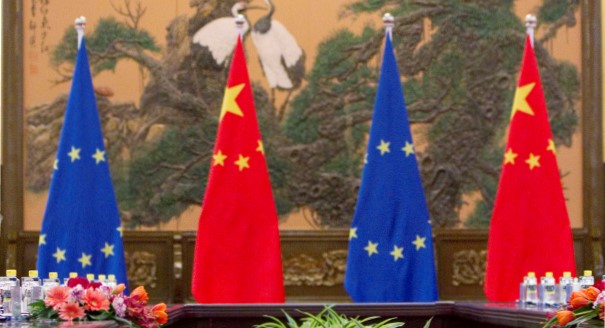
Source: Getty
China’s difficulties in transitioning to a new growth model, and the visible hesitations in managing the change, are now producing reversed expectations and a bear market.
Source: European Council on Foreign Relations
What is happening to the China consensus illustrates the dictum that those who live by the sword, die by the sword. For decades, the China hype – the psychological expectation of a continuous economic miracle – bolstered China’s growth, its financial clout and the lofty reputation of its managers. But after the bulls come the bears. China’s difficulties in transitioning to a new growth model, and the visible hesitations in managing the change, are now producing reversed expectations and a bear market.
Such a trend is no more well-founded than the unlimited optimism of past decades. China does not have a structural crisis but a structural adjustment that has been talked about and encouraged for years. There are winners left inside China’s economy. ChemChina just conducted, the largest ever overseas acquisition by a Chinese firm. Even with a currency that is overvalued because it is quasi-pegged to the rising dollar, China’s trade surplus is still enormous.
But China now has two trends now going against it. One is market sentiment, and that clearly originates as much in China as elsewhere. China’s firms and its wealthy class are rushing to the exit door. The outflow currently exceeds 100 billion dollars per month. Consumers and private individuals are influenced enough by dampened expectations to slow down consumption and investment. And worse than this sentiment, China’s decision-makers are seen to waver and contradict themselves on red hot issues such as stock market intervention or managing the currency. What was a structural adjustment issue has become a crisis of confidence.But this doesn’t tell the whole story. China’s economic reversal cannot be separated from global issues, in terms of causes as well as consequences.
First amongst the causes is the dollar’s stratospheric rise over the past two years: the permanent expectation of an US interest rate rise has created an upward bias for the dollar. China’s economy is tied to the dollar more than that of any other major economy. In contrast, thanks to the doom and gloom hovering over Europe, the euro has been in a steady decline. Germany and northern Europe’s recurring trade surpluses are every bit as impressive as China’s, but being anchored to weaker economies in the Eurozone allows them to maintain a cheap euro. All other major currencies in Asia have been falling – and the Bank of Japan’s turn in monetary policy on 26 January amounts to voluntary depreciation of the yen. Incredibly, China’s export machine has not yet been grievously hurt by the inflated value of the Chinese currency – it has just slowed down its rate of expansion. But a reversal is bound to happen.
China’s lower growth is rebounding on all producers of primary materials and energy. That’s very good news for consumers and for Europe’s external trade balance, but it does mean many in the emerging and developing world, or even in mature economies like Canada or Australia, are hit. In turn, this is likely to translate into less demand for Chinese goods and also Chinese investment in energy and mining. The epochal fall of the Baltic Dry Index (for raw material bulk shipping) to a tenth of its level of two years ago is a telltale sign.
In turn, this also means less financial recycling from producer countries to developed consumer economies. And because nobody can afford to burst the credit bubble, the race is on for monetary creation or “quantitative easing”. Mr. Draghi of the ECB and Mr. Kuroda of the Bank of Japan are on the same wavelength on the subject, while the smart money is on the Fed continuing to postpone an interest rate adjustment. All in all, the risks of what is popularly called a “currency war”, i.e. a debasing of the currency both for external trade reasons and to keep domestic credit going, have never been so high.
And then there come politics. China has leveraged its economic strength into diplomatic and strategic clout. It follows that if its economic leverage wanes, others will jump into the gap that opens between ambitions and realities. There are small but telling signs of this shift, even on the part of international actors who are not geopolitical competitors.
Read EU Trade Commissioner Malmström’s recent admonition to China:
“Three years after the Third Plenum, major reforms have yet to be seen (…) Postponing meaningful reform, or indeed back tracking will only prolong the current period of uncertainty, and therefore China’s own development”.
The Commissioner is right, of course. But how far back must one go to find an instance of the European “weakling” talking so bluntly to the rising Chinese giant? Evaluations of China’s real level of public or government backed indebtedness are mounting because in an unfavourable global climate, monetary creation and credit must be expanded to soften the shock of domestic economic transition. Only two years ago, most member states were falling over themselves to prevent the EU from sanctioning China over solar panel dumpings. Today, seven member states – including France, Germany and the UK – have asked the Commission to be tougher on China’s steel exports to Europe.
The need to rekindle growth and to carry forward massive debts implies that developed economies – read the West plus Japan – will keep a lax monetary policy for the foreseeable future. It means that they are unlikely to accommodate China’s need for a lower renminbi. It is therefore Chinese market players and outside speculators who are doing the job – betting on China’s downturn and lessened competitiveness by short selling the Chinese currency. There is no Western, global or speculative conspiracy against China. But the country, which has for so long depended on the leverage granted by its economic power, may suddenly find itself on its own.
For Europeans, this is a moment which should be seized. The debate on whether to go ahead with market economy status for China is taking place at the European Parliament. At the same time, China has for years stalled on negotiations on a bilateral investment treaty with Europe, and still has not moved forward with tangible concessions. On these twin issues, there are two mistakes to avoid. One would be to repeat what David Cameron and, to a lesser degree, Angela Merkel have already done: call loudly for a free trade pact that de facto implies market economy status. Unconditional support for China instead of for European negotiators simply weakens Europe’s hand. The other mistake is to be taken in by special interest groups of manufacturers and to exclude market economy status for mercantilist reasons or perhaps simply just because China’s hand is weakening.
A long term and strategic approach matters in the relationship with China. What Europe should look for is a quid pro quo with China, for mutual concessions and a winning compromise. China should understand that market economy status is not its birthright, and that it will fail – including in the European Parliament and in the court of public opinion – if it does not cooperate on Europe’s other demands regarding access to China’s markets.
Commissioner Malmström’s approach – mixing a strong call to China for reforms with an acceptance in principle of market economy status – is the right one. EU member states, should not pre-empt the Commission’s mandate by making their own unconditional statements, or by trying to gain individual advantage through lobbying for China. They should get in line, and reinforce the European Commission’s dual message to China: we are open for business, but you must deal with our requests instead of stonewalling us and counting on our internal divisions.
For nearly a decade, Europe’s leverage with China has steadily declined because of its own internal issues. Now there is a chance to rebalance the relationship, not by rejecting China, but by making it understand the need to show more goodwill in negotiations that it had been indefinitely delaying or stalling.
This article was originally published by the European Council on Foreign Relations.

Former Nonresident Senior Fellow, Asia Program
Godement, an expert on Chinese and East Asian strategic and international affairs, was a nonresident senior fellow in the Asia Program at the Carnegie Endowment for International Peace.
Recent Work
François Godement, Ashley J. Tellis

François Godement, Abigaël Vasselier
Carnegie does not take institutional positions on public policy issues; the views represented herein are those of the author(s) and do not necessarily reflect the views of Carnegie, its staff, or its trustees.

China’s political future will be shaped between now and next October. As the Communist Party enters its intense “campaign season” to prepare for a major political transition in 2027, reading Beijing's actions and responses may become more difficult as domestic politics weigh on its behavior more than usual.

Damien Ma
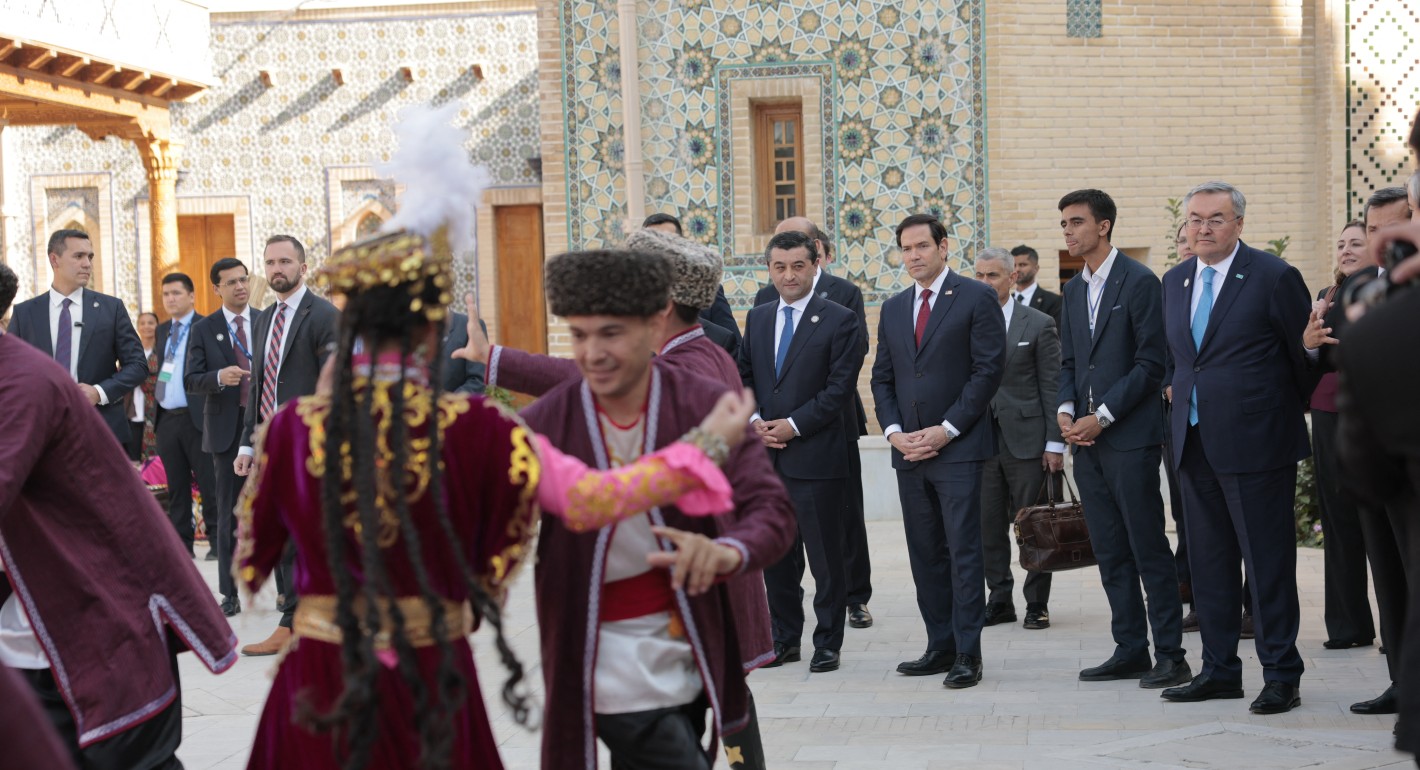
Rubio’s recent visit brought welcome attention, but more capital requires governance changes that may be a hard sell for regional governments.

Jennifer B. Murtazashvili

China has showcased its engineering prowess with small modular reactor demonstration projects. But turning these technological achievements into commercial success will be a greater challenge.

Tong Zhao

Despite public disputes over trade and immigration, the strategic partnership’s foundations remain sturdy.

Sameer Lalwani

With its public finances in shambles, the far right polling at 35 percent ahead of the 2027 presidential election, and a growing protest movement, is France’s crisis a threat to the EU’s geopolitical awakening?

Rym Momtaz, ed.