

Commentary
The EU can impose sanctions but struggles to enforce them without the United States. With Washington increasingly disinterested in backing European interests, the bloc must now fend for itself.
Nicu Popescu, Tiago Antunes
{
  "authors": [
    "C. Raja Mohan",
    "Aryaman Bhatnagar"
  ],
  "type": "other",
  "centerAffiliationAll": "dc",
  "centers": [
    "Carnegie Endowment for International Peace",
    "Carnegie India"
  ],
  "collections": [],
  "englishNewsletterAll": "ctw",
  "nonEnglishNewsletterAll": "",
  "primaryCenter": "Carnegie India",
  "programAffiliation": "SAP",
  "programs": [
    "South Asia"
  ],
  "projects": [],
  "regions": [
    "South Asia",
    "Pakistan",
    "India"
  ],
  "topics": [
    "Economy",
    "Foreign Policy",
    "Security"
  ]
}
Source: Getty
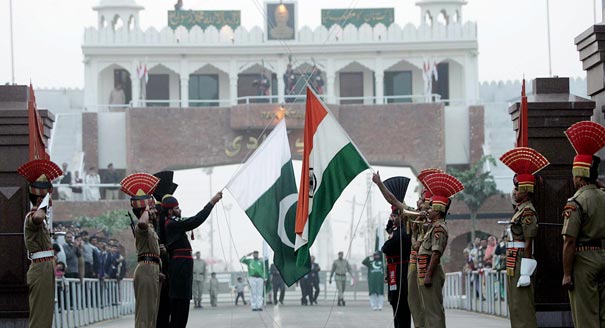
India and Pakistan have considerable scope to build on the various confidence-building measures that have been negotiated in the past decade and a half, especially in the areas of trade and economic cooperation.
Source: National Bureau of Asian Research
This essay reviews the current state of India-Pakistan relations and examines the prospects for bilateral and regional cooperation between the two South Asian neighbors.
India and Pakistan have considerable scope to build on the various confidence-building measures that have been negotiated in the past decade and a half, especially in the areas of trade and economic cooperation. Greater economic engagement has the potential to generate interdependence that could help promote the normalization of relations. However, policymakers in both countries face familiar obstacles to a normal relationship—cross-border terrorism originating from Pakistan, differences over Kashmir, and entrenched domestic opposition to broadening engagement on both sides of the border. The inability of policymakers to separate progress in one field from differences in other areas has rendered it difficult to expand and sustain cooperation. More immediately, India-Pakistan relations are further complicated by the turbulent regional dynamic centered on Afghanistan. The drawdown of foreign troops after over a decade-long international presence in Afghanistan and the challenges of producing internal stability there will make the construction of a shared vision for regional cooperation elusive.
This essay offers the following policy recommendations for limiting conflict between India and Pakistan and expanding the scope for cooperation:
This chapter is available on the National Bureau of Asian Research website.
Former Nonresident Senior Fellow, Carnegie India
A leading analyst of India’s foreign policy, Mohan is also an expert on South Asian security, great-power relations in Asia, and arms control.
Aryaman Bhatnagar
Carnegie does not take institutional positions on public policy issues; the views represented herein are those of the author(s) and do not necessarily reflect the views of Carnegie, its staff, or its trustees.

The EU can impose sanctions but struggles to enforce them without the United States. With Washington increasingly disinterested in backing European interests, the bloc must now fend for itself.


Nicu Popescu, Tiago Antunes
Global and rising powers will need to engage with Africa’s priorities and agency in order to secure the continent’s increasingly attractive partnerships.

Fonteh Akum

Rubio’s recent visit brought welcome attention, but more capital requires governance changes that may be a hard sell for regional governments.

Jennifer B. Murtazashvili

America’s foreign-policy objectives have grown more demanding while Americans have demanded greater focus on their own affairs.

Stephen Wertheim

Japan’s long-term security policy is driven by concerns about China, and there is little appetite for (or interest in) pursuing a confrontation with Moscow.

James D.J. Brown