

Commentary
AI capabilities are moving fast. Most institutions—including governments—can’t keep up.
Anton Leicht, Scott Singer
{
  "authors": [
    "Bilal Baloch"
  ],
  "type": "legacyinthemedia",
  "centerAffiliationAll": "dc",
  "centers": [
    "Carnegie Endowment for International Peace",
    "Carnegie India"
  ],
  "collections": [],
  "englishNewsletterAll": "ctw",
  "nonEnglishNewsletterAll": "",
  "primaryCenter": "Carnegie India",
  "programAffiliation": "SAP",
  "programs": [
    "South Asia"
  ],
  "projects": [],
  "regions": [
    "United States",
    "South Asia",
    "India",
    "North America"
  ],
  "topics": [
    "Political Reform",
    "Democracy"
  ]
}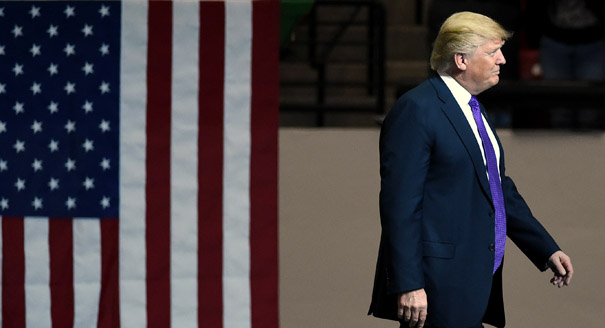
Source: Getty
A study in India finds that ideological diversity in the administration is key to a tolerant government. So far there is little evidence that Trump will select a ideologically diverse administration.
Source: Washington Post
Should Americans worry about the emerging Donald Trump administration? Some say it is a “team of racists” that has emboldened white supremacists and frightened civil rights groups. Others suggest that a promising “team of rivals” is emerging.
Does it matter? Scholars and policymakers disagree over how much cabinet ministers influence policy. My research finds that, in a crisis, a cabinet’s ideological diversity matters a great deal. I’ve examined how governments in developing democracies behave in such times by studying their tolerance in the face of anti-corruption movements.
Here’s what I’ve found: Ideologically plural governments are more likely to behave tolerantly. Ideas act as weapons, and no one position can “win out” and undo institutional integrity.
In other words, what’s key to a government that behaves tolerantly isn’t sharing a partisan ideology, be it conservative or liberal; rather, it’s having internal ideological checks and balances, including administration officials in positions of power who vigorously disagree amongst themselves.
I drew on two important bodies of research for my work — concerning how experts and politicians in government diagnose new policy problems and how contending interests in positions of power can be a net positive for government stability. I then built an interactive model of government behavior in which officials’ ideas, and not outside interests alone, shape action.
Members of a government interpret and analyze events through their beliefs – politicians through party ideology and technocrats through their professional training. Beliefs matter especially during a crisis, because political and factual uncertainty make it difficult to fully understand what’s happening or predict how events will affect the interests of voters and various stakeholders.
Therefore, in ideologically plural cabinets, officials diagnose the policy problem and prescribe the government’s response in diverse ways, thus decreasing the likelihood of arbitrary action.
My data comes from more than 120 unique interviews with state elites in India; assessments from seven focus groups, mainly with bureaucrats and business elites; and a collection of private letters and government reports collected from three national archives.
The events that are perhaps most relevant to President-elect Trump’s emerging Cabinet may be those of the Congress Party government under Indira Gandhi’s second term as prime minister (1971-75) when the country faced a nationwide anti-corruption movement.
At this time, Gandhi’s administration enjoyed an electoral majority built around a homogeneous ideology, rooted in the Congress’ socialism and “unity in diversity” nationalism that privileged minority communities. Diagnosing the movement as anti-minority, majoritarian nationalism, Gandhi suppressed opponents and crushed civil liberties. She ignored her few advisers and relied on a small clique of loyalists that included family members.
The result was authoritarian creep, including mass arrests and press censorship. The cabinet’s and prime minister’s ideas, weaponized and unchecked, led to the disaster of the national emergency.
Contrast that with the more tolerant response of another Congress Party government faced with nationwide anti-corruption agitations, led by Manmohan Singh (2009-2014). Singh’s coalition government included policy experts and politicians with a variety of ideologies. Their varying diagnoses of the India Against Corruption movement moderated government action.
In practice, presidents will mix these two strategies in their cabinets. But you can see how they plan to govern by which one they emphasize.
If presidents or prime ministers plan to govern in an authoritarian manner, they will emphasize loyalty when picking advisers and by relying more on military and security personnel. If they plan to govern democratically, they will emphasize selecting advisers with legislative and political experience who can advance the policy agenda effectively.
Trump’s administration picks so far have emphasized the former, with only a peppering of the latter. Notably, what’s missing are policy experts with established ideas.
Every cabinet and its advisers need decision-makers with established ideas. Technically complex policy challenges — from financial crises to international confrontations — are best solved with at least some technical expertise. Trump’s top advisers so far are weak on such knowledge, as was Gandhi’s cabinet leading up to the emergency.
Are the insights from India, and other examples from the field of comparative politics more generally, relevant? Yes, as I’ll explain.
In crises, many U.S. presidents have tended to appoint and rely on their ideological opposites. Franklin Roosevelt had a coalition-style Cabinet that included Republicans Frank Knox as secretary of the Navy and Henry Stimson as secretary of war. John F. Kennedy gave key Cabinet posts to technocrats, such as Robert McNamara, as well as to Republicans, such as C. Douglas Dillon. I could list many more.
But such ideological diversity helps governance only if the president authentically considers all points of view. For instance, President Obama famously spoke about appointing a “team of rivals.” But former advisers and Cabinet officials have reported that, in fact, Obama has a centralized White House that has paid little attention to contrasting ideas.
Overall, U.S. presidents have picked both ideologically heterogeneous and homogeneous Cabinets. The resulting effects on government tolerance match up with my findings from developing democracies.
For example, Abraham Lincoln’s Cabinet included powerful, ideological opposites, such as William Seward, a moderate Republican who preferred a conciliatory approach toward the South, and Edwin Stanton, formerly a staunch Democrat, who rejected any compromise with the South. Lincoln’s Cabinet meetings were said to be fiery affairs in which officials openly feuded with one another and with the president. This led to ideological checks and balances on government actions.
Consider the story of the Emancipation Proclamation. More radical members of Lincoln’s Cabinet wanted him to move quickly to end slavery. Conservative members feared that emancipation would cause such an outcry that the Republicans would lose the midterm elections, or the South altogether. Others straddled both views.
Lincoln therefore understood that any assault on slavery would have to await a change in attitudes. Gradually, he began to see his Cabinet members’ opinions shift.
That’s when Lincoln came to believe that opposition – however fierce – would no longer be “strong enough to defeat the purpose.” He told his Cabinet that the time for debate was over, and declared emancipation in 1863. Lincoln would later remark “it is my conviction, that, had the proclamation been issued even six months earlier than it was, public sentiment would not have sustained it.”
Diverse points of view can prevent immoderate action
Ideological differences within an administration can delay consensus, provide nudges for contrasting action and even help outsiders, especially civic activists, influence decisions. This can prevent arbitrary government behavior exactly in the ways intended by the founding fathers, who argued that “communication is always checked by distrust in proportion to the number whose concurrence is necessary.”
For better and worse, a presidential system does not lend itself to building ideologically diverse coalition governments as much as parliamentary democracies do. Increasingly, members of opposing parties are less likely to take influential positions within a presidential administration.
Trump could select an ideologically diverse administration that would check extreme actions. To date we have seen little evidence that he will. Some Republicans believe it to be the most conservative Cabinet since Ronald Reagan’s. Current nominees have advocated for torture, internment camps and mass surveillance. But with staffing for key posts remaining, and four years of an administration to go, the hope is that could still change.
This article was originally published in the Washington Post.
Former Visiting Fellow
Bilal Baloch was a visiting fellow at Carnegie India where his research focuses on the political economy of government behavior in India and other developing democracies.
Carnegie does not take institutional positions on public policy issues; the views represented herein are those of the author(s) and do not necessarily reflect the views of Carnegie, its staff, or its trustees.
AI capabilities are moving fast. Most institutions—including governments—can’t keep up.


Anton Leicht, Scott Singer

The Bureau of Industry and Security needs to adjust its focus and practices to maintain its position as the U.S. government’s primary champion of international technological competition.

Geoffrey Irving
Despite myriad challenges and occasional stumbles, the new Hungarian government is moving ahead with energy and conviction to uproot years of illiberalism and corruption and rebuild Hungarian democracy.

Thomas Carothers

European Commission President Ursula von der Leyen is about to give her annual address on the state of the EU. Here’s what she won’t—but should—say.

Rym Momtaz

Understanding the climatic pain points is necessary for policymakers hoping to minimize the war’s negative environmental consequences.



Alejandro Martin Rodriguez, Joy Arkeh, Sarah Yerkes