

In The Media
Jessica Tuchman Mathews
{
  "authors": [
    "Jessica Tuchman Mathews"
  ],
  "type": "other",
  "centerAffiliationAll": "",
  "centers": [
    "Carnegie Endowment for International Peace",
    "Carnegie China"
  ],
  "collections": [
    "China’s Foreign Relations"
  ],
  "englishNewsletterAll": "",
  "nonEnglishNewsletterAll": "",
  "primaryCenter": "Carnegie Endowment for International Peace",
  "programAffiliation": "",
  "programs": [],
  "projects": [],
  "regions": [
    "East Asia",
    "China"
  ],
  "topics": [
    "Economy",
    "Foreign Policy"
  ]
}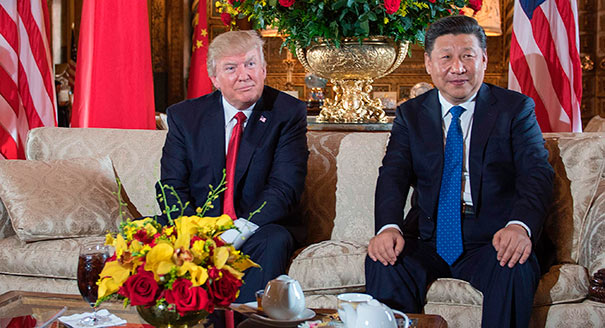
Source: Getty
Without doubt, Asia’s economic ascent has been extraordinary, but Westernization—the spread of the West’s influence and values—has rested on much more than its wealth and the military power derived from it.
Source: New York Review of Books
Gideon Rachman’s Easternization, his new survey of a transformed Asia, admirably does what so little writing on foreign affairs attempts. It treats with equal facility economics, geopolitics, security, enough history for needed background, official thinking, and public attitudes. Rachman, chief foreign affairs columnist for the Financial Times, has an eye for the telling statistic and for the memorable detail that makes it stick. He packs an enormous amount of information into a short book and opens windows of understanding for nonexperts onto this immensely important three fifths of humanity. And while not directly concerned with the new American administration, the story he tells shows well why Donald Trump’s foreign policies could end so badly for the United States and for the world.
But Rachman does not, in the end, make a convincing case for the book’s thesis—embodied in its one-word title. The central issue, he writes, is “how the rise in Asian economic power is changing world politics.” His momentous answer is that “the West’s centuries-long domination of world affairs,” stretching back to 1500, “is now coming to a close.” Without doubt, Asia’s economic ascent has been extraordinary, but Westernization—the spread of the West’s influence and values—has rested on much more than its wealth and the military power derived from it. Those other elements—including open governments, readiness to build institutions, and contributions to others’ security and growth—are weak or absent in Asia today. Easternization is neither here nor coming soon....
This article will be published in the New York Review of Books May 11 edition.

Distinguished Fellow
Mathews is a distinguished fellow at the Carnegie Endowment for International Peace. She served as Carnegie’s president for 18 years.
Recent Work
Jessica Tuchman Mathews
Jessica Tuchman Mathews
Carnegie does not take institutional positions on public policy issues; the views represented herein are those of the author(s) and do not necessarily reflect the views of Carnegie, its staff, or its trustees.
Power assessments shape our perceptions of the limits of the possible, but quantitative rankings and dashboards can provide false confidence.
Nicholas Kitchen

The debate over AI and work too often centers on displacement. Facing aging populations and shrinking workforces, East Asian policymakers view AI not as a threat, but as a cross-sectoral workforce strategy.

Darcie Draudt-Véjares, Sophie Zhuang

In its version of an AI middle power strategy, Seoul is pursuing alignment with the United States not as an endpoint but as a strategy to build industrial and geopolitical leverage. Whether this balance holds remains an open question.
Darcie Draudt-Véjares, Seungjoo Lee

China’s rapid technological progress and its first-rate infrastructure are often cited as refuting the claim that China has been systematically overinvesting in non-productive projects for many years. In fact, as the logic of overinvestment and the many historical precedents show, the former is all-too-often consistent with the latter.

Michael Pettis
For the Middle Corridor to fulfill its promises, one of these routes must become scalable. At present, neither is.

Friedrich Conradi