

Commentary
A leak of Russian gas price data helps establish that China is paying Russia far less than Central Asian countries and Gazprom’s former European customers.
Sergey Vakulenko
{
  "authors": [
    "Alexander Gabuev",
    "Maria Repnikova"
  ],
  "type": "legacyinthemedia",
  "centerAffiliationAll": "",
  "centers": [
    "Carnegie Endowment for International Peace",
    "Carnegie China",
    "Carnegie Russia Eurasia Center"
  ],
  "collections": [],
  "englishNewsletterAll": "",
  "nonEnglishNewsletterAll": "",
  "primaryCenter": "Carnegie Endowment for International Peace",
  "programAffiliation": "",
  "programs": [],
  "projects": [],
  "regions": [
    "East Asia",
    "China",
    "Russia"
  ],
  "topics": [
    "Foreign Policy"
  ]
}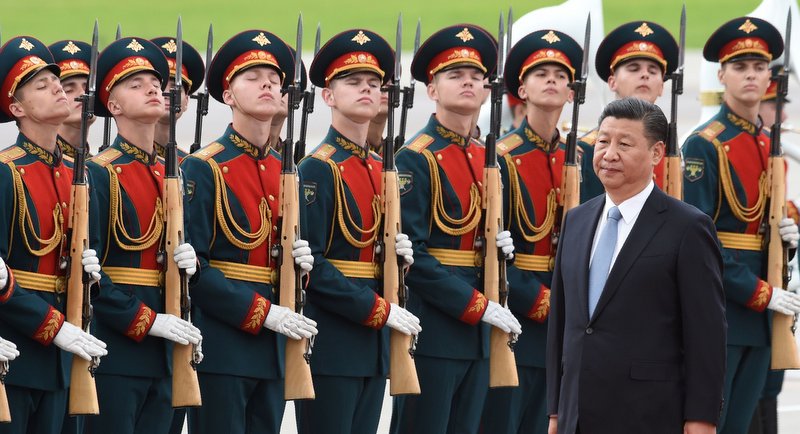
Source: Getty
There may be tensions in the Beijing-Moscow partnership, but reverse migration trends among Chinese workers prove that worries about China’s potential conquest of the Russian Far East are unfounded.
Source: South China Morning Post
Despite signs of growing camaraderie between Beijing and Moscow – including drills in the Baltic and South China seas, and sales of advanced Russian-made missile defence systems to the PLA – Western media and decision-makers remain highly sceptical of their forming a meaningful partnership.
Sensationalist arguments about inherent tensions point to the China-Russia border. The4,200km stretch shows population and wealth disparities in favour of China, that some claim can trigger the extension of Beijing’s regional power into the Russian Far East and Siberia. The attraction of Russia’s vast empty lands for China’s resource-hungry and over-populated empire seems obvious.
This discourse, however, is not rooted in ground realities but on faulty assumptions about China-Russia relations. The analyses predicting China’s inevitable takeover of the Russian Far East draw on sparse factual data. While the population disparity along the border is real – 6.3 million in the Far East face 38.3 million in Heilongjiang (黑龍江) alone – what remains contested is the number of Chinese on Russian soil.
Most Western media refer to alarming figures, some concluding there are two million Chinese, set to reach 10 million by 2050. The latest Russian national census in 2010, however, projected the number of Chinese residents at 30,000. Regional official and academic data we uncovered, in several research trips to the Far East since 2010, estimates the number of Chinese migrants as between 400,000 and 550,000. More than half are in the European part of Russia, where the labour market is bigger and more dynamic than in the east of the Urals. The most Chinese-populated Russian city is Moscow, not Vladivostok or Khabarovsk.
Moreover, after the collapse of oil prices and rouble depreciation, more Chinese workers are choosing to leave Russia. Most Chinese migrants are temporary workers, not permanent settlers. They work in trade, construction and agriculture, and send most of their earnings back to their families. In the past two years, their average income has collapsed by 50 per cent. In 2016, the average monthly salary in Heilongjiang was US$667, while in Primorye, the most populated part of the Far East just across the border, it was US$563.
As the economic incentives to work in Russia evaporate, Chinese migrants are starting to seek out other options, including returning home. Local scholars and officials in the Far East say migrants from the former Soviet republics in Central Asia and the South Caucasus are arriving in much larger numbers than Chinese migrants ever have.
For most Chinese migrants, Russia was neither the top nor final destination, but rather a patchwork solution to make money to help their families. When asked about the possibility of settling in Russia back in 2010, Chinese labourers were not enthusiastic, pointing to language and cultural barriers, as well as discrimination and loneliness. Fieldwork data from the Russian Far East is supported by studies of migration patterns in China’s northwest: between going to Russia or to rich inland provinces of China, the workers as a rule choose the latter.
Shifting demographics in China may turn the reversed flow of its migrant workers into a long-term phenomenon. While China has scrapped the one-child policy to stop the labour force from shrinking, many experts say this has come too late. Most Chinese couples are unwilling to have more children, which means competition for workers will worsen, producing hikes in salaries. If the Chinese can make more money at home, they are likely to further fall out of love with the Russian Far East.
The only scenario in which Chinese could arrive in the Far East in larger numbers in the near future, is if China’s rising investments in the Far East bring more of its workers to carry out joint projects. So far, however, China’s slowing economic growth and the collapse of commodity prices, as well as the Far East’s hostile investment climate, have prompted a cautious strategy on the part of Chinese investors. Despite physical proximity and the complementary structure of their economies, China has never been among the top five investors in the Far East region.
Also, even if Chinese investment in the Far East rises dramatically, it is not certain that workers will stay on. The most likely scenario is a continuation of current migration trends on a larger scale, with the Chinese coming to Russia and leaving once they complete their obligations and receive their pay. Big infrastructure projects in Vladivostok ahead of the 2012 Apec summit illustrate this dynamics. These construction projects attracted up to 3,000 Chinese workers, but few remained after the job was done.
Buying into dramatic myths about Chinese demographic expansion into Siberia and the Far East risks producing a misconstrued picture of Sino-Russian relations. While there are underlying tensions in the partnership, China’s potential conquest of the Far East is not one of them.
Maria Repnikova is an assistant professor at Georgia State University.
This op-ed was originally published in the South China Morning Post

Director, Carnegie Russia Eurasia Center
Alexander Gabuev is director of the Carnegie Russia Eurasia Center. Gabuev’s research is focused on Russian foreign policy with particular focus on the impact of the war in Ukraine and the Sino-Russia relationship. Since joining Carnegie in 2015, Gabuev has contributed commentary and analysis to a wide range of publications, including the Financial Times, the New York Times, the Wall Street Journal, and the Economist.
Maria Repnikova
Carnegie does not take institutional positions on public policy issues; the views represented herein are those of the author(s) and do not necessarily reflect the views of Carnegie, its staff, or its trustees.
A leak of Russian gas price data helps establish that China is paying Russia far less than Central Asian countries and Gazprom’s former European customers.

Sergey Vakulenko

China’s political future will be shaped between now and next October. As the Communist Party enters its intense “campaign season” to prepare for a major political transition in 2027, reading Beijing's actions and responses may become more difficult as domestic politics weigh on its behavior more than usual.

Damien Ma

The EU can impose sanctions but struggles to enforce them without the United States. With Washington increasingly disinterested in backing European interests, the bloc must now fend for itself.


Nicu Popescu, Tiago Antunes
Global and rising powers will need to engage with Africa’s priorities and agency in order to secure the continent’s increasingly attractive partnerships.

Fonteh Akum

Rubio’s recent visit brought welcome attention, but more capital requires governance changes that may be a hard sell for regional governments.

Jennifer B. Murtazashvili