

Q&A
Paul Haenle, Philippe Le Corre
{
  "authors": [
    "Philippe Le Corre"
  ],
  "type": "other",
  "centerAffiliationAll": "dc",
  "centers": [
    "Carnegie Endowment for International Peace",
    "Carnegie China"
  ],
  "collections": [
    "Belt and Road Initiative"
  ],
  "englishNewsletterAll": "asia",
  "nonEnglishNewsletterAll": "",
  "primaryCenter": "Carnegie Endowment for International Peace",
  "programAffiliation": "AP",
  "programs": [
    "Asia"
  ],
  "projects": [],
  "regions": [
    "East Asia",
    "China",
    "Central Asia",
    "Eastern Europe",
    "Western Europe"
  ],
  "topics": [
    "Economy",
    "Foreign Policy"
  ]
}
Source: Getty
The internationalization of China, and of its companies in particular, is one of the most important phenomena of the beginning of the twenty-first century.
Source: Palgrave Macmillan
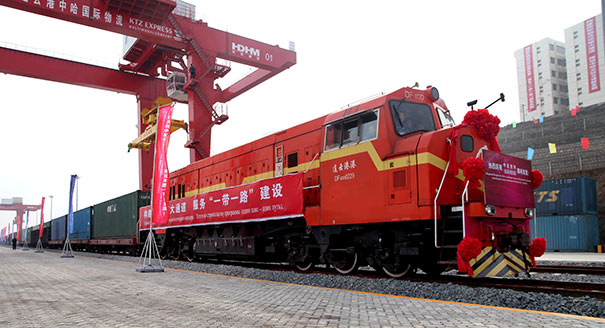
This chapter focuses on Chinese foreign direct investments (FDI) in Europe, and their potential impact on the landscape of the targeted countries. It examines the investment’s possible connections with the current Belt and Road Initiative (BR), which is primarily billed as an international network of infrastructure projects. With the BR in mind, this chapter asks whether Chinese state-owned enterprises (SOE) can build from their recent experiences in Western Europe, and looks at three main questions: (1) What is the political, economic, and social impact on targeted countries when it comes to public investments in the field of infrastructures? (2) How does it relate to the Belt and Road Initiative? (3) What are the stakes for the cooperation between Chinese investors on the one hand, and local public- and private-sector actors on the other?
This chapter was originally published in Rethinking the Silk Road, released by Palgrave Macmillan.
Former Nonresident Senior Fellow, Europe Program
Philippe Le Corre was a nonresident senior fellow in the Europe Program at the Carnegie Endowment for International Peace.
Recent Work

Paul Haenle, Philippe Le Corre


Erik Brattberg, Philippe Le Corre, Paul Stronski, …
Carnegie does not take institutional positions on public policy issues; the views represented herein are those of the author(s) and do not necessarily reflect the views of Carnegie, its staff, or its trustees.

The Plaza Accord was not an externally imposed punishment of Japan but part of a broader restructuring that Japanese economists and policymakers themselves recognized was necessary. Its effects were undermined, however, when Tokyo responded to the resulting slowdown with policies that exacerbated investment, credit expansion, and the very imbalances the adjustment was intended to resolve.

Michael Pettis

Before the next wave of EU enlargement takes place, the union needs to grapple with thorny questions of how power is distributed among its members.


Emil Sondaj Hansen, Ditte Brasso Sørensen

The real test may come after the leaders leave the room.



Sheena Chestnut Greitens, Oriana Skylar Mastro, Yukon Huang, …

The Horn of Africa countries are among those facing a new security calculus.


Andrew Leber, Lesley Anne Warner

The new U.S.–Denmark–Greenland agreement will help Washington exert political, economic, and financial dominance under the guise of security. Yet, it acknowledged Copenhagen’s and Nuuk’s sovereignty on the island.

Marc Pierini