

Q&A
Paul Haenle, Philippe Le Corre
{
  "authors": [
    "Philippe Le Corre"
  ],
  "type": "legacyinthemedia",
  "centerAffiliationAll": "dc",
  "centers": [
    "Carnegie Endowment for International Peace"
  ],
  "collections": [],
  "englishNewsletterAll": "asia",
  "nonEnglishNewsletterAll": "",
  "primaryCenter": "Carnegie Endowment for International Peace",
  "programAffiliation": "AP",
  "programs": [
    "Asia"
  ],
  "projects": [],
  "regions": [
    "East Asia",
    "China"
  ],
  "topics": [
    "Political Reform"
  ]
}
Source: Getty
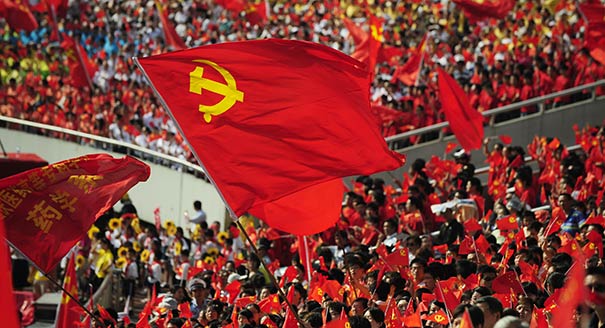
The hundredth anniversary of the Chinese Communist Party’s founding is in 2021. The party’s new leadership will keep an eye on this important deadline, which could well define the future of the single party, and of its domestic and global ambitions.
Source: Institut Montaigne
2017 will be remembered as the year of the 19th Congress of the Chinese Communist Party, a key moment in the regime’s history. On October 18, the party emphasized “the Chinese nation’s great rejuvenation” under the leadership of a much strengthened General Secretary. Although Xi Jinping had been in power for the previous five years, no one had been able, back in 2012, to anticipate the kind of leader he was going to become. We now know better.
Xi’s term was not characterized by political or economic liberalization. It was rather focused on the consolidation of the party’s power around nationalist and patriotic ideas, with the help of the “anti-corruption campaign”, and also the use of international affairs for domestic ends. Indeed, in the eyes of Chinese leaders, foreign policy must serve the party’s goals.
Those who have been watching China closely for the past three decades had not envisioned such a fast-rising and intensely assertive power, only a few years after the start of the 21st century. China’s zeal, at such high speed, has astounded everyone.
For a long time, Chinese leaders - from the father of the “Open Door Policy” Deng Xiaoping to Jiang Zemin and Hu Jintao – all claimed the country only aspired to a peaceful and constructive relation with the rest of the world, including with its neighbors. Hu Jintao, Xi’s predecessor, spoke of a “harmonious world”, and described it as a serene post-Cold War global society. In such a world, China would play the role of a pacifying actor, maybe even of a “responsible partner”, as suggested by former US Deputy Secretary of State Robert Zoellick in 2005. This aspiration turned into an open ambition, that of a “Chinese dream”, aiming to restore the ex-Middle Kingdom’s glory. One which should never have faded away in the first place, according to the majority of China’s population, and especially to its leaders. The Communist Party, the structures of which are perfectly imbricated with that of the State and the economy, aims to revamp the country’s image. The party’s survival and the pursuit of the country’s economic growth, a necessary condition to China’s social stability, might depend on whether or not it succeeds. China’s heavy debt and industrial overcapacity, which came as the result of repeated State interventions for the public sector, are related to this forced march.
Widely acclaimed on October 18, General Secretary Xi thus declared in his speech that “it is time for China to take center stage” on the international scene and to “offer a greater contribution to humanity”. Xi Jinping’s thought was included right away in the Chinese constitution, just like the over-used slogan “socialism with Chinese characteristics” introduced by Deng in the 1980s. Meanwhile, Chinese State-owned companies keep playing a key role in the industry, infrastructures and finance for instance.
Xi’s China makes no secret of its ambition to assume leadership in all sectors anymore, whether it be in trade, technology, science, defence or even in the governance model boasted by Beijing. This “consensus”, a mix of political authoritarianism and capitalism, might leave some historians perplex, but is meanwhile inspiring many leaders abroad. From Cairo to Phnom Penh to Belgrade, Ankara or Islamabad, many are tempted to endorse such a system, despite China’s uniqueness. Indeed, which country could seriously compare itself to such a geographical, demographic, and now economic giant? Admittedly though, the weakness of the Anglo-Saxon model in particular (the victory of Brexit during the 2016 referendum, Donald Trump’s election, partial electoral debacles for both Theresa May and Angela Merkel) has offered Xi Jinping a unique opportunity on the very year of his party’s congress.
His Davos statement in January 2017 was an ode to multilateralism, globalization and trade. His October speech was even clearer: China aims to “occupy a central position in the world” but “no one should expect the country to accept to have its interests infringed upon”. This ambition in itself is not surprising, but the explicit assertion of such an ambition is. A more sophisticated and novel approach to the world, one which seems more aligned with the aspirations of the forward-looking post-Deng Xiaoping generation, is now perceptible. The undeniable economic successes of the last decades do not live up this generation’s expectations. This is a group of smart individuals, often educated at Western or elite Chinese universities, who are perfectly aware of the state of the world.
Chinese initiatives on the global stage are deployed everywhere: from the United Nations, where Beijing has become the second budget contributor, to the World Bank, to UNIDO or the International Telecommunication Union, where it holds key positions, to the Asian Infrastructure Investment Bank, which it controls. In the military area, Beijing is the first contributor of UN peacekeepers and it has also just inaugurated an impressive naval base in Djibouti - the first ever outside its borders. Moreover, China is hinting at Donald Trump’s United States that a “G2” could manage the world. It flirts with Vladimir Putin’s Russia and invests in some of its energy projects. It speaks of “connectivity” to the European Union, whilst asking for a market economy status and for the implementation of a free-trade treaty - although such negotiations have stalled, given the absence of a European agreement.
Last but not least, the Belt and Road Initiative (BRI), launched in 2013 in Astana, Kazakhstan, by Xi Jinping, has become deliberately vague, one might even say obscure. Its goals include “forging closer economic ties, deepening cooperation and expanding development space in the Eurasian region” as well as “vigorously enhancing practical cooperation and being good partners of a win-win cooperation.”
The BRI initially consisted of a wide network of rail, road, port and energy infrastructures, meant to connect China to the rest of the Eurasian continent. The BRI now gathers even broader projects, including in finance, telecommunications, and, of course, in trade exchange development. Despite the 65 countries affiliated (which represent “a $21 trillion consolidated GNP” according to Beijing), BRI countries only receive $100 billion through Chinese investments, rather than the $3 or 4 trillion required. From Tajikistan to Sri Lanka, projects vary but are mostly inconsistent. Directly steered by Beijing, the Silk Road Fund ($40 billion) often supports shady projects. Although the narrative around this project is in full swing, it may nonetheless be observed that Chinese foreign direct investments are mostly deployed through brand and tech acquisitions, and mainly in the leading European economies (Germany, France, United Kingdom, Italy), as well as in Australia, in Canada, and in the United States. If Chinese investments decelerated a bit in 2017, they should regain speed in 2018, as they match Beijing’s undisguised ambition to take leadership in high technology (as clearly stated in the made in China 2025 report). Chinese acquisitions abroad, as well as mergers and acquisitions, are an important part of this strategy.
The next Chinese Communist Party’s 20th Congress will take place in 2022. Again, it will be a high-staked event with so many questions already asked about the next leadership line-up, and whether Xi himself will remain as party leader. Many of the newly-appointed members of the Politburo’s Standing Committee will probably serve just one term. In the years in-between, the world will be hearing a lot about Xi Jinping Thought and BRI. However, an equally important year for the regime will be 2021, the hundredth anniversary of the Chinese Communist Party’s founding. No doubt the new CCP leadership will keep an eye on this important deadline, which could well define the future of the single party, and of its domestic and global ambitions.
This article was originally published in Institut Montaigne.
Former Nonresident Senior Fellow, Europe Program
Philippe Le Corre was a nonresident senior fellow in the Europe Program at the Carnegie Endowment for International Peace.
Recent Work

Paul Haenle, Philippe Le Corre

Erik Brattberg, Philippe Le Corre, Paul Stronski, …
Carnegie does not take institutional positions on public policy issues; the views represented herein are those of the author(s) and do not necessarily reflect the views of Carnegie, its staff, or its trustees.
European reactions to the war in Iran have lost sight of wider political dynamics. The EU must position itself for the next phase of the crisis without giving up on its principles.

Richard Youngs
For years, the United States anchored global cyber diplomacy. As Washington rethinks its leadership role, the launch of the UN’s Cyber Global Mechanism may test how allies adjust their engagement.

Patryk Pawlak, Chris Painter
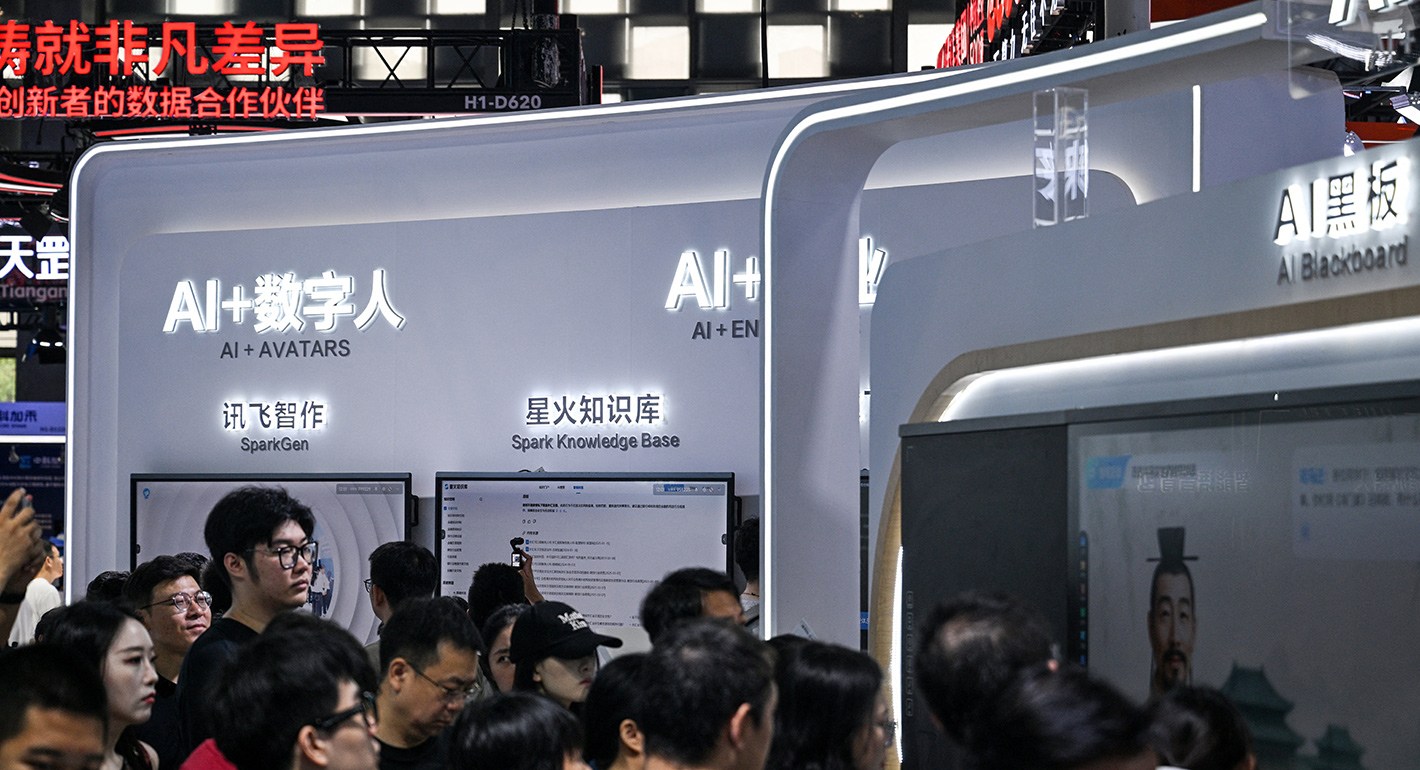
Censorship in China spans the public and private domains and is now enabled by powerful AI systems.
Nathan Law
Most of Moscow’s military resources are tied up in Ukraine, while Beijing’s foreign policy prioritizes economic ties and avoids direct conflict.


Alexander Gabuev, Temur Umarov
The interventions in Iran and Venezuela are in keeping with Trump’s strategy of containing China, but also strengthen Russia’s position.

Mikhail Korostikov