

Commentary
Katherine Charlet, Danielle Citron
{
  "authors": [
    "Katherine Charlet"
  ],
  "type": "legacyinthemedia",
  "centerAffiliationAll": "dc",
  "centers": [
    "Carnegie Endowment for International Peace"
  ],
  "collections": [],
  "englishNewsletterAll": "ctw",
  "nonEnglishNewsletterAll": "",
  "primaryCenter": "Carnegie Endowment for International Peace",
  "programAffiliation": "TIA",
  "programs": [
    "Technology and International Affairs"
  ],
  "projects": [],
  "regions": [
    "North America",
    "United States",
    "Russia",
    "Iran"
  ],
  "topics": [
    "Security",
    "Foreign Policy",
    "Technology"
  ]
}
Source: Getty
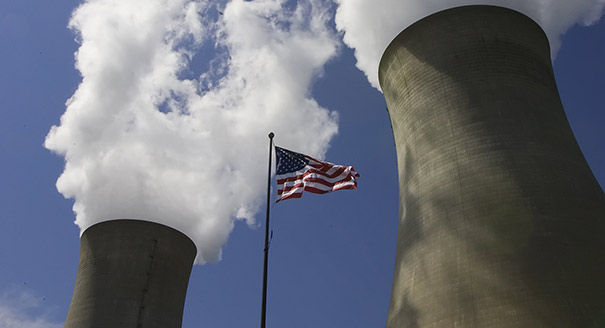
One genuine piece of news behind the U.S. sanctions against Russian individuals and organizations is the attribution to Russia of a hacking campaign that has targeted critical U.S. infrastructure.
Source: Axios
One genuine piece of news behind the U.S. sanctions against Russian individuals and organizations is the attribution to Russia of a cyberhacking campaign that has targeted critical U.S. infrastructure.
The details: Per the Treasury Department’s statement, “Since at least March 2016, Russian government cyber actors have also targeted … the energy, nuclear, commercial facilities, water, aviation and critical manufacturing sectors.”
The Department of Homeland Security has previously reported on cyber intrusions into critical infrastructure but has only identified an “Advanced Persistent Threat” without pointing the finger at a suspected culprit. In a move surely coordinated with Treasury’s announcement, the DHS updated its alert to note the Russian attribution and describe a “multi-stage campaign” into energy sector networks that included collection of “information pertaining to Industrial Control Systems.”
Why it matters: This attribution reinforces the need to secure critical infrastructure and continues a series of actions that have picked up steam since Homeland Security Advisor Tom Bossert told an audience last June that the U.S. government would “call out bad behavior and impose costs on our adversaries.” These include removal of Kaspersky from U.S. government systems, special counsel indictments,naming-and-shaming of Russia for the NotPetya attacks and this week’s sanctions and attribution.
What's next: These moves aren’t yet enough to stop Russia’s bad behavior. But it’s hard to imagine matters ending here.
Former Director, Technology and International Affairs Program
Katherine Charlet was the inaugural director of Carnegie’s Technology and International Affairs Program.
Recent Work
Katherine Charlet, Danielle Citron
Charlotte Stanton, Vivien Lung, Nancy (Hanzhuo) Zhang, …
Carnegie does not take institutional positions on public policy issues; the views represented herein are those of the author(s) and do not necessarily reflect the views of Carnegie, its staff, or its trustees.

Trump has promised Belarus a massive potash deal. But Minsk is seeking something greater: restored Western transit and greater room for maneuver from Russia.

Balázs Jarábik

The real test may come after the leaders leave the room.



Sheena Chestnut Greitens, Oriana Skylar Mastro, Yukon Huang, …

The Horn of Africa countries are among those facing a new security calculus.


Andrew Leber, Lesley Anne Warner

The European far right might fail to steer EU policy in the direction Russia wants, but they will create enough chaos inside Europe to benefit the Kremlin.

Dimitar Bechev

The new U.S.–Denmark–Greenland agreement will help Washington exert political, economic, and financial dominance under the guise of security. Yet, it acknowledged Copenhagen’s and Nuuk’s sovereignty on the island.

Marc Pierini